Sous vide and slow cooking share a lot of traits: both are largely hands-off, require minimal cleanup, and take much longer than conventional methods like baking or grilling. But they aren’t the same. What are the key differences, and when should you choose one over the other? Read on to find out.
What is sous vide cooking?
Sous vide is a gentle, controlled cooking technique in which food is sealed in a food-safe bag or jar and submerged in a water bath held at a precise temperature for an extended time. An immersion circulator heats and circulates the water, maintaining a steady temperature so the food cooks evenly from edge to edge. The defining feature of sous vide is that precise, consistent heat, typically set somewhere between 110°F and 190°F. Most immersion circulators can’t cool effectively below about 60°F and generally won’t heat above 200°F.
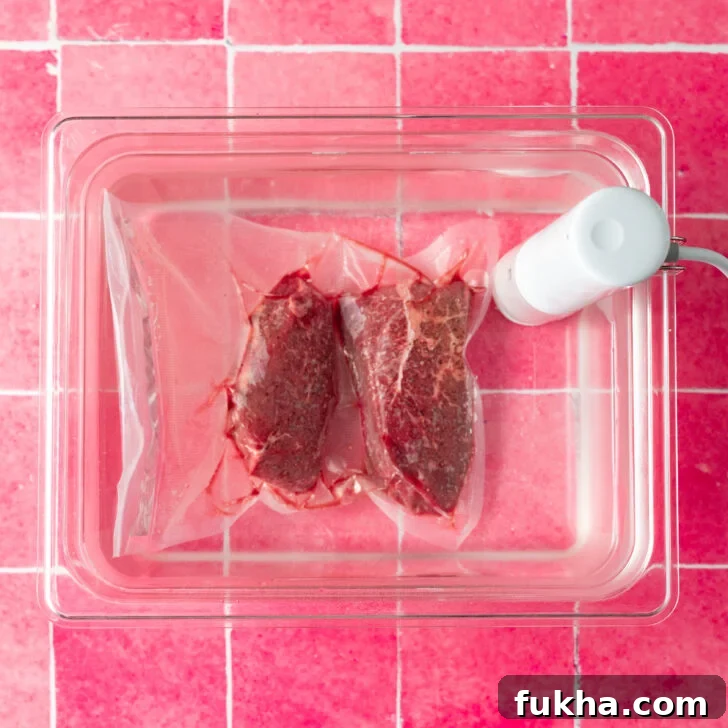
To sous vide at home you only need a water container — a stockpot, cooler, or purpose-built tub — and an immersion circulator, which you set to the exact temperature you want. You season and seal the food (vacuum sealing is common, but other air-removal methods work too), start the circulator, then let the food stay in the bath until it reaches the desired doneness. It’s a favorite method for foods where temperature control matters: steaks, eggs, seafood, and medium-rare roasts like prime rib.
An immersion circulator turns a pot of water into a precise cooking environment: it heats and circulates so the temperature stays consistent.
Sous vide excels at repeatable, restaurant-quality results for items that are otherwise easy to overcook. Because the entire piece of food equilibrates to the bath temperature, you get an even doneness and can time finishing steps — like searing a steak — for flavor and texture without risking overcooking the interior.
Sous Vide School
An interactive beginner’s guide can help you learn the essentials of sous vide: ideal temperatures, timing, safe sealing methods, and finishing techniques. For many home cooks, a focused course or guide speeds up the learning curve and helps avoid common mistakes.
What is slow cooking?
Slow cooking uses a countertop appliance commonly called a slow cooker or Crock-Pot. You place ingredients in the removable bowl, choose a setting — usually Low or High — and let the cooker maintain a higher, less precise temperature for several hours. Low is typically around 200°F and High about 300°F; Low cooks often run 6–8 hours, while High cooks are usually 3–4 hours.
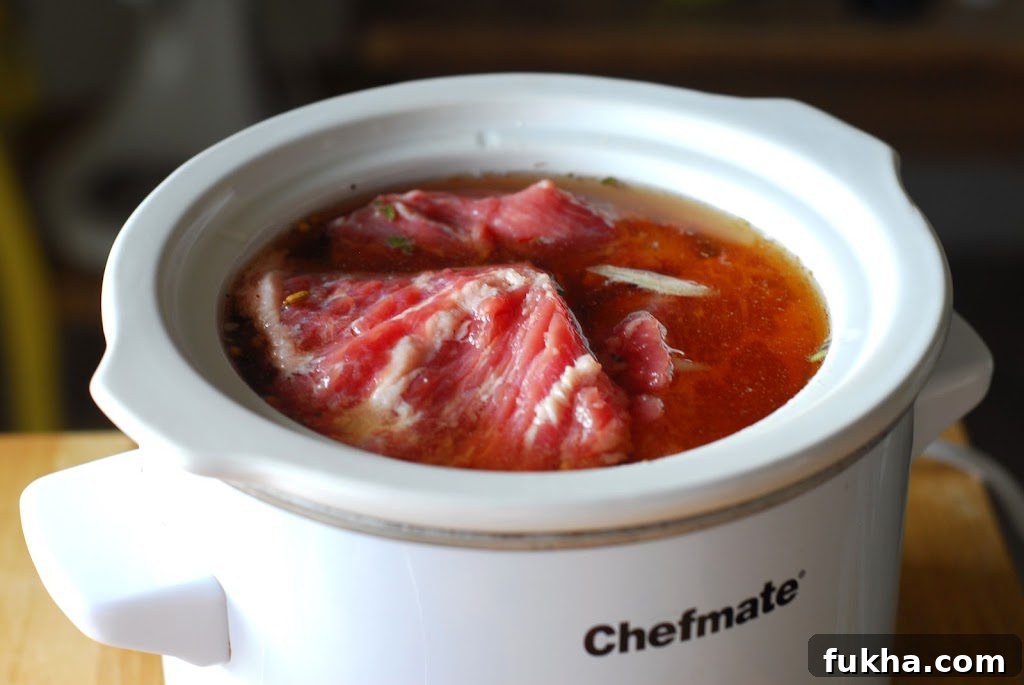
The slow cooker is ideal for braises, soups, stews, and large cuts that benefit from long, moist cooking until they fall apart. It’s simple: add ingredients, set the cooker, and return hours later to tender, comforting dishes with minimal active time.
What’s the difference between the two?
They share common advantages — both are low-and-slow, hands-off, and excellent for meal prep — but their approaches and outcomes are different. Key differences include:
- Precision vs. approximation: Sous vide gives you an exact temperature, so you can target precise doneness levels (for example, a specific degree for rare or medium-rare). Slow cookers offer broader settings (Low/High) and produce a more uniform, well-braised texture rather than a precise internal temperature.
- Prep and cleanup: Sous vide often requires extra prep to season and seal food, but cleanup is usually just discarding or rinsing the bag. Slow cookers are faster to load but require cleaning the pot afterward, which can be messier.
- What each method protects: Sous vide is excellent for delicate or expensive items — seafood, scallops, filet mignon, beef tenderloin, custards and cheesecakes — that need careful, gentle heat. Slow cooking is designed to break down tough connective tissue and create shreddable, fall-apart textures; it will overcook delicate proteins and fine cuts.
Equipment Needed for Each Method
A slow cooker is a single, simple appliance and often all you need. They are affordable and reliable for soups, stews, and braises. Optional accessories like disposable liners can simplify cleanup but aren’t required.
Sous vide requires an immersion circulator plus a suitable container for the water bath. That container can be a stockpot, cooler, or a purpose-built sous vide tub. Useful optional tools include a vacuum sealer and bags or other air-removal methods, a heavy skillet (like cast iron) for searing, and simple clips or weights to keep bags submerged. These extras make sous vide easier and expand what you can do with the method.
So, which one should I use?
Choose the slow cooker for:
- Soups and stews
- Long braises and pot roasts that should fall apart
- Meats you plan to shred
Choose sous vide for:
- Steaks and other high-value cuts where precise doneness matters
- Seafood and delicate proteins
- Roasts that should be served medium-rare, such as prime rib
- Eggs, pork chops, and items that are easy to dry out with conventional methods
Chicken can work well with either method, but sous vide reduces the risk of overcooking and drying the meat when you want a juicy, controlled result. Ultimately, each method shines in different situations: use the slow cooker for comforting, fall-apart dishes and sous vide when precision and protecting delicate textures are your priority.