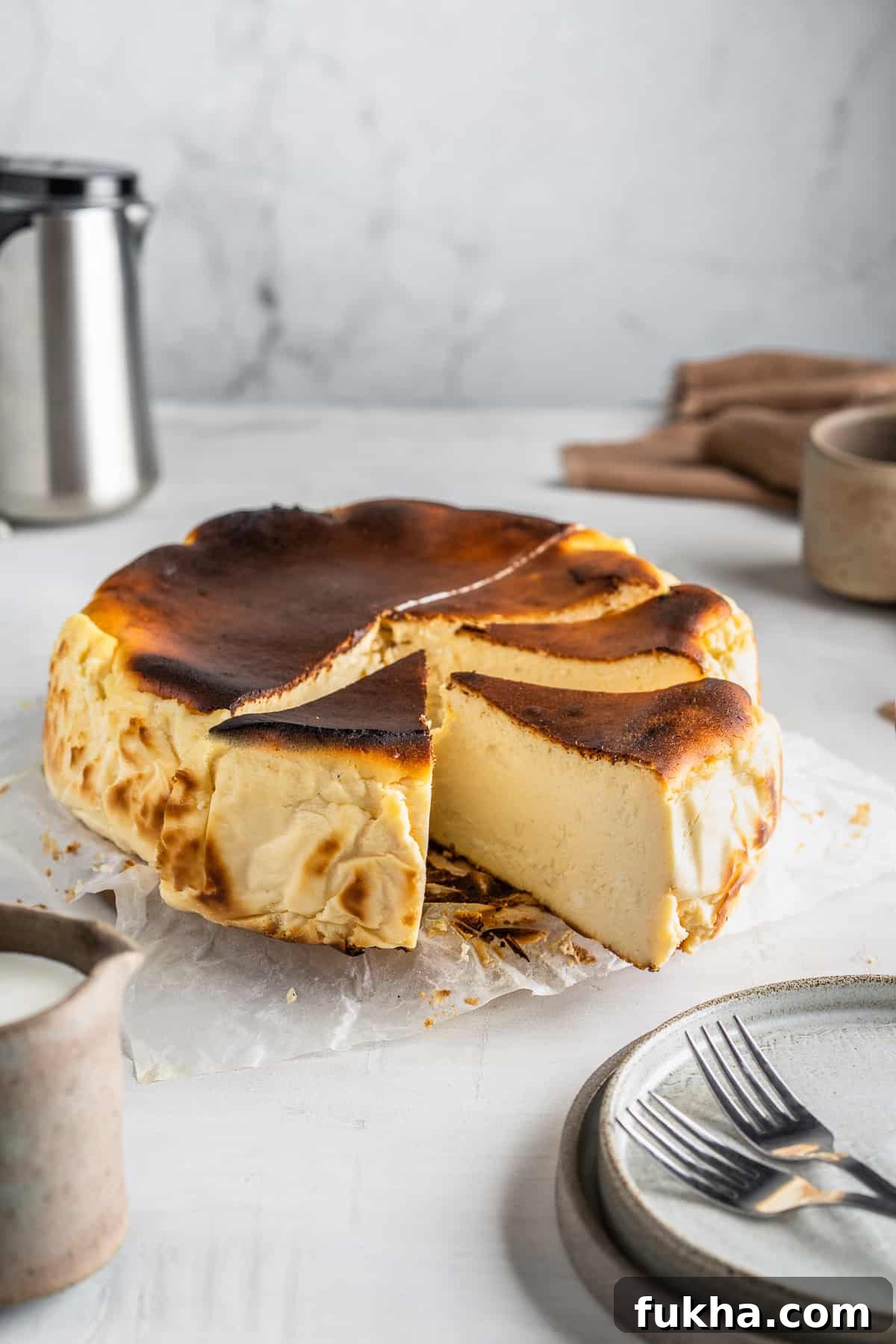
San Sebastian cheesecake, also called Burnt Basque cheesecake, is a striking, modern Spanish dessert defined by its deeply caramelized, almost charred top and a luxuriously creamy center. The contrast between the bittersweet, caramelized crust and the silky interior gives this crustless cheesecake a flavor profile that’s reminiscent of browned butter or salted caramel. Simple to make and visually impressive, it’s become a favorite for home bakers and restaurant pastry chefs alike.
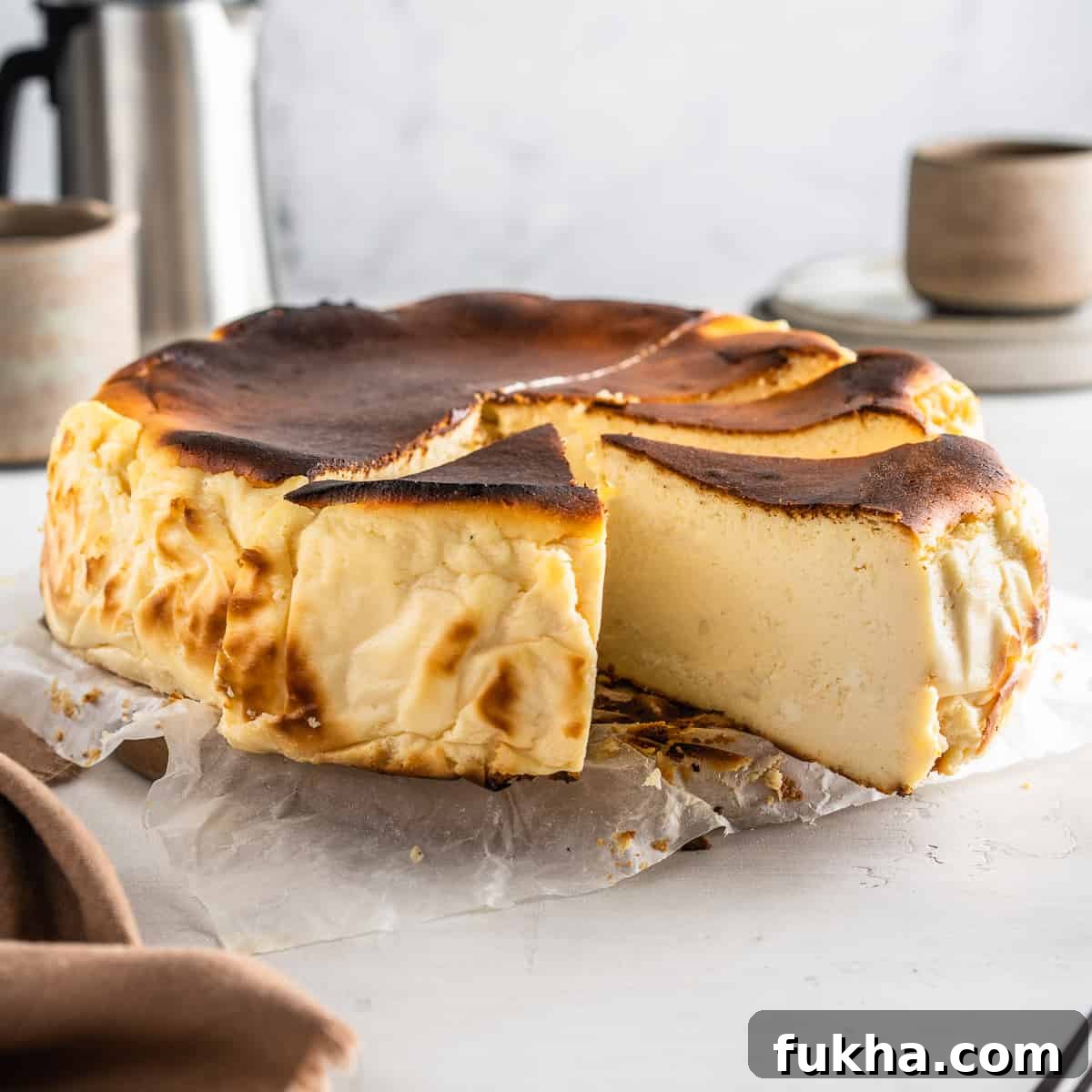
San Sebastian cheesecake
Originating in the Basque region of northern Spain, San Sebastian cheesecake is a crustless, high-temperature baked cheesecake with a deeply browned surface and a soft, almost custardy interior. It’s also known by variants of the name such as Burnt Basque cheesecake or Saint Sebastian cake. The defining characteristic is the contrast between the dark, caramelized top and the delicate, creamy center.
The exterior’s toasted, slightly bitter notes complement the richness inside. Unlike traditional New York–style cheesecake, this version is baked without a water bath; instead, it’s exposed to very high heat to develop the signature browned top while leaving the center tender and slightly jiggly.
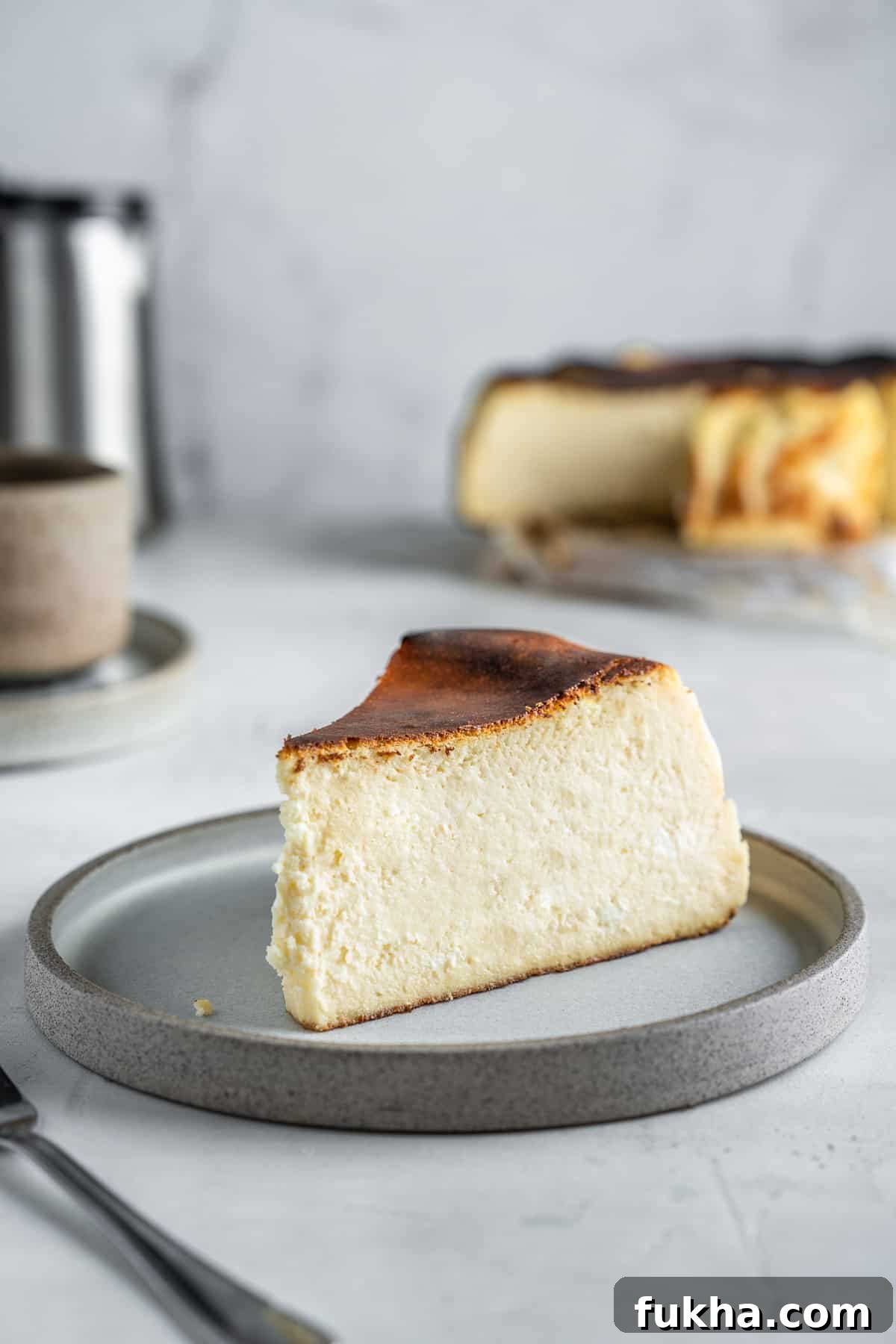
Ingredient list
Use room-temperature ingredients for the smoothest batter and the best texture. Exact quantities and the full recipe are in the recipe card below.
Room-temperature ingredients prevent a lumpy batter and reduce the risk of cracking while baking.
- Cream cheese – full-fat cream cheese, at room temperature. Avoid whipped or reduced-fat varieties.
- Sugar – granulated or caster sugar.
- Eggs – large eggs at room temperature.
- Heavy cream – full-fat (36–38% fat) for richness and proper texture.
- Flour – a small amount of all-purpose flour to stabilize the batter.
How to make San Sebastian cheesecake step-by-step
Step 1. Preheat your oven to 430°F (220°C) and allow it to preheat for at least 30 minutes. A very hot oven is essential to achieve the characteristic browned top.
Pro tip: Longer preheating ensures the oven is uniformly hot and helps the top caramelize quickly.
Step 2. Butter a 9-inch (23 cm) springform pan and line it with two overlapping sheets of parchment paper. Press the paper to the bottom and sides so it sticks; let it rise at least 2 inches (5 cm) above the pan rim. The parchment should be pleated and rustic-looking — this creates the iconic slouchy sides after baking.
Step 3. In a stand mixer fitted with the paddle attachment, beat room-temperature cream cheese with the sugar at medium-low speed until smooth and creamy, scraping the bowl as needed.
Step 4. Add the eggs one at a time, mixing well after each addition. Pour in the heavy cream and blend at low speed briefly. Finally, add the sifted flour and mix on low until the batter is smooth and homogeneous. Avoid overmixing to reduce trapped air.
Step 5. Pour the batter into the prepared pan and smooth the top with the back of a spoon or an offset spatula.
Step 6. Bake for about 40 minutes on a middle rack until the top is deeply browned. The center should still be slightly jiggly, like a soft custard. If the top hasn’t browned enough, broil for 1–2 minutes while watching closely — broiling darkens the surface very fast.
Pro tip: Put the pan into the hot oven quickly to avoid heat loss and ensure even browning.
Step 7. Remove from the oven and cool to room temperature for at least 4 hours. Keep the parchment in place until slicing to help the cake keep its form. Serve the same day or chill overnight for a firmer texture.
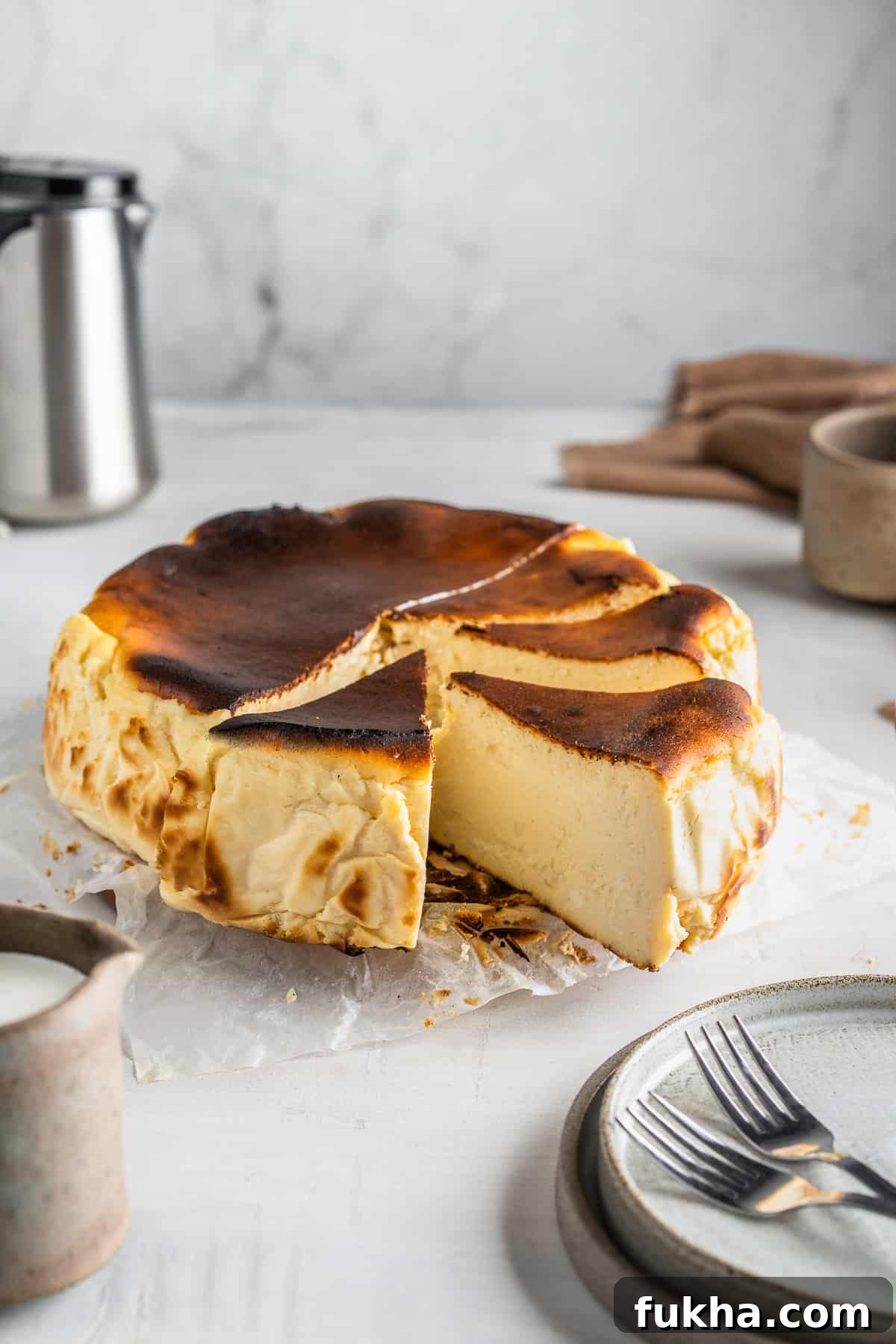
Expert Tips
- Bring all ingredients to room temperature before starting — this helps them blend into a silky batter.
- Use two sheets of parchment paper and let them rise above the pan to prevent overflow and create the characteristic rustic sides.
- Avoid overmixing to minimize air in the batter, which reduces cracking and shrinkage.
- Watch the final minutes closely. If needed, broil for a very short time to achieve the classic dark top, but do not leave it unattended.
- Use a hot, preheated oven and place the pan on the center rack for even browning. With a conventional (non-fan) oven, place the pan on a rack slightly higher than center, but ensure the paper won’t touch the heating element.
- For neat slices, dip a sharp knife in hot water, dry it, and cut in one smooth stroke, wiping the blade between cuts.
Recipe variations
Texture options: Adjust cooking and cooling to achieve various textures — creamy and soft at room temperature, more custardy with a slightly underbaked center, or firm after extended chilling.
- Serve at room temperature for a soft, creamy texture.
- Bake slightly less and chill well for a custardy, “raw-like” center that firms up in the fridge.
- Bake as directed and chill at least 12 hours for a firm, sliceable cheesecake like traditional styles.
Flavor ideas: The base recipe is versatile — add a teaspoon of vanilla extract, a touch of lemon zest, or a tablespoon of dark rum or whiskey for nuance. You can also fold in chocolate, matcha, or nut paste to create flavored variations.
How to serve it
Burnt Basque cheesecake is excellent the day it’s made and can be even better after a day or two. Serve at room temperature, optionally keeping the browned parchment for a rustic presentation. Pair with a spoonful of chocolate sauce, a berry compote, or a glass of dessert wine for an elegant finish.
Storing and freezing
Refrigerate: Store the cooled cheesecake in an airtight container in the refrigerator for up to 3 days. Bring to room temperature for at least 30 minutes before serving for best texture.
Freeze whole: Once fully cooled, remove parchment, freeze for 1–2 hours on a flat plate, then wrap tightly in plastic and foil for up to 3 months. Thaw in the refrigerator overnight.
Freeze slices: Wrap individual slices in cling film and foil, then freeze for up to 3 months. Thaw overnight in the fridge and bring to room temperature before serving.
Troubleshooting cheesecake
My cheesecake is runny
Reason: Underbaked. If the center remains liquid after cooling, it likely needed more oven time.
Fix: Bake a few more minutes next time; check for a slightly jiggly center that sets as it cools.
My cheesecake is cracked on top
Causes: Overmixing, excess air in the batter, or opening the oven door during baking.
Prevention: Mix only until just combined, tap the pan gently to release bubbles, and avoid opening the oven while the cake bakes. Small cracks often close as the cake cools.
Recipe FAQ
The cheesecake is named for San Sebastián, a city in Spain’s Basque Country, where this style of burnt, crustless cheesecake was popularized.
No — Basque cheesecake is traditionally crustless, which contributes to its silky interior and distinctive rustic look.
Basque cheesecake is crustless, baked at a higher temperature to develop a burnt top, and typically has a lighter, more custardy texture than dense New York–style cheesecake.
The classic recipe includes a small amount of flour, so it is not gluten-free as written. To make it gluten-free, substitute the flour with rice flour or cornstarch.
Recipe card
San Sebastian Cheesecake (Burnt Basque Cheesecake)
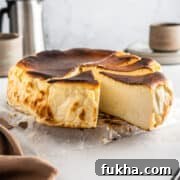
A simple, five-ingredient cheesecake baked at high heat to develop a caramelized, burnt top and a melting, creamy center.
- Total Time: 55 minutes (plus cooling)
- Yield: 12 slices
- Category: Cakes
- Method: Baking
- Cuisine: Spanish
Ingredients
- 4 ½ blocks (about 1 kg) full-fat cream cheese (Philadelphia), room temperature
- 1 ¼ cup (250 g) granulated sugar
- 5 large eggs, room temperature
- 2 cups + 2 teaspoons (480 ml) heavy cream, room temperature
- 4 tablespoons (30 g) all-purpose flour
Instructions
- Preheat oven to 430°F (220°C) for at least 30 minutes.
- Butter a 9-inch (23 cm) springform pan and line with two overlapping sheets of parchment paper; let them rise 2 inches (5 cm) above the rim.
- Beat cream cheese and sugar on medium-low until smooth, scraping the bowl occasionally.
- Add eggs one at a time, mixing well. Add heavy cream and blend briefly. Add sifted flour and mix on low until smooth.
- Pour batter into the prepared pan and smooth the top. Bake about 40 minutes until the top is deeply browned and the center is slightly jiggly.
- If the top needs more color, broil 1–2 minutes while watching closely. Remove and cool to room temperature for at least 4 hours before serving.
Notes
- All ingredients should be at room temperature for the best texture.
- Use two sheets of parchment and allow them to rise above the pan—this prevents spills and creates the classic shape.
- Mix only until ingredients are combined to avoid excess air and cracking.
- If the top does not brown enough, broil briefly, watching carefully to prevent burning.
Nutrition
- Serving Size: 1 slice
- Calories: 548
- Sugar: 21.2 g
- Sodium: 291 mg
- Fat: 46.2 g
- Saturated Fat: 28.3 g
- Carbohydrates: 26.3 g
- Fiber: 0.1 g
- Protein: 10 g
- Cholesterol: 225 mg
Nutritional information is an estimate for informational purposes only and may vary depending on brands and ingredients used.