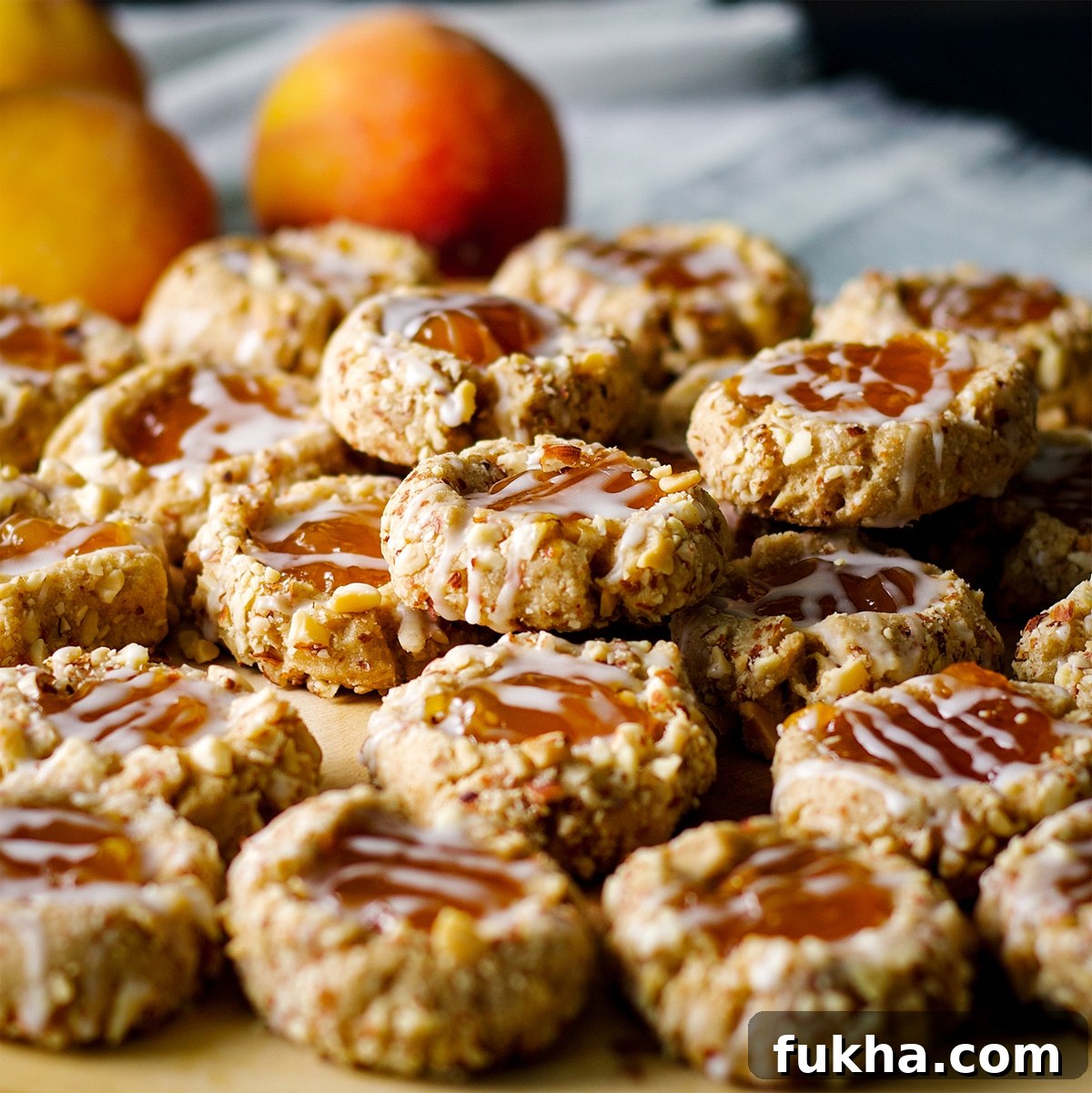
These almond thumbprint cookies are tender, buttery shortbread that practically melt in your mouth. Rolled in roasted almonds, filled with jam or preserves, and finished with a delicate almond glaze, they’re jewel-like and wonderfully addictive.
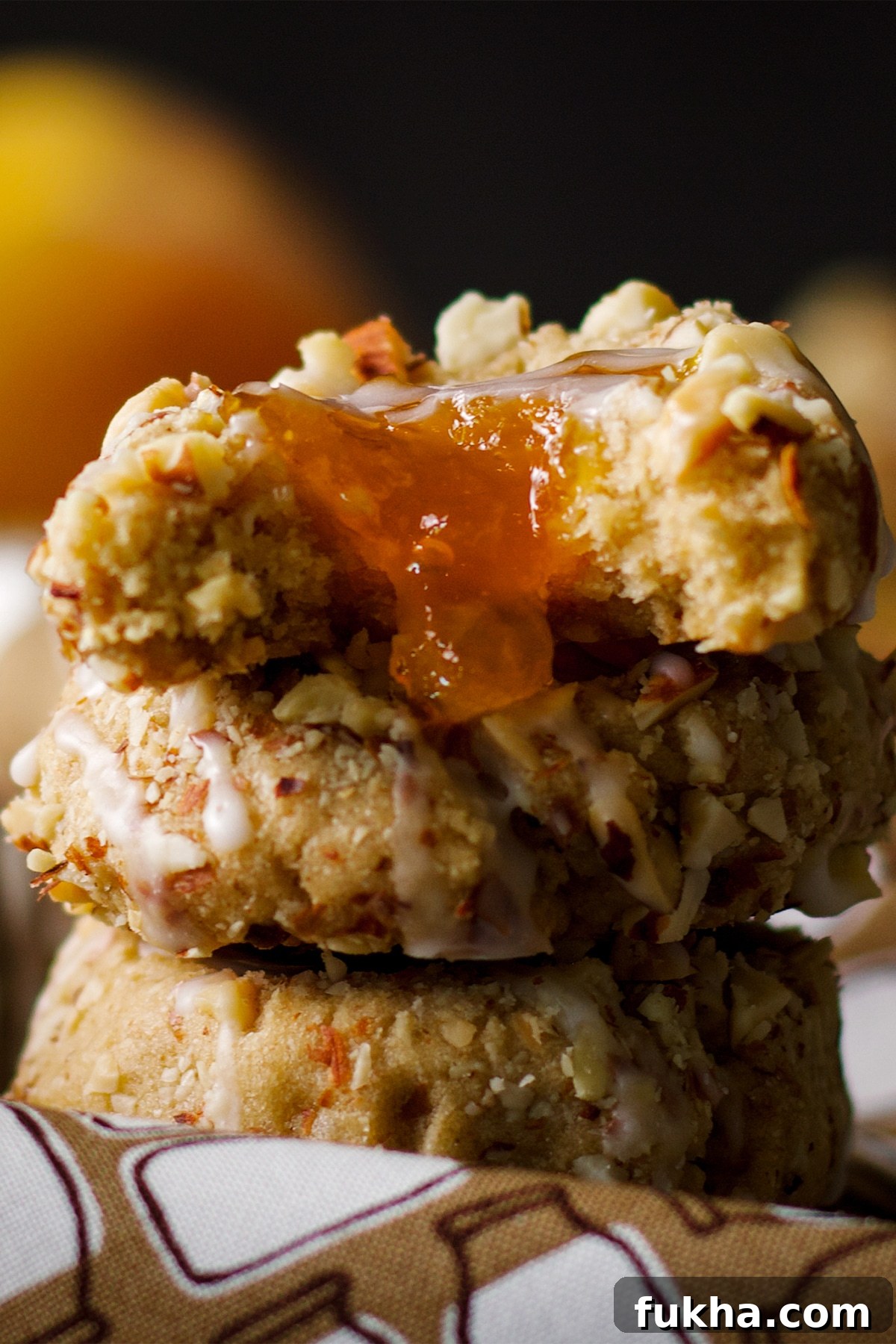
My grandmother was the undisputed Queen of Homemade Cookies. Her freezer was always stocked with trays of small cookies, and every holiday we received a tin overflowing with a variety of bite-sized treats. I loved them all, but her jam-filled thumbprints — tender, buttery rounds with bright dollops of jam in the centers — were my favorite. They looked like tiny, edible jewels and tasted like childhood.
What Are Thumbprint Cookies?
Thumbprint cookies trace their roots to Sweden, where they are called Hallongrotta, or “raspberry cave.” In other countries you might see them called jam drops or simply jam cookies. The defining technique is the small indentation pressed into each ball of dough — traditionally with a thumb — which is then filled with jam, curd, caramel, or chocolate.
Most thumbprints are made from a shortbread-style dough: a high butter-to-flour ratio, no leavening, and a light, tender texture. The result is a delicate cookie that practically melts on the tongue.
Ingredients Needed to Prepare this Recipe
- Whole raw almonds, roasted and finely chopped for rolling.
- Unsalted butter, at room temperature.
- Brown sugar, packed (light or dark).
- Granulated sugar.
- One large egg plus an extra yolk.
- Pure vanilla extract and almond extract for flavor.
- All-purpose flour and a bit of whole wheat flour.
- Superfine almond flour to keep the texture soft and tender. If you can’t find superfine, pulse regular almond flour in a food processor with ½ cup of all-purpose flour to refine it slightly.
- Salt.
- Fruit jam or preserves — choose a thick, not runny, variety. Peach preserves and strawberry-rhubarb are favorites.
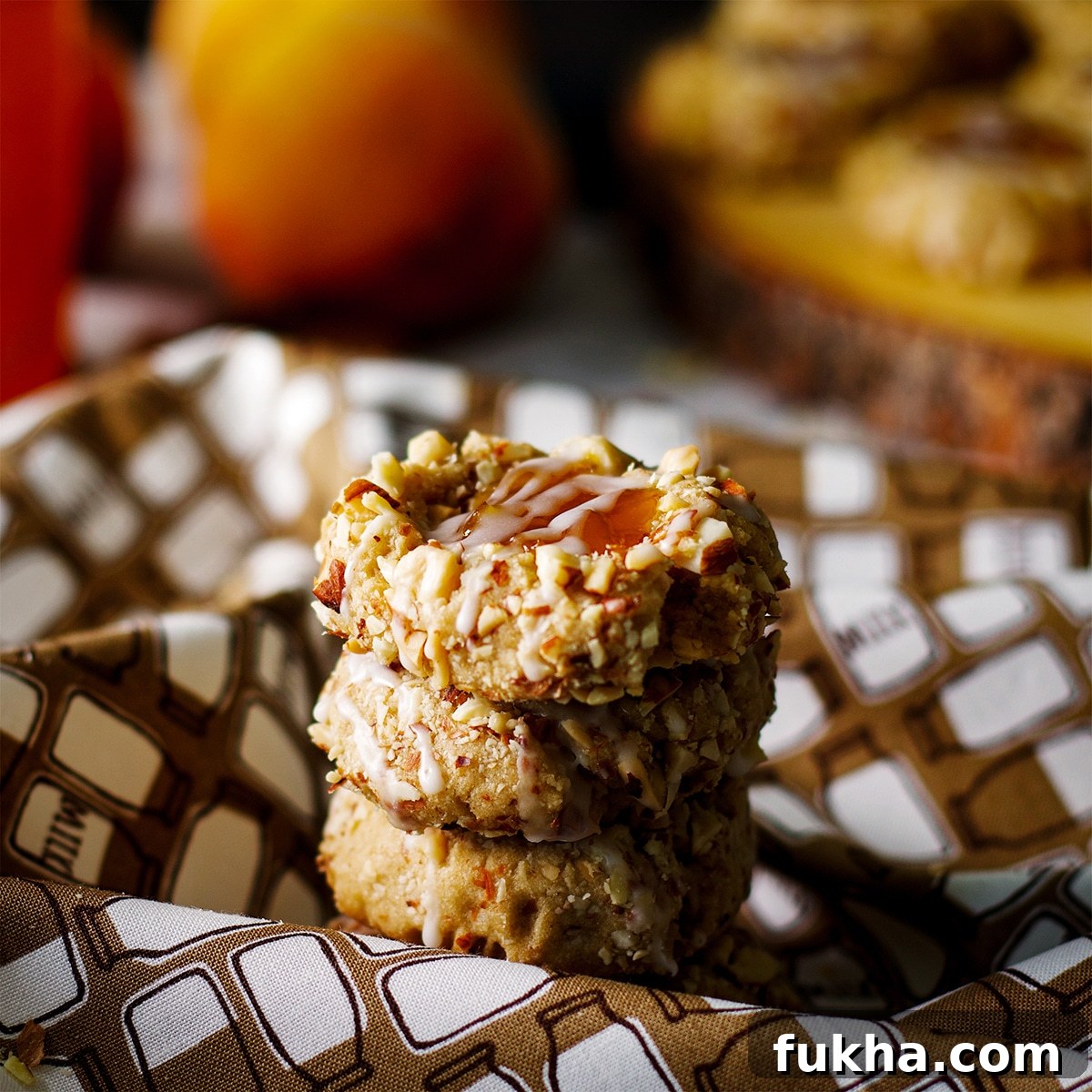
For a pronounced almond flavor, this recipe uses both almond flour and almond extract, and each cookie is rolled in chopped roasted almonds before baking. The roasted almonds add immediate toasted nuttiness and a pleasant crunchy contrast to the tender shortbread interior.
What Kind of Jam Is Best for Thumbprint Cookies?
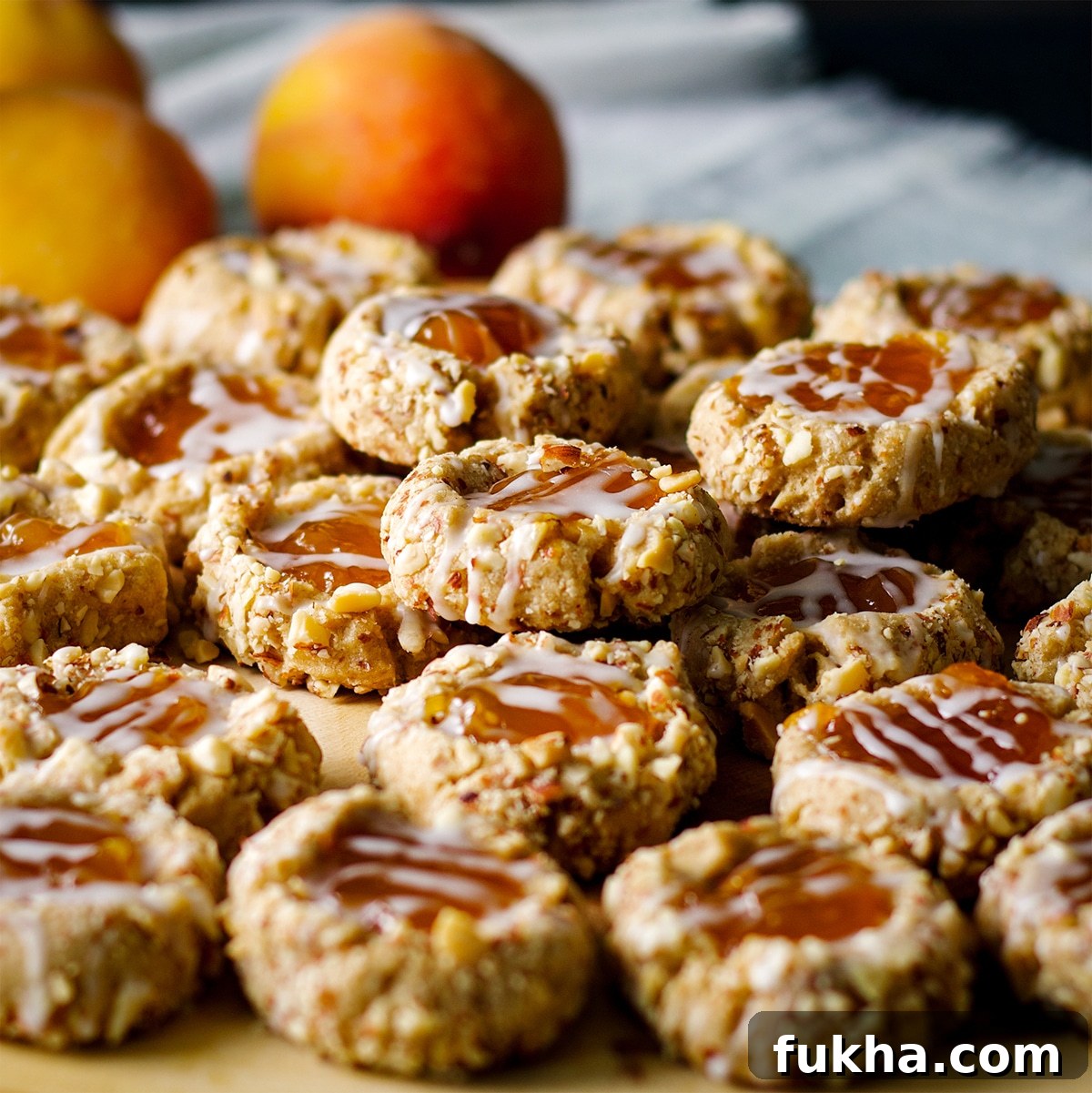
Use any jam or preserves you enjoy, but opt for thicker, fruit-forward varieties rather than thin or runny spreads. Mixing several jams in one batch — as many bakers do — creates a pretty assortment of colors on the cookie tray. The photos here show cookies filled with homemade peach preserves, baked when peaches were in season, but strawberry-rhubarb or other dense preserves work equally well.

How to Make the Shortbread Cookie Dough
The dough here is classic shortbread: lots of butter, no chemical leavening. Instead of baking powder or soda, shortbread gains lift from the air you incorporate when creaming butter and sugar. Beat the butter with both sugars until the mixture is light in color and noticeably aerated; this creates small pockets of air that keep the cookies tender.
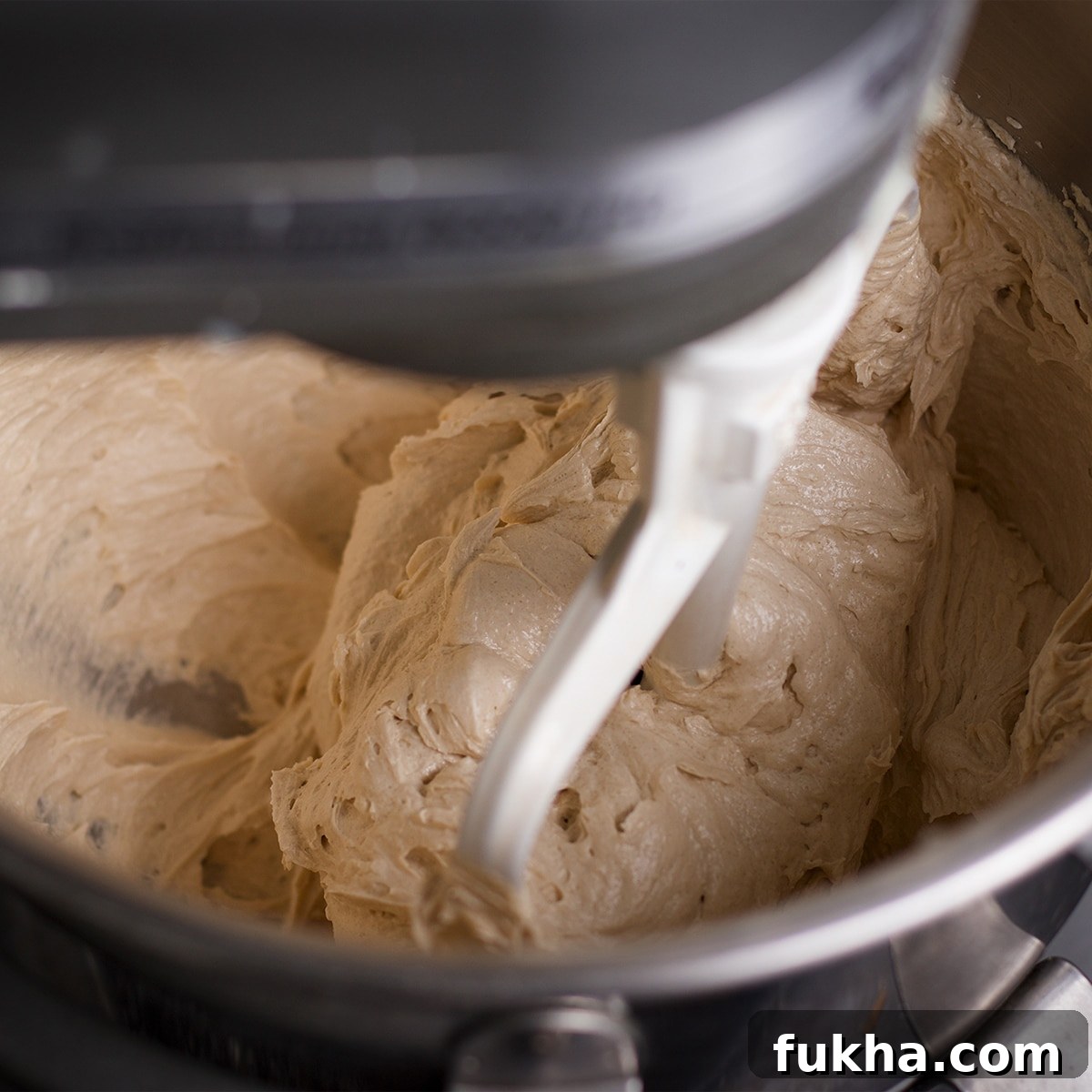
Beat butter and sugars for several minutes until fluffy. Add the egg, yolk, and extracts, then blend until combined.
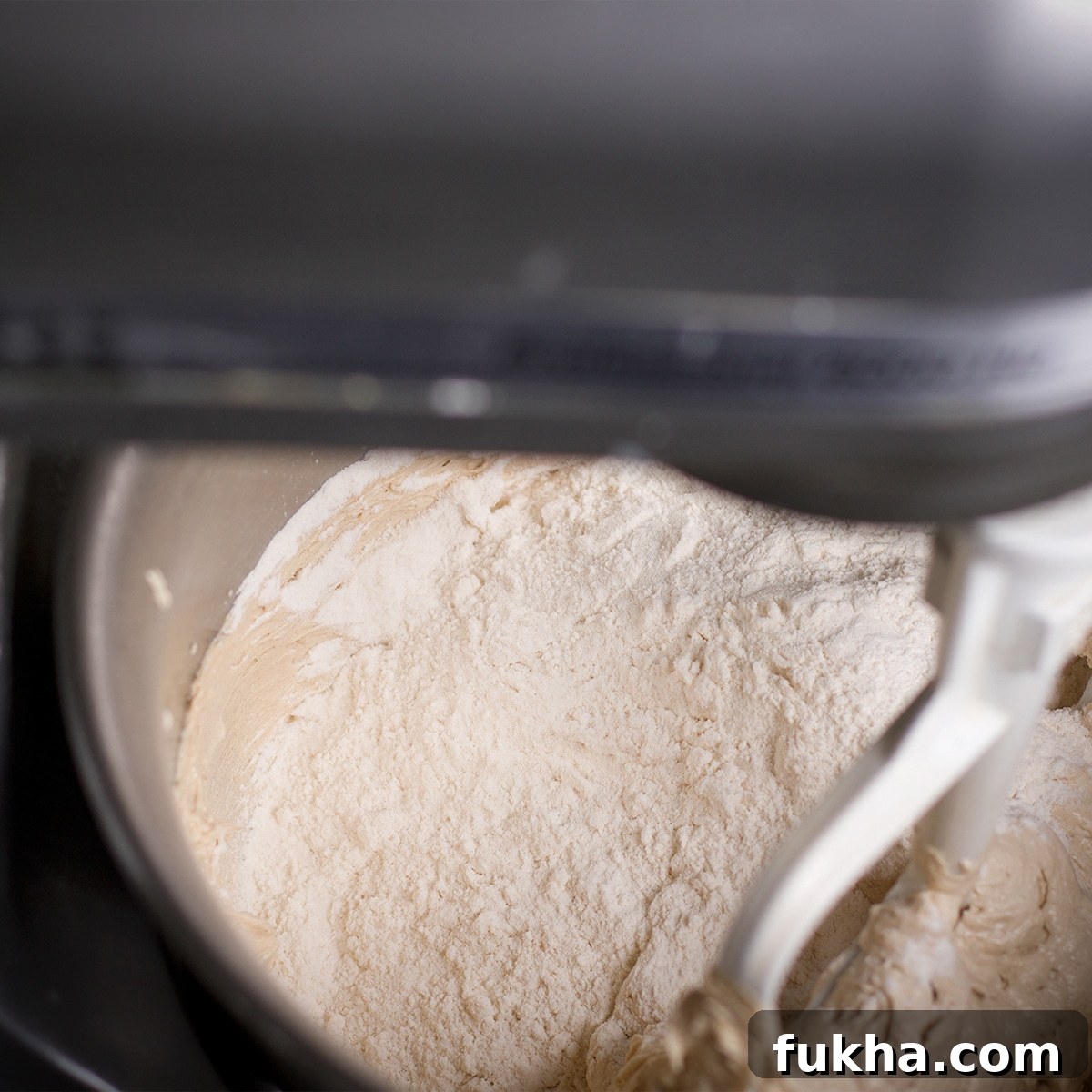
Gently fold in all-purpose flour, whole wheat flour, almond flour, and salt on low speed just until combined. Over-mixing once flour is added will develop gluten and make the cookies tough, so stop as soon as the dough comes together.
Chill the dough for at least 2 hours and up to 3 days. Chilling firms the butter so the cookies keep their rounded shape in the oven; if the dough is warm the cookies will spread and flatten.
Pro tip: While the dough chills, roast the whole almonds at 375°F (190°C) until darkened and fragrant. Let them cool, then pulse in a food processor until they resemble coarse cornmeal. These are used to roll the dough before baking.
How to Shape and Fill Thumbprint Cookies
Shape chilled dough into tablespoon-sized balls. Press an indentation into the center of each ball with your thumb or the back of a spoon. Dip the tops in the ground roasted almonds and arrange on a parchment-lined baking sheet about 2 inches apart. Fill each indentation with ½ to 1 teaspoon of jam or preserves, then bake.
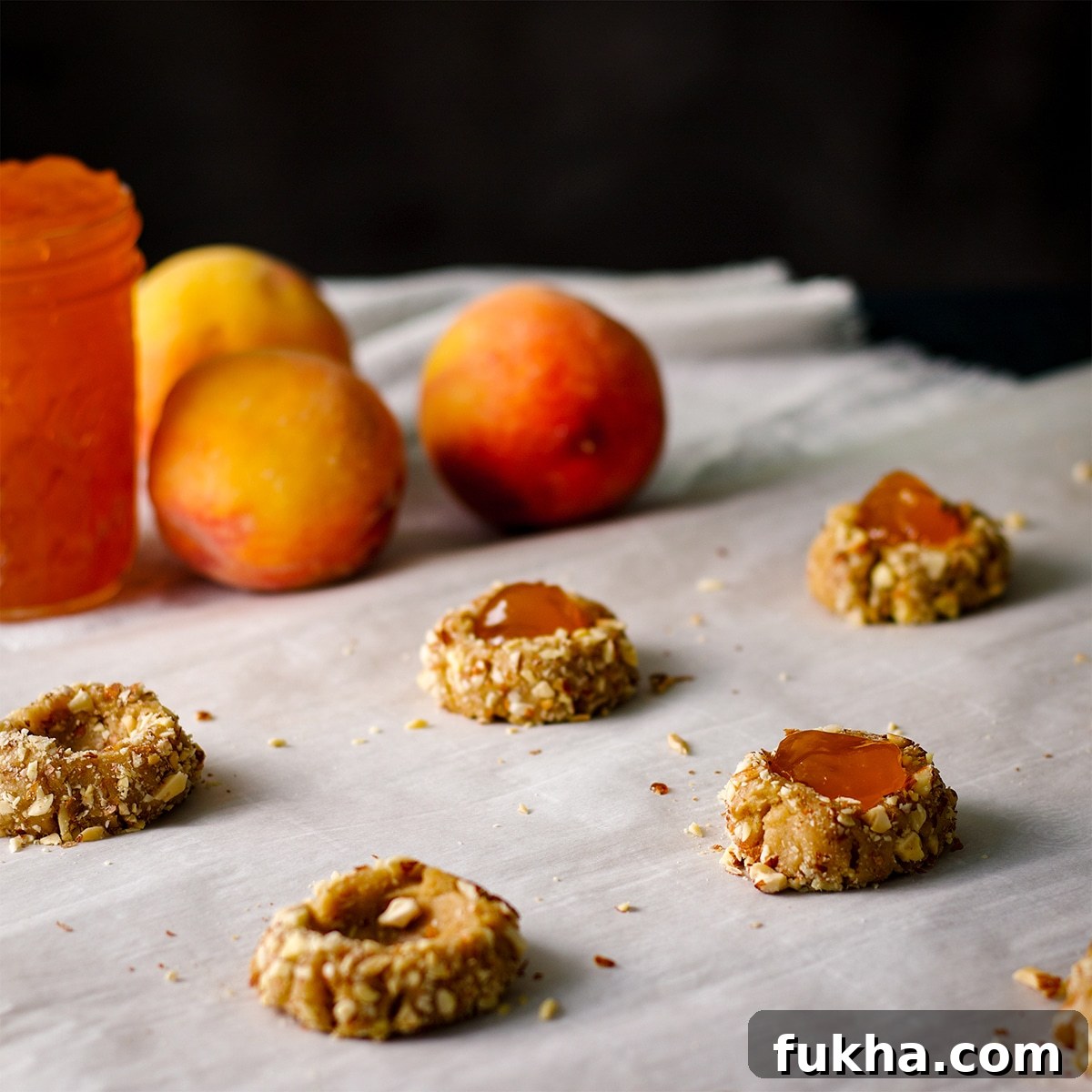
After baking and cooling, whisk powdered sugar with 1–2 tablespoons half-and-half or milk and a teaspoon of almond extract to make a thin glaze. Drizzle over the cooled cookies and let set—or skip the resting period and enjoy them right away.

How to Store These Cookies
Store thumbprint cookies in an airtight container at room temperature for up to three days, or refrigerate for up to one week. For longer storage, freeze them for up to three months. If stacking cookies, place parchment between layers to prevent sticking.
This Is a Building-Block Recipe
This thumbprint cookie recipe is a versatile, reliable base to return to again and again. Use it as written or use the dough as a starting point to experiment with different fillings and finishes. While I adore this version, it still can’t replace the sentimental perfection of my grandmother’s cookies — the ones she baked and shared with so much love.

If you try this recipe, please leave a comment or share a photo using the hashtag #ofbatteranddough.
Happy baking!
📖 Recipe
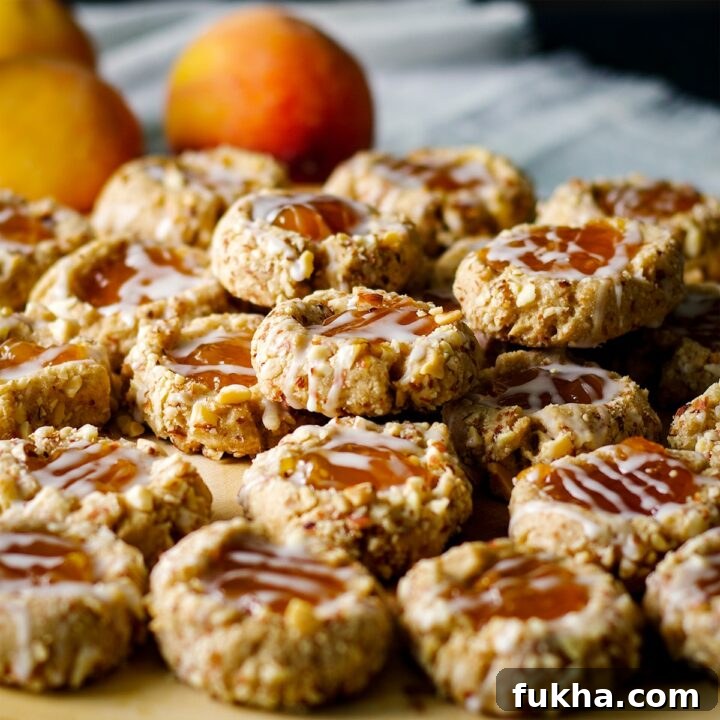
Almond Thumbprint Cookies
Buttery shortbread rolled in roasted almonds, filled with fruit preserves, and finished with an almond glaze.
Ingredients
- 12 tablespoons butter (6 ounces / 169 grams), at room temperature
- ¾ cup (159 grams) packed brown sugar
- ¼ cup + 2 tablespoons (74 grams) granulated sugar
- 1 large egg + 1 large egg yolk
- 1 teaspoon pure vanilla extract
- 1 teaspoon almond extract
- 2 ¾ cups (330 grams) all-purpose flour
- ¼ cup (28 grams) whole wheat flour
- ½ cup (48 grams) superfine almond flour
- 1 teaspoon salt
- 8 ounces jam or preserves (thick, not runny)
- 1 cup (5 ounces / 142 grams) whole almonds, roasted and finely chopped
For the Almond Glaze
- 1 cup (113 grams) powdered (confectioners’) sugar
- 1–2 tablespoons half-and-half or milk
- 1 teaspoon almond extract
Instructions
- Preheat: When ready to bake, preheat the oven to 350°F (176°C). Line baking sheets with parchment paper.
- Cream: Beat butter and both sugars on medium-high speed for about 4 minutes, scraping the bowl a couple of times, until light and fluffy.
- Add eggs & extracts: Mix in the egg, egg yolk, vanilla, and almond extract until well combined.
- Mix dry ingredients: Add all-purpose flour, whole wheat flour, almond flour, and salt. Mix on low speed just until the dough comes together. Cover and refrigerate for at least 2 hours or up to 3 days.
- Roast & process almonds: Spread almonds on a sheet and roast at 375°F (190°C) for about 10 minutes until fragrant. Cool, then pulse in a food processor to a coarse, cornmeal-like texture. Place in a small bowl.
- Shape cookies: Roll dough into tablespoon-sized balls. Press an indentation into the center of each with your thumb. Dip the tops in the ground roasted almonds and place on prepared sheets about 2 inches apart. Fill each indentation with ½–1 teaspoon jam.
- Bake: Bake for 14–16 minutes. They will have small cracks and be set but still soft. Let cool completely on the baking sheet.
- Make glaze: Combine powdered sugar with 1 tablespoon milk or half-and-half and almond extract. Stir until smooth; add up to 1 additional tablespoon of liquid if needed to achieve a drizzleable consistency.
- Finish: Drizzle glaze over cooled cookies and let set.
- Store: Keep in an airtight container at room temperature up to 3 days, refrigerated up to 1 week, or frozen up to 3 months. Use parchment between layers when stacking.
Notes
- If you can’t find superfine almond flour, pulse regular almond flour with ½ cup of the all-purpose flour in a food processor for a minute or two to refine the texture.
- Choose preserves that are thick and chunky rather than thin or runny to prevent bleeding into the cookie during baking.
Nutrition Information (per cookie)
Calories: 156 | Total Fat: 10g | Saturated Fat: 5g | Cholesterol: 33mg | Sodium: 190mg | Carbohydrates: 15g | Fiber: 1g | Sugar: 7g | Protein: 3g