Today’s Expert: Salad Savoy Corporation
Welcome to the seventh edition of our featured series, “Ask the Produce Expert.” In this series we highlight partner growers, suppliers, and commodity boards, asking industry professionals practical questions that help consumers better understand the food they buy and eat every day. If you have a question for a future expert, tweet at me or post it on my Facebook page — I’ll do my best to include it in an upcoming edition.
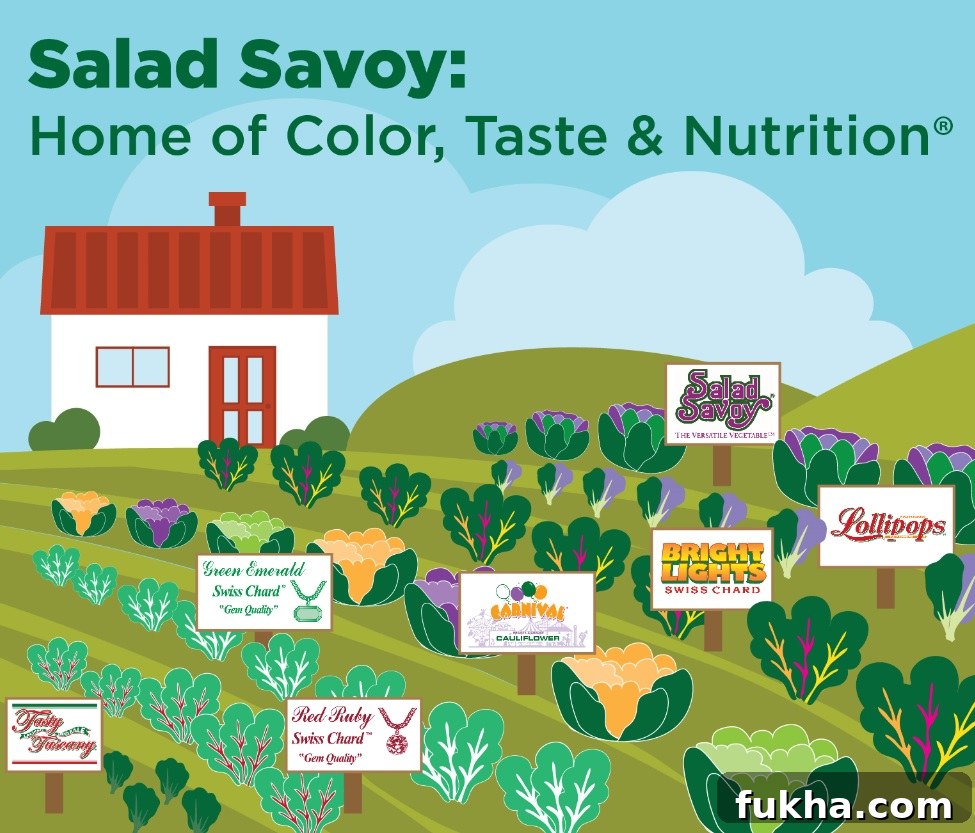
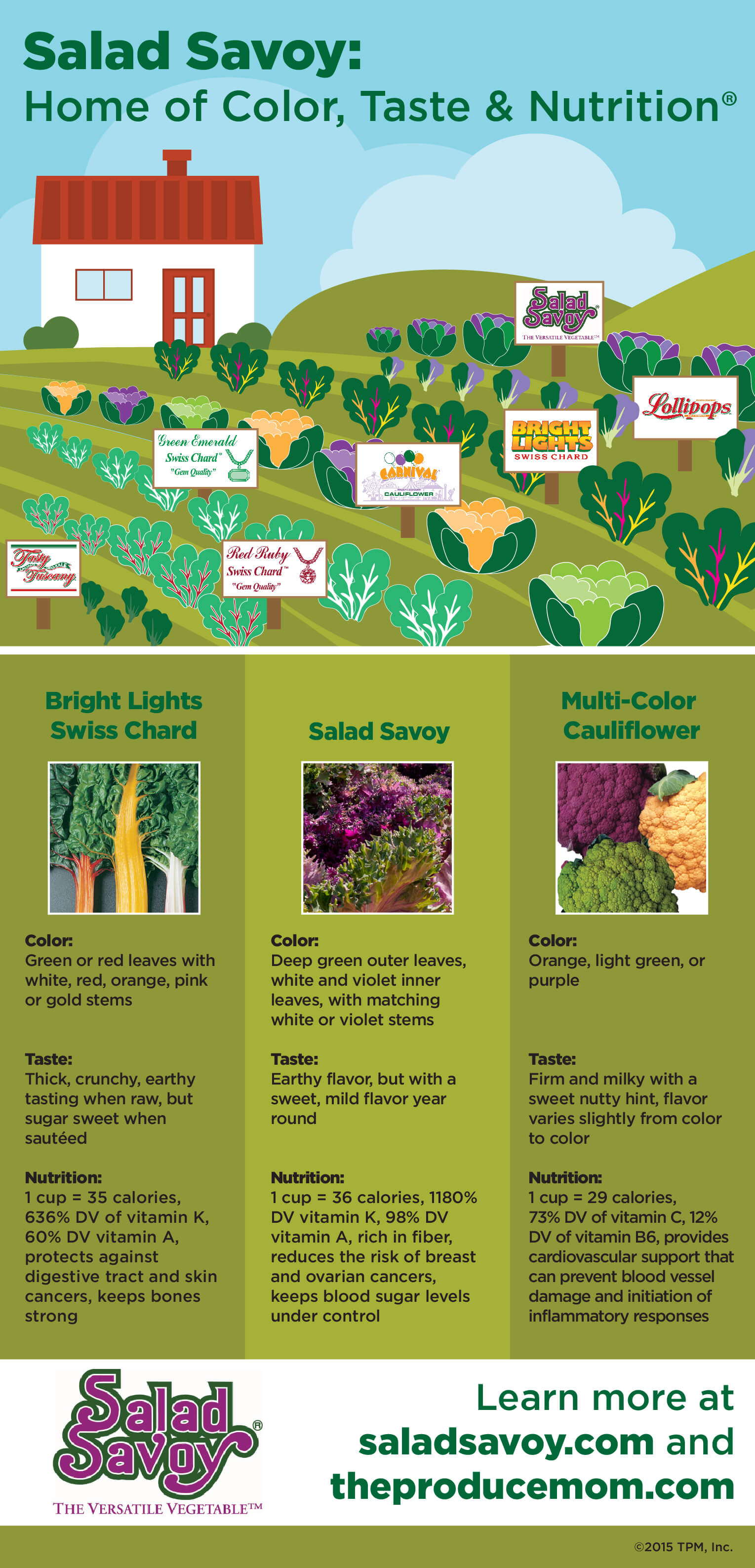
Salad Savoy Corporation grows visually striking vegetables in Salinas, California. Founded in 1984 by John Moore, the company produces several branded items, including Salad Savoy® (their original namesake), Bright Lights Swiss Chard®, Steamin’ Greens®, Lollipops®, Carnival® Multi-Color Cauliflower, Green Emerald Swiss Chard®, Tasty Tuscany™, and Red Ruby Swiss Chard™.
The company focuses on what it calls a “triad of success”: color, taste, and nutrition. Salad Savoy’s produce appears in grocery stores as well as in quick-service restaurants, fine dining establishments, country clubs, and cruise lines — though the team says their favorite place to find their vegetables is in home refrigerators.
Follow Salad Savoy on Facebook and Twitter for updates, product news, and seasonal highlights.
In this edition of Ask the Produce Expert, John Moore shares his expertise about growing colorful, nutritious vegetables, framed around the company’s triad of success: color, taste, and nutrition.
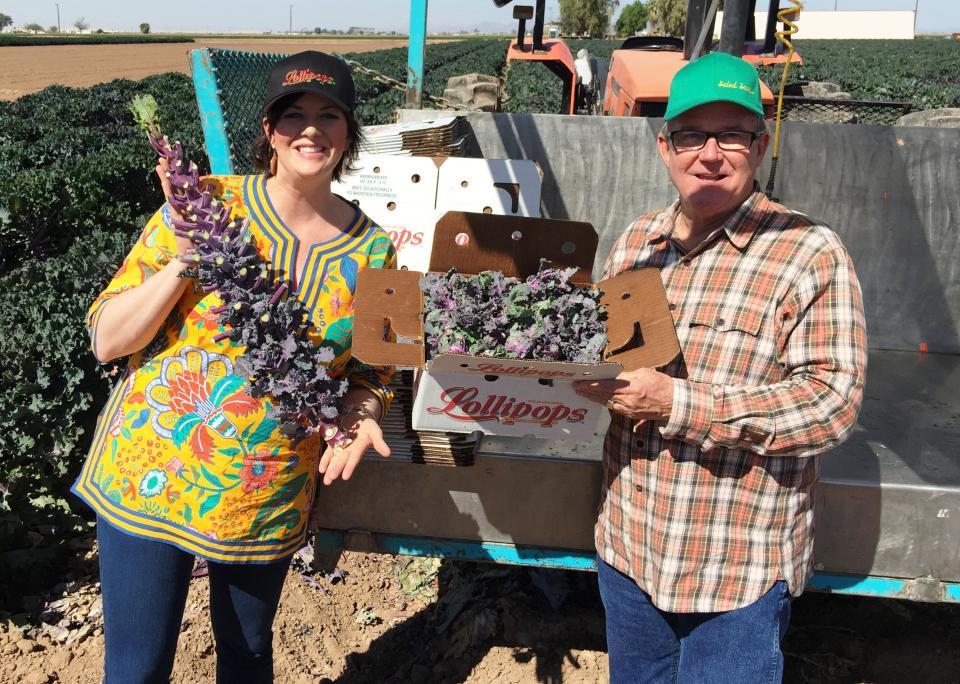
John Moore is the founder, owner, and president of Salad Savoy. His interest in colorful vegetables began during a trip to Europe in the early 1980s, and it led him to develop the original Salad Savoy leafy vegetable. Over the years he has introduced new varieties and worked to showcase the natural beauty and culinary appeal of vegetables.
Now let’s dive into the questions:
How did you develop your passion for colorful vegetables?
I grew up in the produce industry and worked on international deals with several well-known companies. During a visit to a garden in Sweden I became inspired to create something new — a leafy vegetable that combined attractive color with great flavor and texture. That idea became Salad Savoy, and it launched the company’s focus on visually appealing, flavorful produce.
Explain the meaning behind Salad Savoy’s “triad of success: Color, Taste & Nutrition”
From the start, Salad Savoy was developed as a nutritious vegetable through selective, natural breeding. Its striking violet and white colors captured attention and made for memorable plate presentations. But taste is the ultimate test — if a vegetable doesn’t taste good, people won’t eat it. Once Salad Savoy proved successful, the company expanded its portfolio with other items that match the same standards, beginning with Bright Lights chard and Carnival cauliflower and extending to newer items like Lollipops kale sprouts. The triad — color, taste, nutrition — guides every product decision.
Do different colors of the same vegetable offer different nutrients?
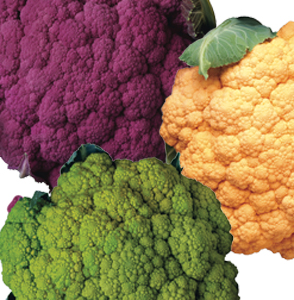
Yes. Research over the past two decades has highlighted how color often corresponds with specific phytonutrients. For example, orange varieties tend to contain higher levels of beta-carotene; purple varieties often contain anthocyanins, a type of flavonoid linked to various health benefits; and other pigments bring their own compounds and antioxidant profiles. Different colors can add unique nutritional benefits to an already healthy vegetable lineup.
What causes the change in color?
Color in vegetables comes from a combination of genetics and selective breeding. Natural cross-breeding and careful selection have enhanced unique colors over time. Environmental factors can also influence pigment expression, but the varieties Salad Savoy grows are selected for stable, vibrant color through conventional breeding methods.
Is there a variation in taste between different colors of the same veggie?
Taste differences do occur, but perceptions vary among consumers. Some people notice a creamier texture in one color of cauliflower, while another color might have a slightly peppery note or a milder flavor. With Salad Savoy’s original product, the flavor between the violet and white varieties is largely comparable. Overall, the company aims for consistent, appealing flavor across its colored varieties so that color enhances the eating experience without compromising taste.
Do uniquely colored vegetables cost more than traditional colors?
There can be a slight premium associated with certain seed varieties, but the larger cost comes from the careful handling required to deliver a high-quality product. Salad Savoy emphasizes attention to quality, selection, and food safety — many items are hand-picked and hand-packed, and products undergo several levels of inspection before cooling and distribution. These steps help ensure consistent appearance, taste, and freshness.
Which Salad Savoy product is the most aesthetically pleasing to your own eye?
That’s a hard question — it’s like asking which of my children is my favorite. I take pride in all of our products and the care that goes into growing, harvesting, and packing them. If I had to pick one that holds special meaning, it would be the original Salad Savoy, because it was my idea and the foundation for everything the company has become.
Closing thoughts
That concludes the seventh edition of Ask the Produce Expert. Thank you to John Moore for sharing his knowledge about colorful vegetable farming and for explaining how color, taste, and nutrition guide his company’s work.
Previous editions of the series have featured a variety of topics and voices, including discussions on organic versus natural, picking and packaging, the California drought, apples and the apple industry, the art of growing apples, pears and cherries, and family-run fruit farming operations. I learned a lot from each expert and look forward to the next installment.
#FreshProduce rules — thank you for serving fruits and vegetables to your family!
xoxo The Produce Mom
Sign up here for our weekly newsletter if you want more recipes, cooking tips, and produce news.