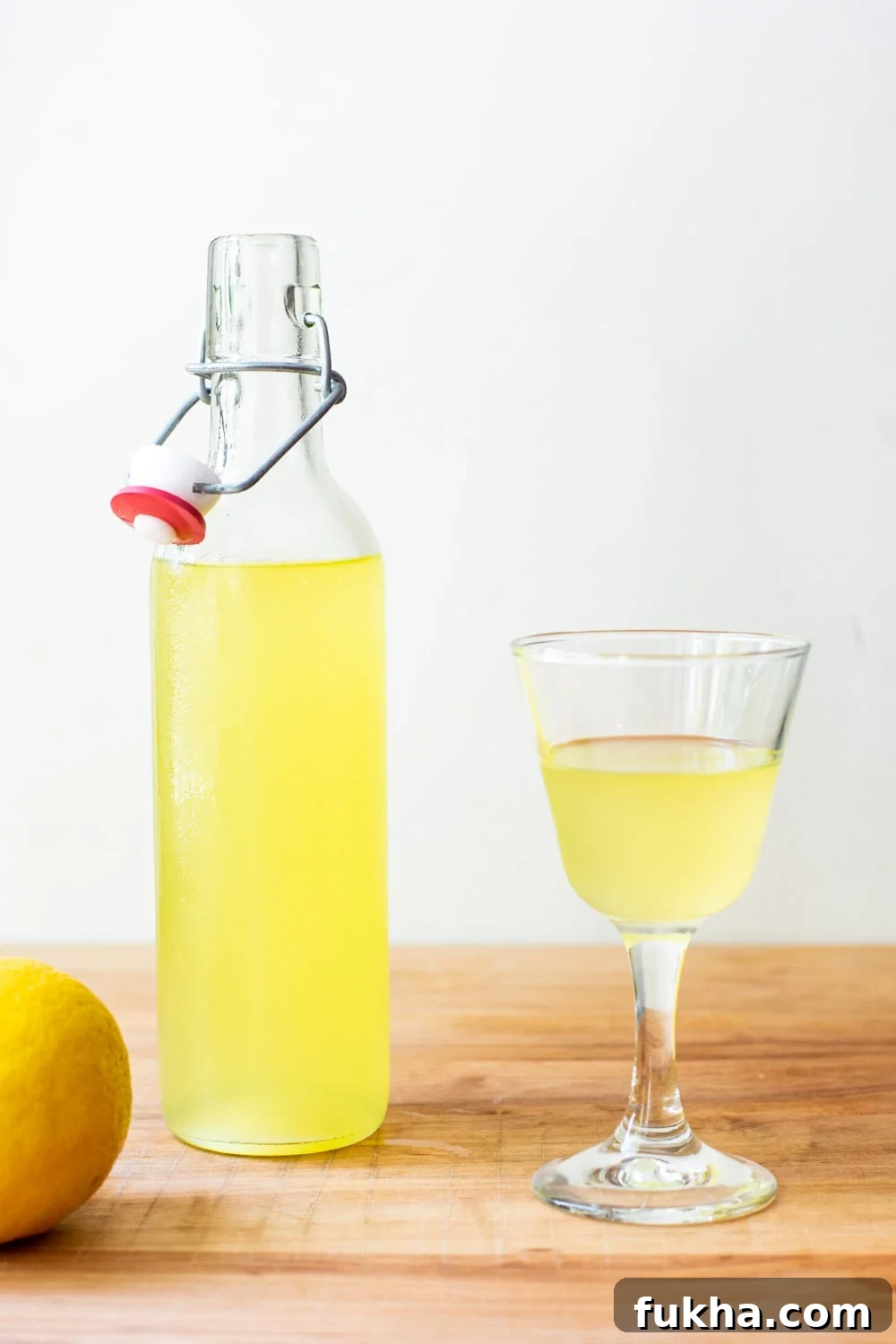
Originating on the Amalfi Coast, this bright, lemon-infused liqueur has become a classic in bars and homes worldwide. Limoncello is surprisingly easy to make at home and requires no special equipment or complicated techniques. With just a few quality ingredients and a little patience, you can produce a silky, aromatic liqueur that’s perfect chilled as an after-dinner digestif or used in cocktails and desserts.
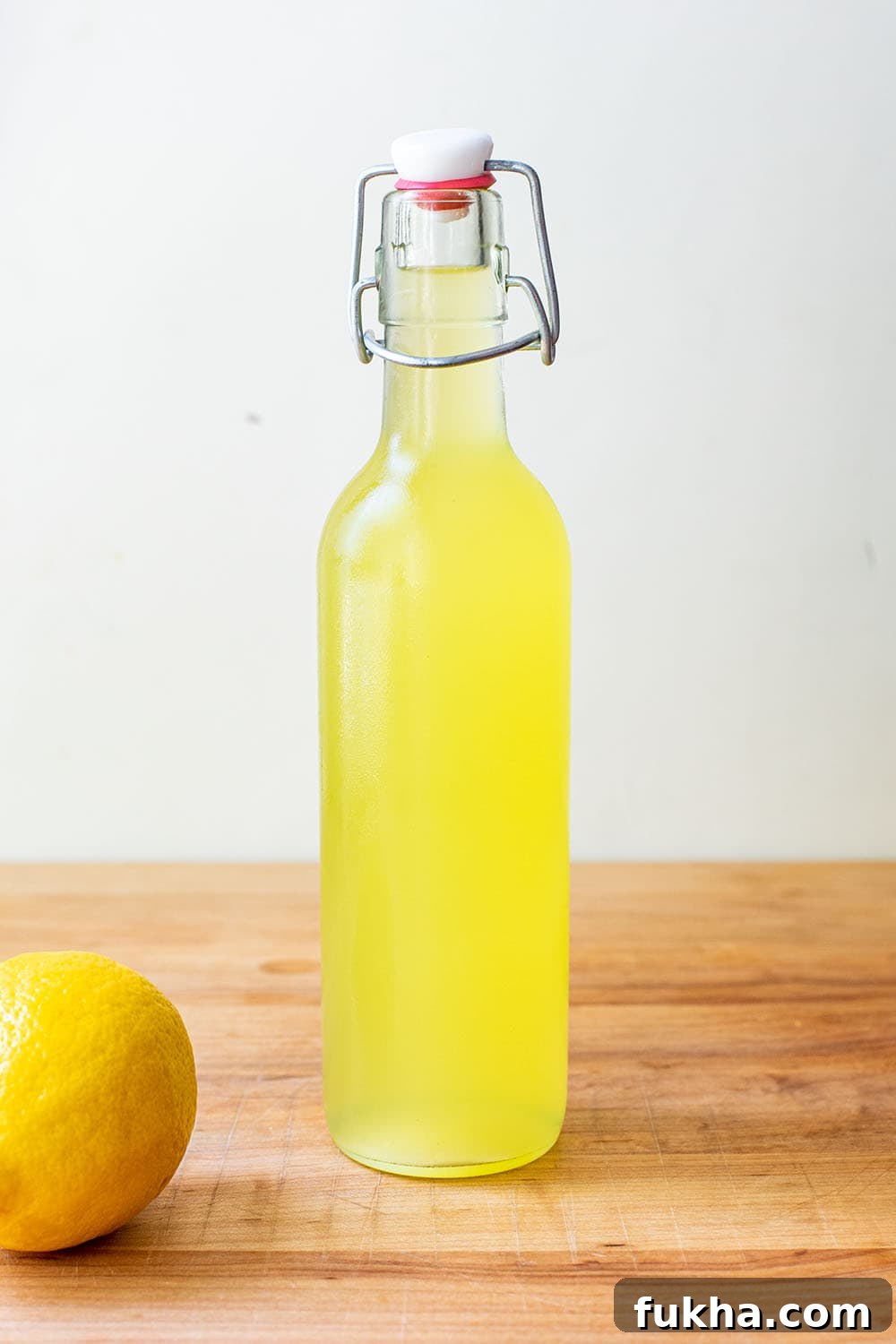
This recipe began during a trip to Positano, where local limoncello inspired a simple homemade version. After a few refinements, this method delivers clear, bright lemon flavor with balanced sweetness and the clean bite of a neutral, high-proof spirit.
How it works
Homemade limoncello uses four basic ingredients: high-proof neutral spirit (Everclear or similar), organic lemons, sugar, and water. The essential technique is maceration: lemon peels are steeped in alcohol to extract the fragrant, flavorful lemon oil from the zest. After a week of infusion, the peels are removed and the alcohol is blended with a cooled simple syrup (equal parts sugar and water). The syrup tames the alcohol and rounds the mouthfeel, producing a smooth, drinkable liqueur.
Ingredient notes
- Organic lemons: Use organic fruit to avoid pesticide residues and waxes that inhibit oil extraction. The yellow zest contains the aromatic oils that define limoncello; remove only the colored rind and avoid excessive white pith, which brings bitterness.
- High-proof neutral spirit: A strong, neutral-tasting spirit extracts oils more effectively and withstands dilution. Everclear at higher proofs is a common choice; the final liqueur will be diluted by the simple syrup, so starting strength matters.
- Simple syrup: A basic 1:1 syrup (equal parts granulated sugar and water) sweetens and softens the infused alcohol. Adjust sweetness to taste after combining, keeping in mind chilling can mute sweetness slightly.
The recipe card below includes exact quantities and yields.
Everclear versus vodka
Many recipes suggest using vodka, but most vodkas are bottled at 80–90 proof (40–45% ABV). When the infusion is diluted with sugar and water, starting with a lower-proof spirit yields a weaker, less viscous limoncello and may freeze in a home freezer. Higher-proof neutral spirits extract zest oils more efficiently and produce a balanced final ABV after dilution. If you use a lower-proof spirit, reduce the syrup slightly and then adjust sweetness to taste.
Step-by-step instructions
Step 1.
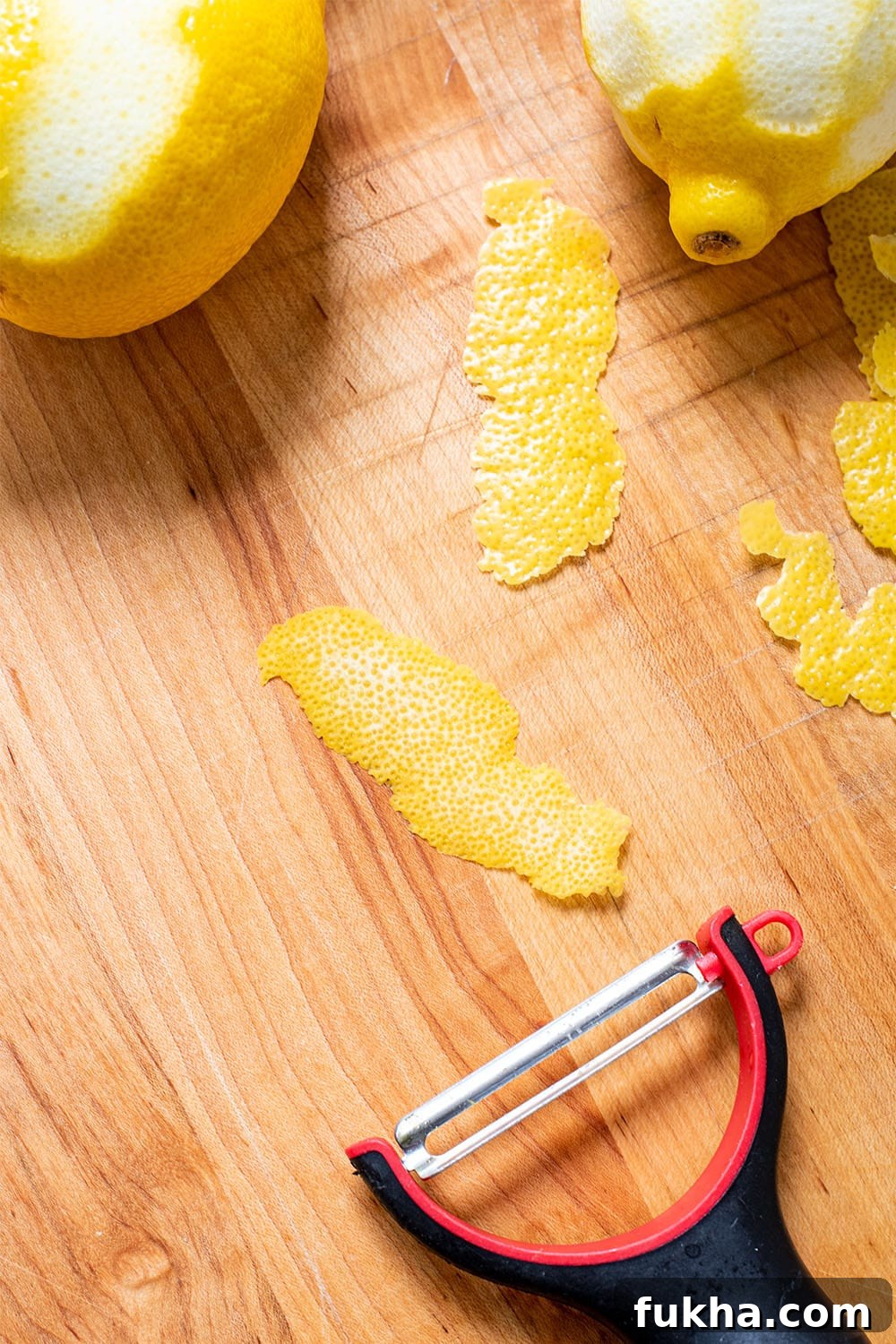
Wash and dry the lemons. Using a Y-peeler or a sharp vegetable peeler, remove only the yellow outer rind in thin strips. Try to avoid the white pith as much as possible to prevent bitterness.
Step 2.
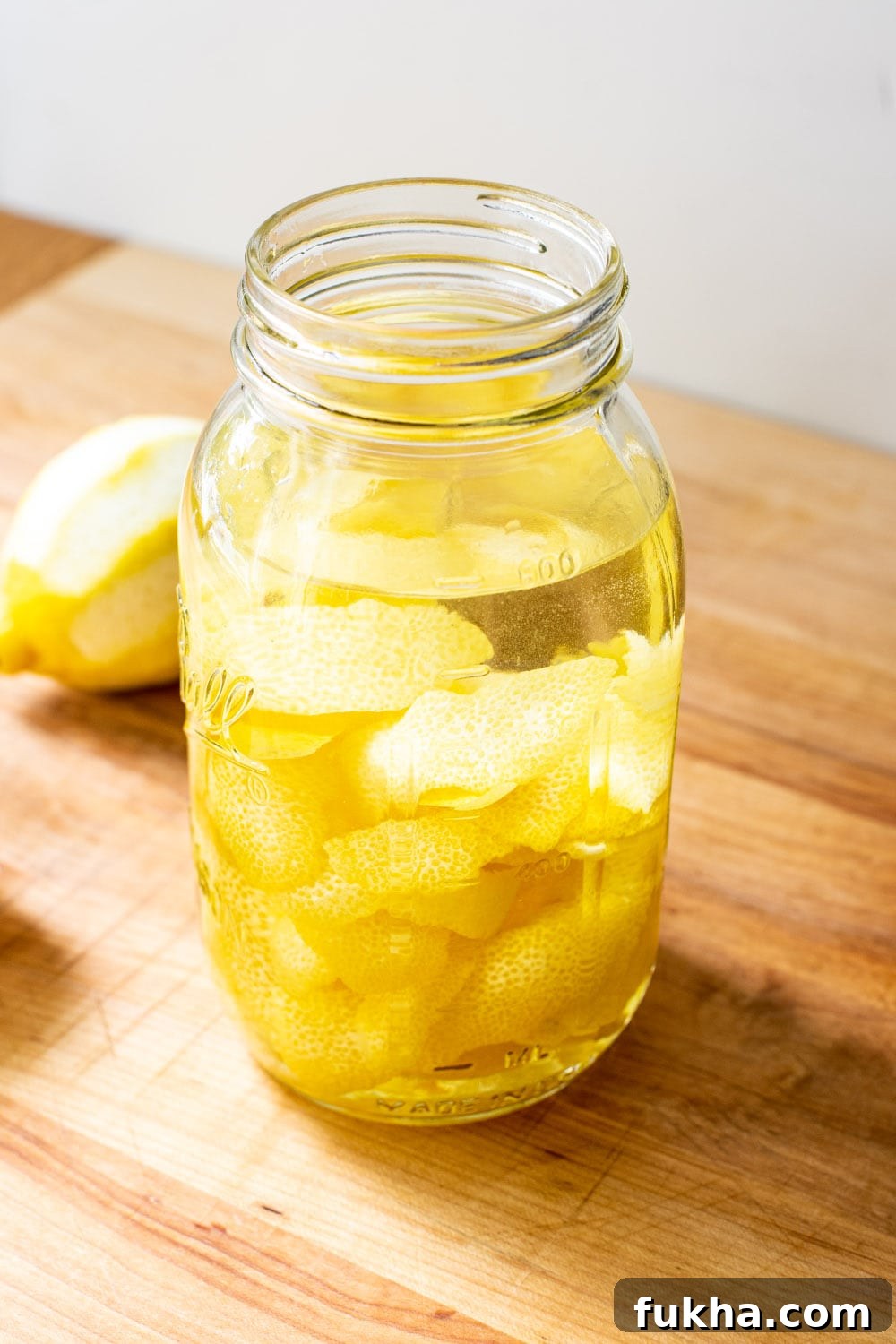
Place the lemon peels in a large, sealable glass container and cover with the spirit. Seal the jar and leave it in a cool, dark place for seven days, gently inverting once or twice to mix the contents.
Step 3.
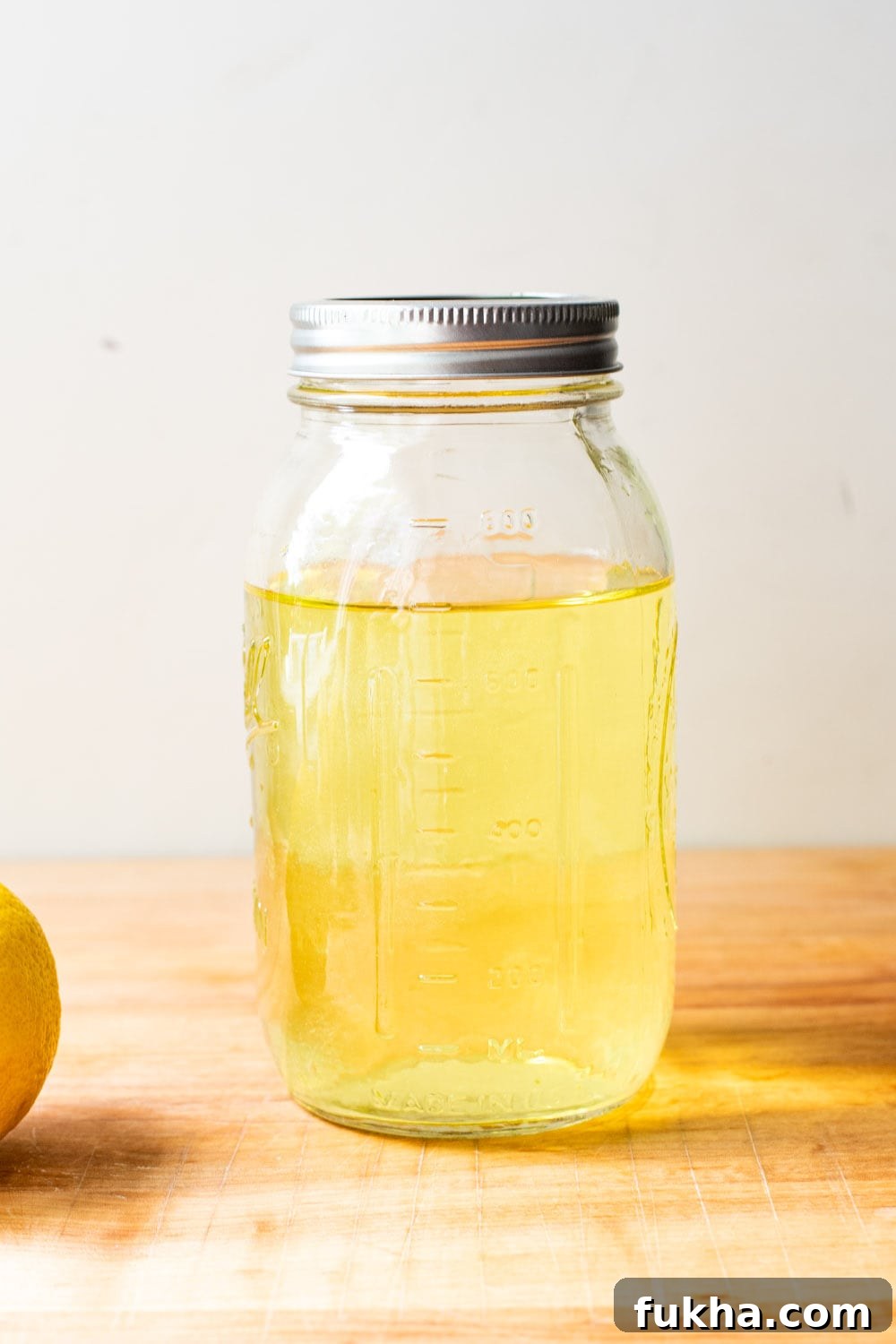
On the eighth day, strain the infused alcohol through a fine mesh sieve or cheesecloth to remove the peels. Discard the solids.
Step 4.
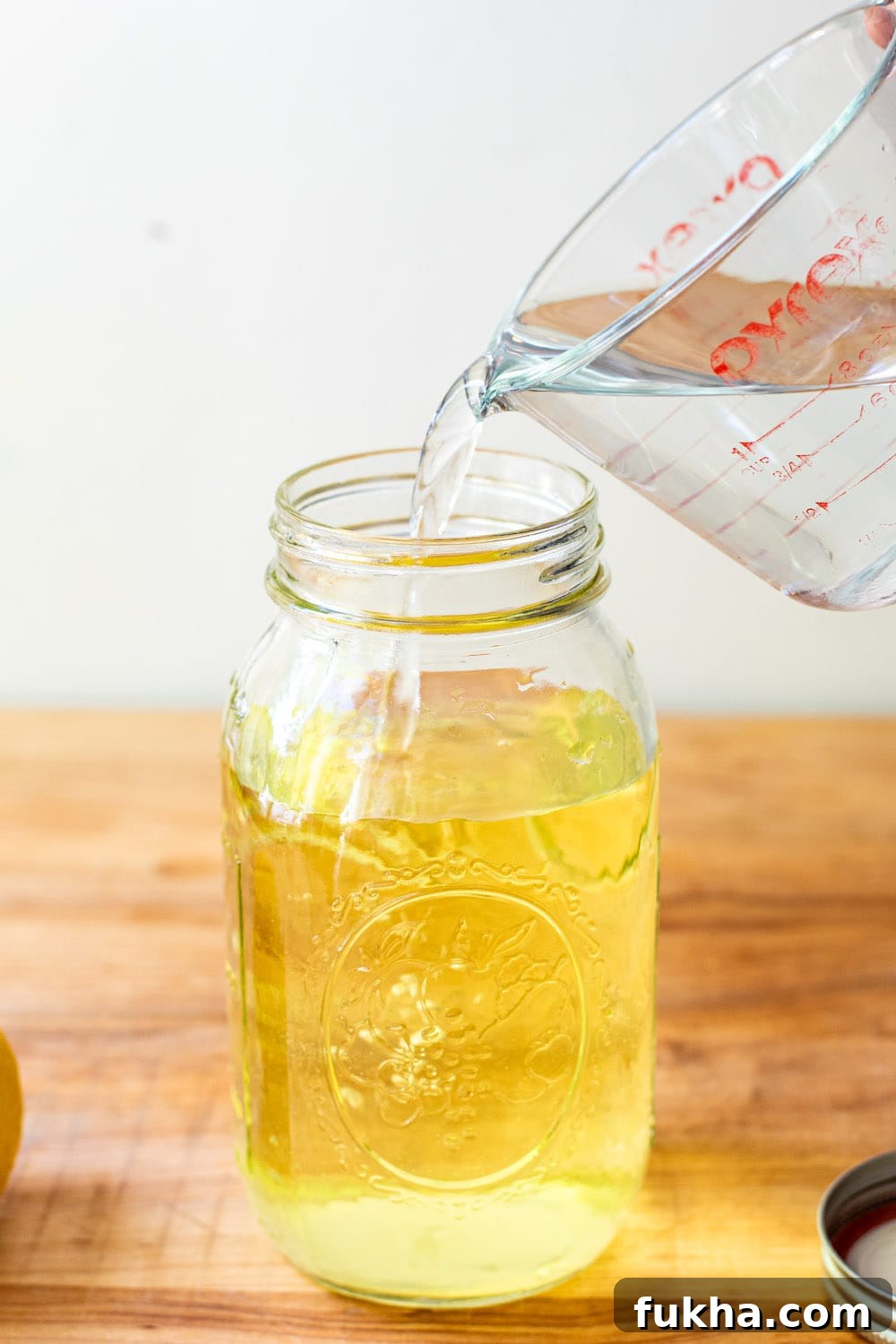
Make the simple syrup by heating equal parts water and sugar in a saucepan until the sugar dissolves. Allow the syrup to cool to room temperature, then combine it with the strained lemon-infused alcohol. Taste and adjust sweetness if desired. Bottle and chill—limoncello is best served well chilled.
Expert tips
- Peel carefully: keep the zest thin and avoid including the bitter white pith. A sharp peeler or paring knife helps control thickness.
- Use a single large jar: it’s easier to combine and strain one large batch than several small jars, though either approach works.
- Adjust sweetness after combining: chilling the limoncello will slightly reduce perceived sweetness, so taste cold and fine-tune with extra syrup if needed.
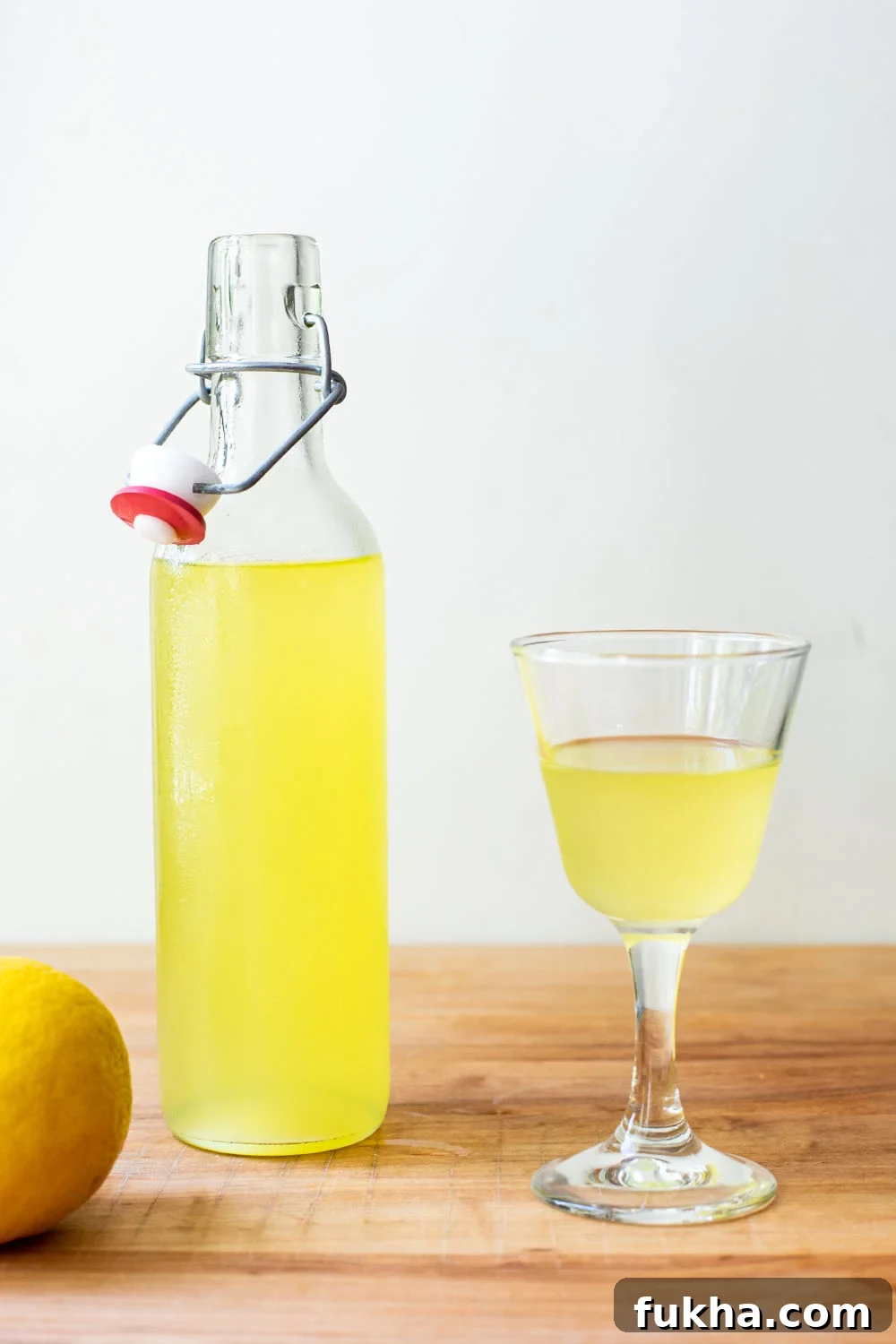
- Storage and serving: transfer limoncello to smaller, freezer-safe glass bottles for long-term storage. Keep bottled limoncello in the freezer so it’s always ice cold for serving.
Frequently asked questions
What is the approximate ABV of this recipe?
Using a high-proof spirit such as 151 proof and diluting with the listed amount of syrup, the final liqueur will be roughly 29% ABV (about 58–60 proof), which is common for limoncello.
Can I steep the lemons longer than seven days?
You can extend the infusion slightly, but very long steeping may extract bitter compounds. Seven to eight days is a reliable window for bright lemon flavor without off-flavors.
How much limoncello does this make?
This scale makes just over three 750 ml bottles of finished limoncello, depending on evaporation and how you bottle it.
Authentic Limoncello Recipe
Ingredients
- 10 medium or large organic lemons
- 1 liter high-proof neutral spirit (for example, 151 proof)
Simple syrup (makes about 7 cups)
- 5 1/2 cups water
- 5 1/2 cups granulated sugar
Yield and times
Servings: about 42 two-ounce servings. Prep time: ~25 minutes active. Infusion time: 7–8 days. Total time: 8 days.
Instructions
- Peel the lemons, removing only the yellow zest. Avoid the white pith to prevent bitterness.
- Combine the peels and the spirit in a large, sealable glass jar. Seal and let sit for 7 days in a cool, dark place, gently inverting the jar once or twice during the week.
- On day eight, strain out the peels and discard them.
- Prepare the simple syrup by heating water and sugar in a saucepan over medium heat, stirring until the sugar dissolves. Cool to room temperature.
- Mix the cooled syrup with the strained lemon-infused alcohol. Taste and adjust sweetness if desired. Bottle and chill—store in the freezer and serve ice cold.
Notes
Use a sharp peeler for thin zest. A one-gallon jar or large mason jar works well for infusion and straining. Use a small funnel to bottle into freezer-safe glass bottles. Keep limoncello frozen so it’s ready to serve chilled.
Nutrition (approximate per 2 oz serving)
Calories: 164 kcal; Carbohydrates: 28 g; Sugar: 27 g; Protein: 0.3 g; Fat: trace. Nutrition information is approximate.