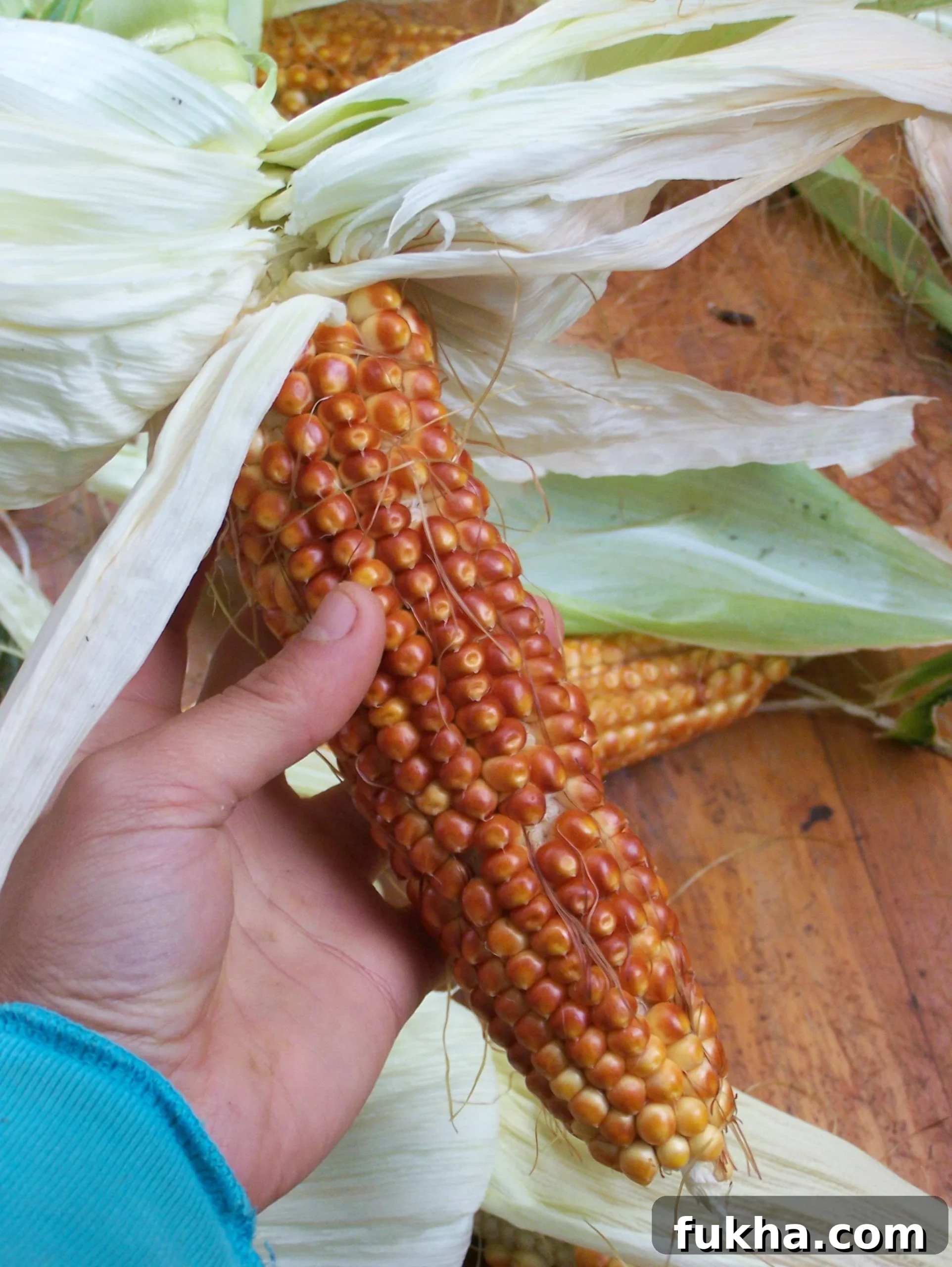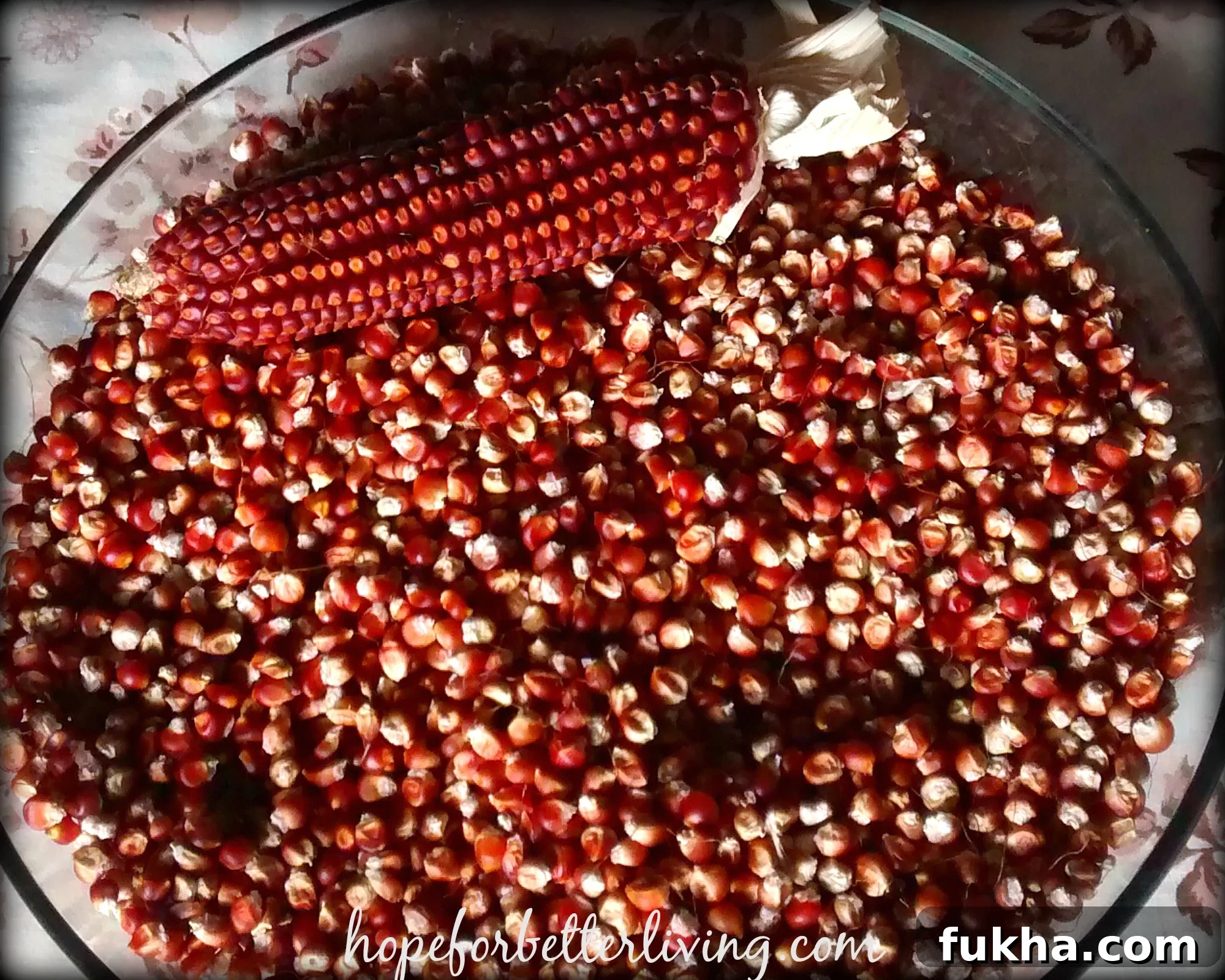
While sweet corn is the familiar choice for most home gardeners — who doesn’t love its rich, milky flavor? — there are several other types of corn worth exploring. Two years ago a friend gave me a jar of heirloom seed labeled as a “grinding” variety. I had never milled whole corn kernels before, but I was eager to learn. I later learned the seed was Floriani Red Flint corn, an Italian heirloom that mills to a pink-tinted cornmeal or flour. It’s excellent in baked goods and works surprisingly well as a gravy thickener, offering a natural alternative to potato starch or commercial flours.
Because I found a practical use for the corn without needing an entire field, I saved some seed and planted it the following spring. Despite an unusually wet season, the plants grew well and averaged about seven feet tall. I planted in a single row, naively hoping for both milling kernels and a bit of shade for my other crops, but that taught me an important lesson about pollination. Some ears developed full, even rows of kernels while others showed gaps. I soon remembered that corn needs several rows planted close together — or a block planting — to ensure good pollination and full cobs. Lesson learned for next season.
As harvest approached, I had questions about drying and shelling. I consulted the friend who gave me the seed and learned the traditional method:
- Leave ears on the stalk as long as possible, harvesting before the first hard frost. If the weather turns wet, harvest earlier to prevent rot.
- Peel back the husks to expose the kernels to air.
- Either remove the husks and bind ears in groups of six to eight, or tie the husks tightly for hanging. Keep in mind husks will shrink as they dry.
- Hang the corn in a warm, well-ventilated place out of direct sunlight for drying.
- When kernels are hard enough that you cannot dent them with a fingernail, they are ready to be removed.
- Shell immediately with friends at a shelling party or store and shell at your own pace over the winter.
I followed those steps. After stripping dry ears from the stalks, I carried them home and peeled back the husks. The live color of fresh corn had dulled during drying; some ears that looked orange-yellow on the stalk deepened in color as they dried. I tied the husks with strips of cloth at first, but later switched to more secure twine after a few ears slipped and fell as the husks shrank.
Once thoroughly dry, I removed the papery husks and began shelling. This variety of flint corn has small hook-like points at the tip of each kernel, which can be rough on bare hands, so leather gloves are a good idea. To shell, I gripped an ear with both hands and twisted in opposite directions; kernels begin to pop off and fall into a bowl or pan. If you’re shelling many ears, spread a cloth on the table to catch kernels and make cleanup easy. Watch for any sign of mold if the corn was stored in damp conditions, and discard any affected ears.
When finished, I poured the fully dried kernels into mason jars and sealed them. Properly dried and stored, corn kernels keep well and are ready for milling. You can grind corn through a grain mill like you would wheat; open the grinder as wide as it will go for the first pass. One cup of whole corn kernels yields roughly 2 1/4 cups of corn flour. About 1/2 to 3/4 cup of this flour will thicken 4 to 5 cups of broth into a flavorful gravy, depending on desired thickness.
Grow and Grind Heirloom Corn
Growing, drying, and milling heirloom corn is a rewarding process that connects garden work to the kitchen. It requires a little planning for pollination and drying space, but the result — a home-milled, flavorful cornmeal or flour — is well worth the effort. Whether you use it in baked goods, as a thickener, or as a pantry staple, grinding your own heirloom corn offers flavor, control, and a gratifying link to traditional foodways.