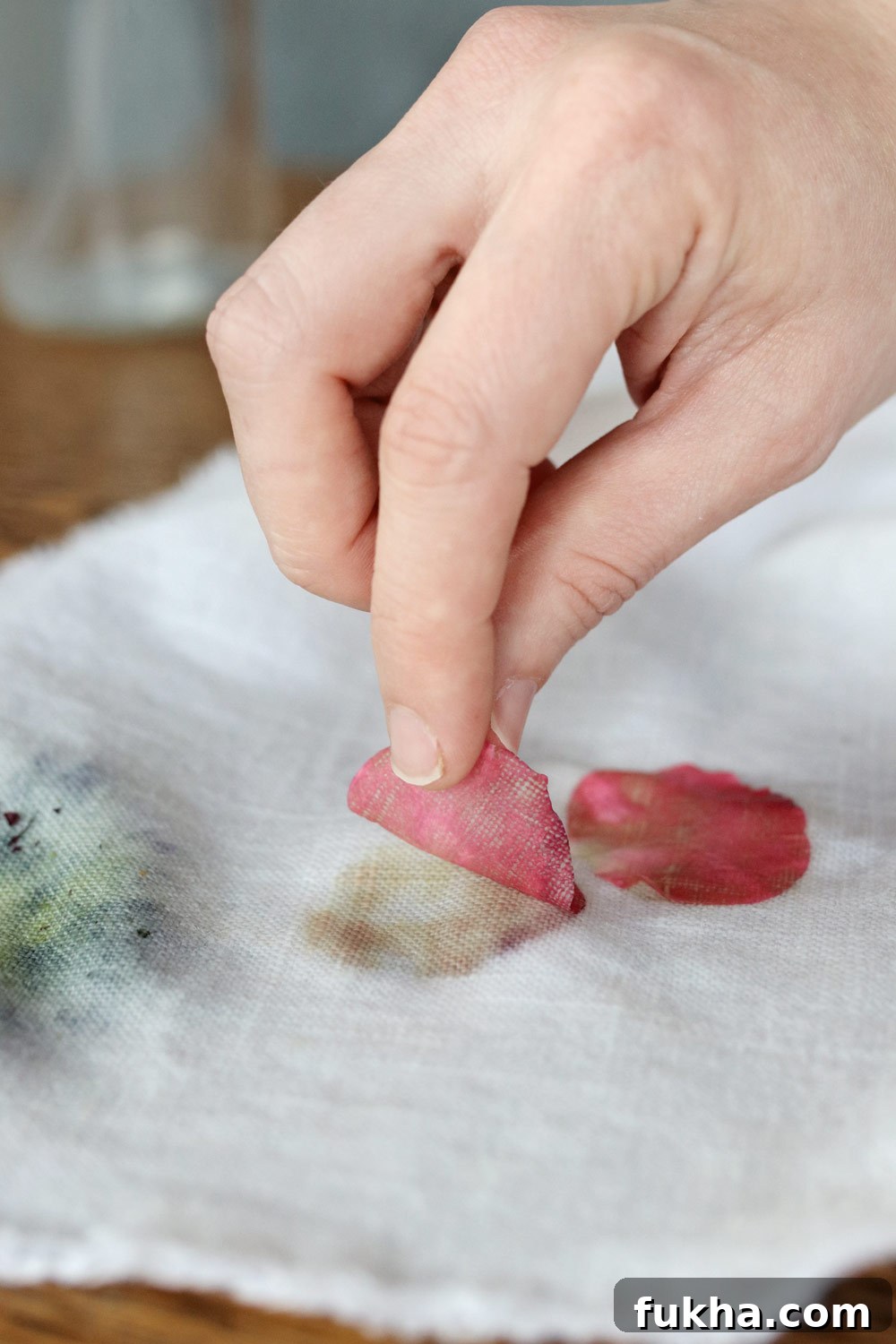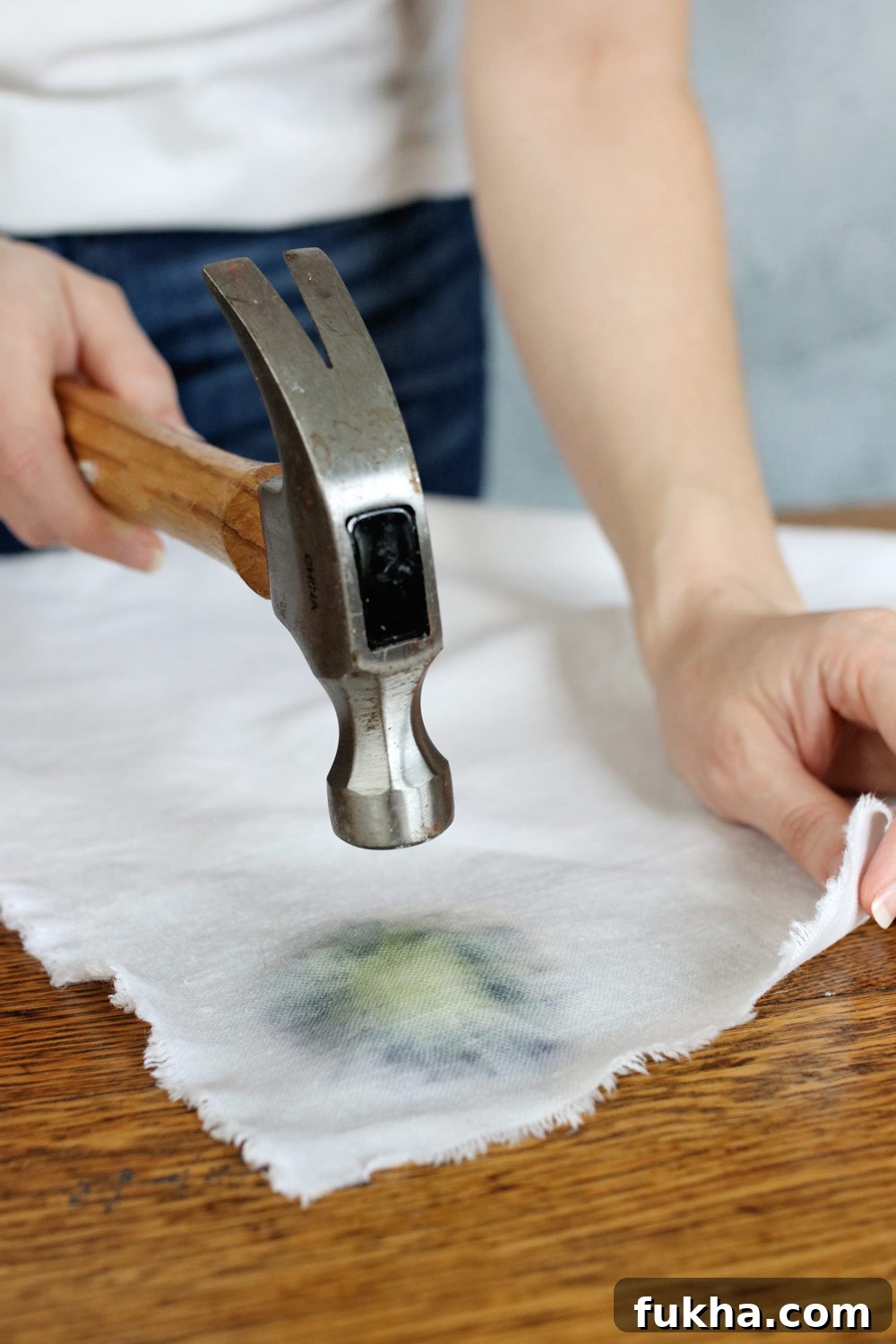
I’ve always enjoyed experimenting with natural dyes like turmeric, beets, and tea. They create soft, elegant hues you don’t get from synthetic dyes and they’re easy to work with — just simmer and steep. Lately I wanted brighter, more floral tones, so I decided to try using fresh flowers to dye fabric. Rather than brewing large pots of dye, I started with a simpler technique: flower pounding.
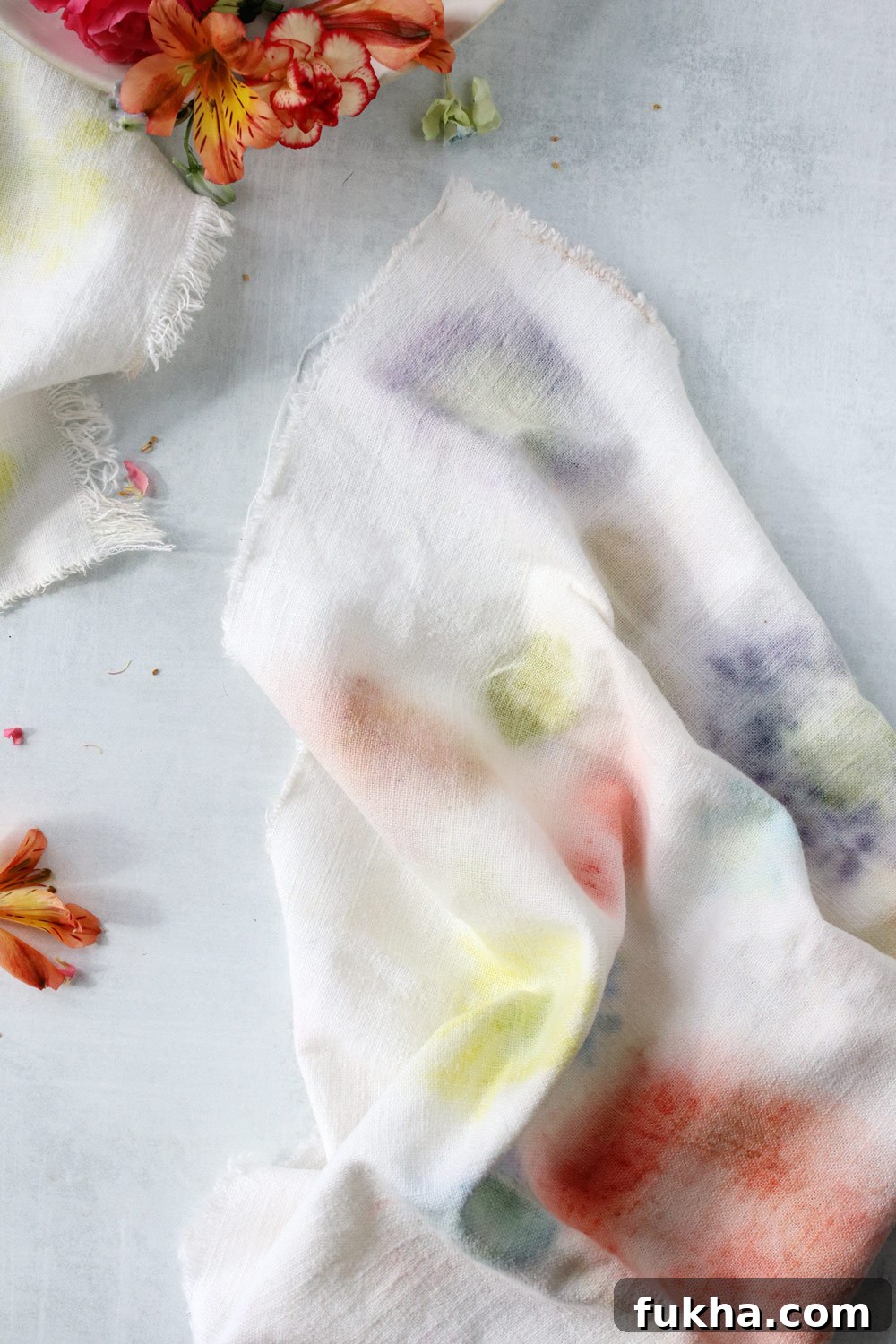
Flower pounding transfers pigments directly from petals and leaves onto fabric using a hammer or mallet. When paired with a fixative such as alum salts, the colors can become surprisingly vivid and colorfast, often brighter than many spice- or vegetable-based dyes. The results range from soft, watercolor-like washes to bolder floral impressions depending on your materials and technique, making the method versatile for small projects.
Below is a straightforward, approachable way to make watercolor-style napkins using fresh flowers, a hammer, and an alum solution.
DIY Watercolor Napkins with Flower Dyeing
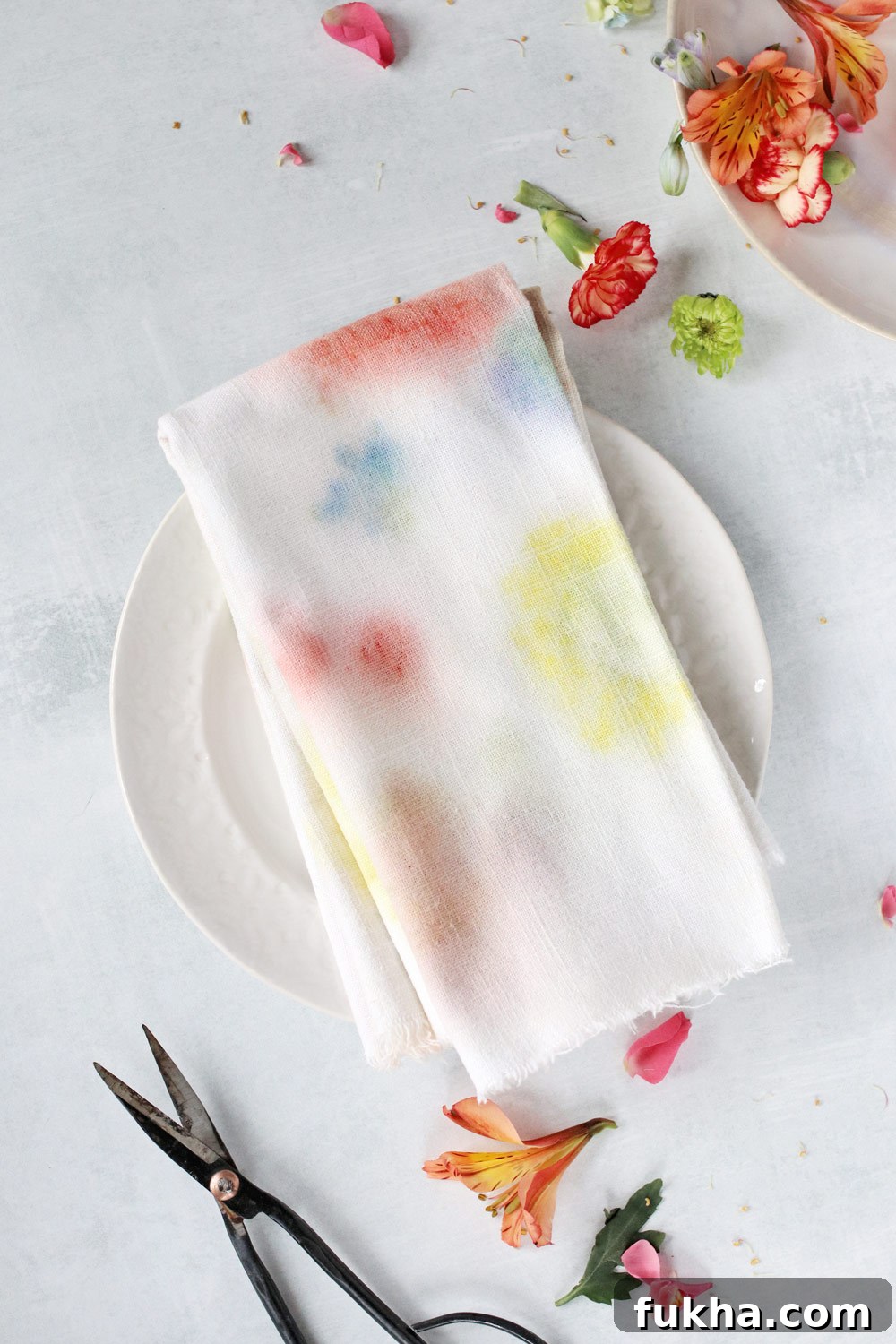
With just fresh flowers, a hammer, a little alum-water spray, and a few napkins, you can create unique, painterly pieces in less than an hour.
Choose flowers with vivid pigments—deep red roses, geranium petals, and black-eyed Susan are excellent choices—and don’t overlook textured greens like fern fronds or geranium leaves to add contrast. You can forage from a garden or greenhouse depending on the season; the brighter the petals, the stronger the transfer will be.
To help set the color and improve washfastness, use alum as a fixative. You can dissolve alum in water and simmer your fabric for an hour, or make a quick alum spray by dissolving a small amount of alum in warm water and placing it in a glass spray bottle. Spray the fabric before and after pounding to encourage the pigment to bind to the fibers.
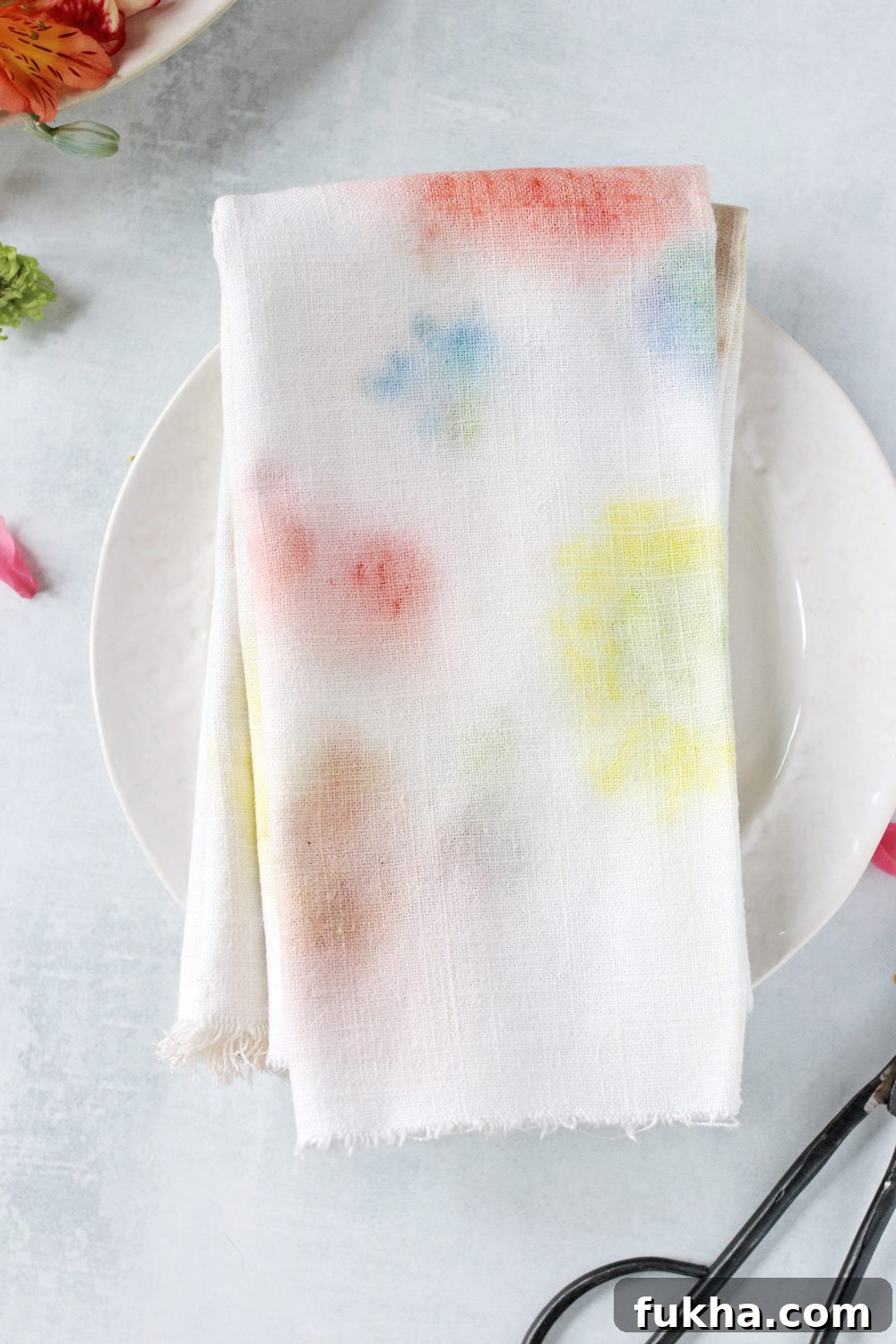
Some tutorials promise distinct, crisp floral outlines, but your results will vary with fabric type, petal thickness, and how much fixative you use. On medium-weight linen, I achieved a softer, impressionistic silhouette rather than a sharply defined print. I liked the painterly effect, though next time I plan to use more flowers, less alum spray, and skip ironing, which can sometimes scorch delicate fabrics.
How to Flower Pound on Fabric
Supplies
- A selection of fresh flowers and leaves
- Hammer or rubber mallet
- Alum salts
- Glass spray bottle
- 100% cotton or linen napkins (I used linen)
- A sturdy, hard surface
Instructions
1. Wash and dry your fabric first to remove sizing or finishes that could resist the pigment.
2. Make the alum spray by dissolving about 1 tablespoon of alum in warm water. Pour the solution into a glass spray bottle and fill the rest with water. Shake to combine.
3. Arrange your flowers and leaves on a hard surface. When you’re happy with the layout, place a napkin over the arrangement so the petals sit directly under the fabric where you want the design to appear.
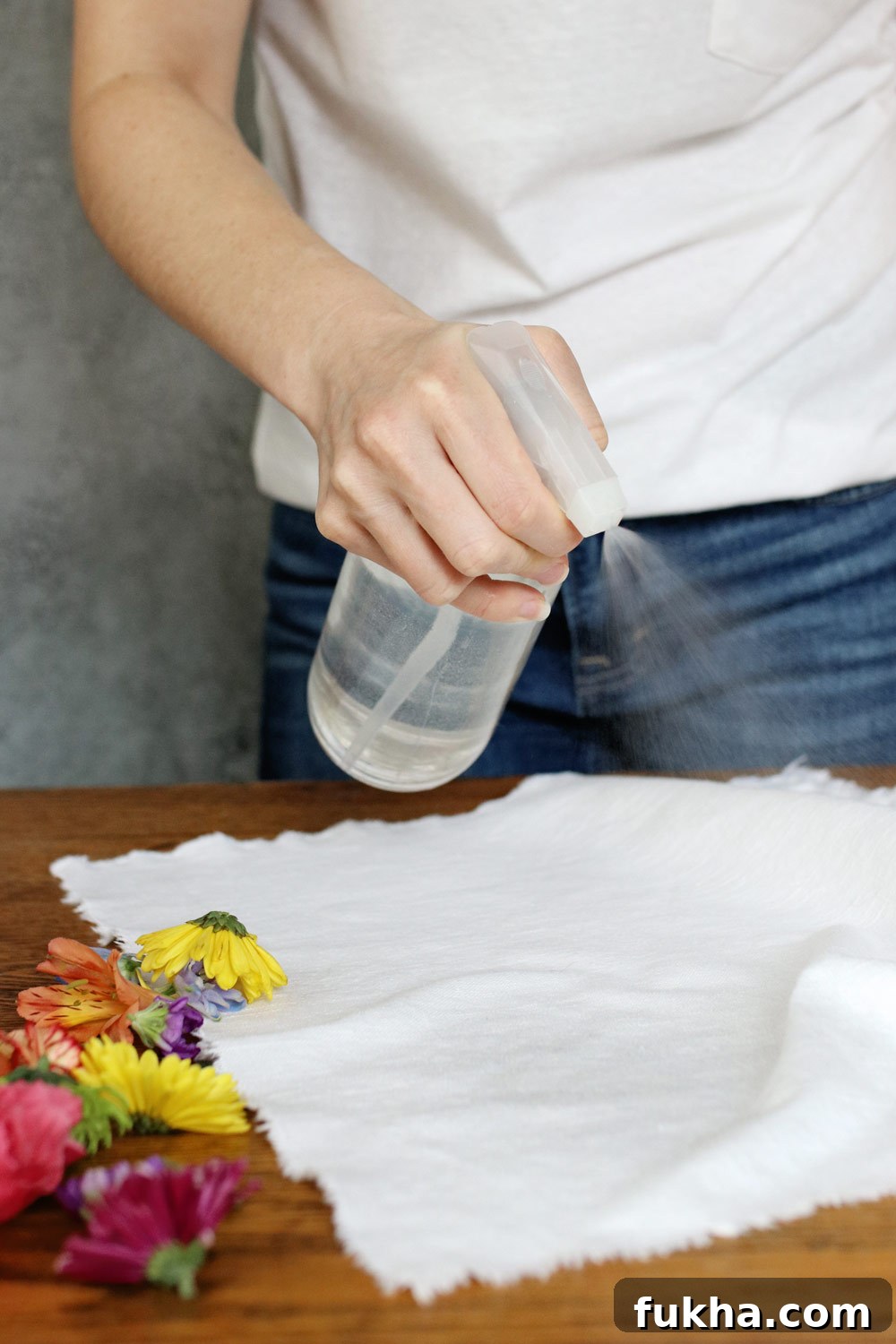
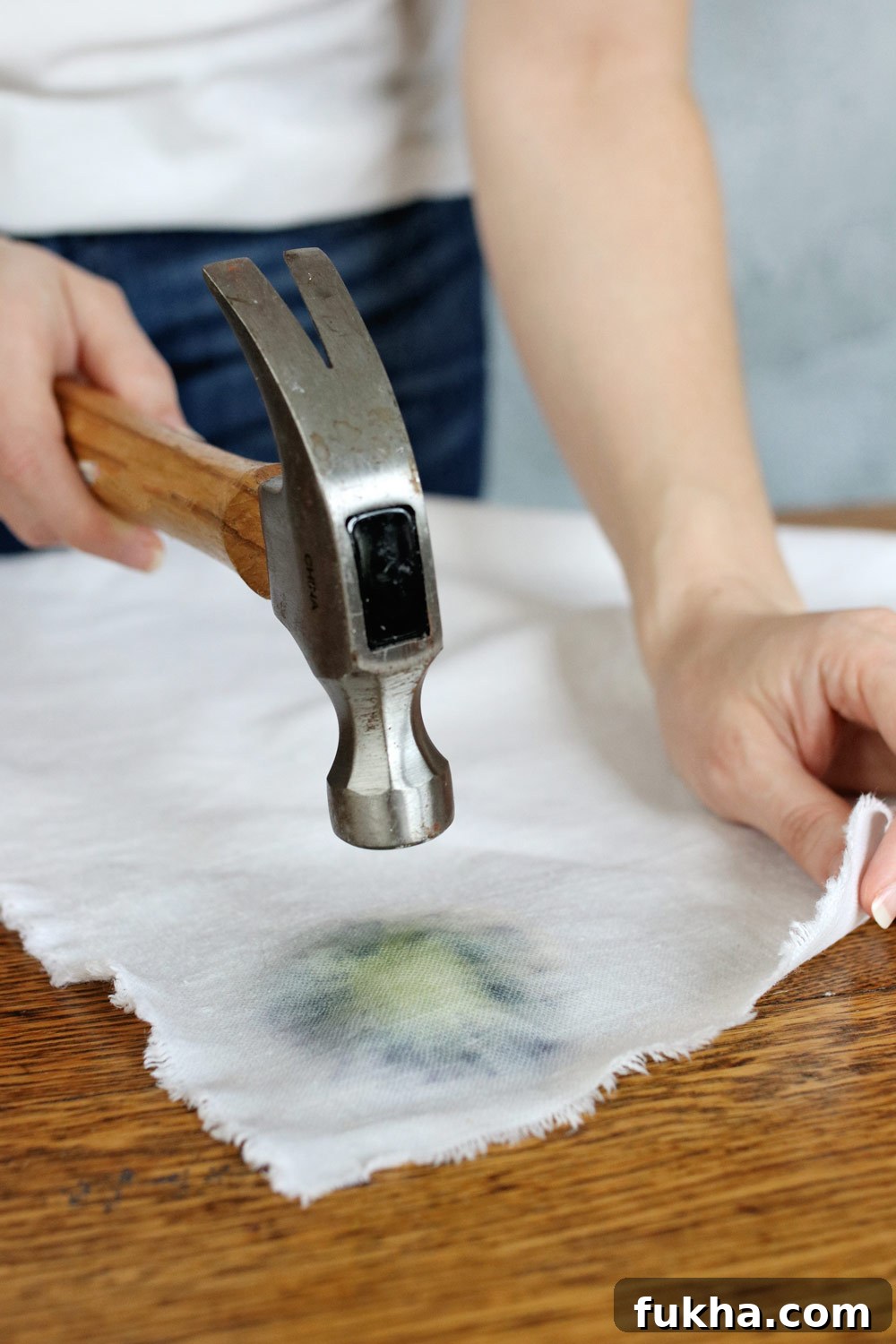
4. Lightly spray the fabric with the alum solution until the petals show through. Hold the fabric steady and begin gently but firmly hammering the petals in place. You’ll see pigment transfer through the cloth as you work. Continue pounding until you achieve the level of color you like, then mist lightly again with the alum spray to help the pigment set.
5. Remove the crushed petals, shake off any debris, and lay the napkins flat to dry. Some guides recommend heat-setting the dye with a hot iron for a few minutes, but be cautious—high heat can scorch natural fibers or char remaining plant matter. If you try ironing, test on a scrap piece first.
Flower pounding is a low-cost, creative way to decorate fabric with natural pigments. Each piece will be one of a kind, and the slight unpredictability is part of the charm. If you enjoy hands-on, botanical crafts, give it a try and experiment with different flowers, fabrics, and amounts of alum to find the look you prefer.
Will you try flower dyeing for yourself?