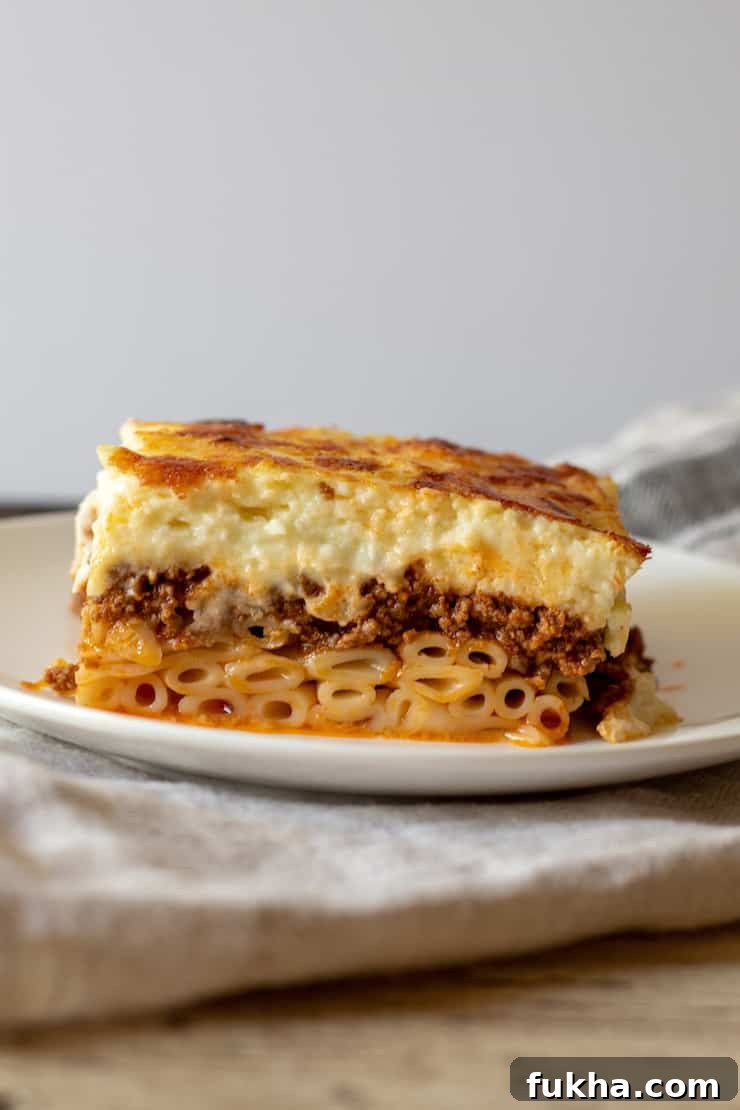
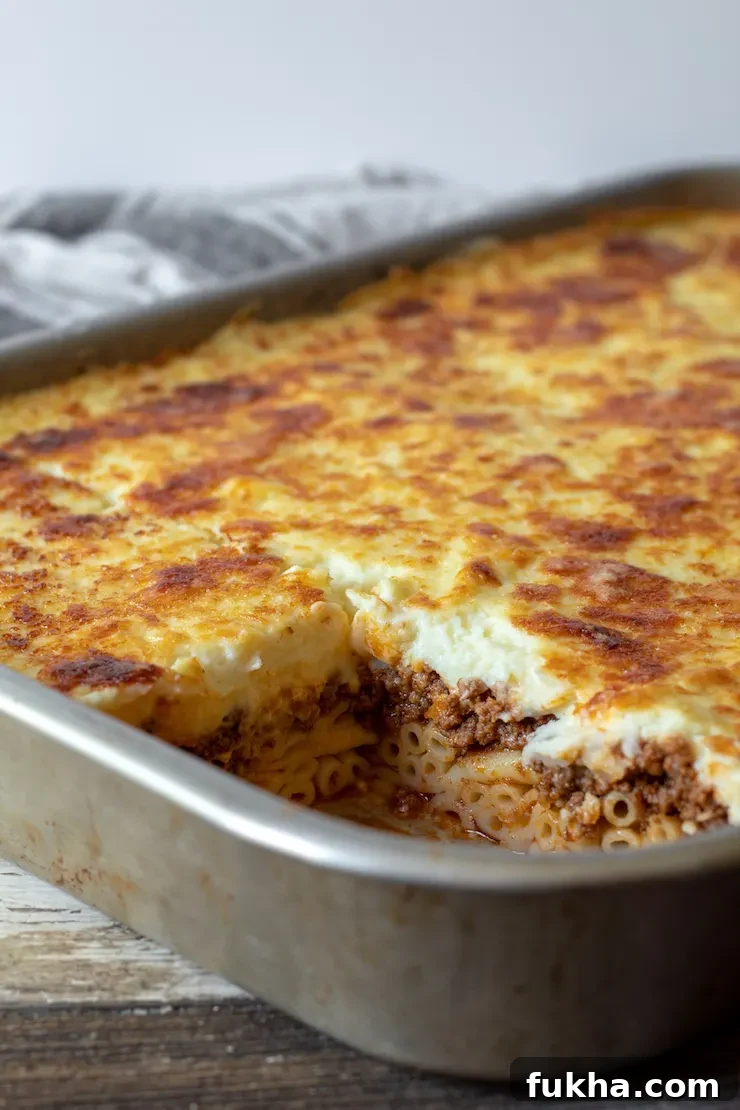
Authentic Pastitsio: a Greek lasagna with layers of long pasta, cinnamon-scented beef ragù, melted Kasseri cheese and a silky béchamel topping. Classic Greek comfort food and a crowd favorite.
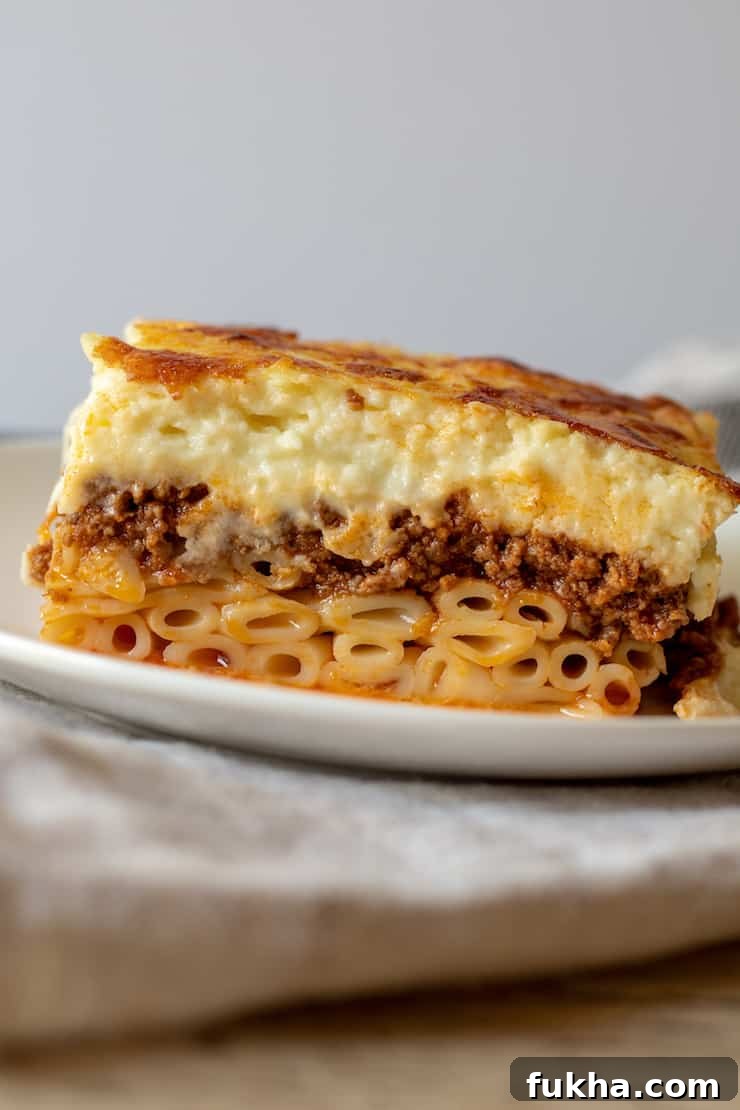
I love Greek food — from neighborhood festivals to family-style church luncheons — and pastitsio is one of those dishes everyone seems to adore. This version came from a conversation I had while substitute teaching, when a colleague named Flora generously shared her grandmother’s recipe and a few family tips. I followed her advice, including letting the meat sauce simmer for hours, and the result was an intensely fragrant, deeply satisfying pastitsio that filled the house with Greektown aromas while baking.
Pastitsio is essentially Greek lasagna: layers of long tubular pasta, a cinnamon-laced beef ragù, plenty of grated cheese and a rich béchamel. It’s a labor of love but straightforward to make, and it benefits from prepping the sauce a day ahead. The recipe below reflects Flora’s approach — grounded in family tradition — and yields a large, comforting dish ideal for gatherings or meal prepping.
What are pastitsio noodles?
The traditional noodles are long, wide tubes made specifically for pastitsio. If you can’t find them, mostaccioli or similar long tubular pasta works well (avoid ridged penne). Cook the pasta just short of al dente, toss with a beaten egg to help bind the layer, and spread evenly in the pan.
What is Kasseri cheese?
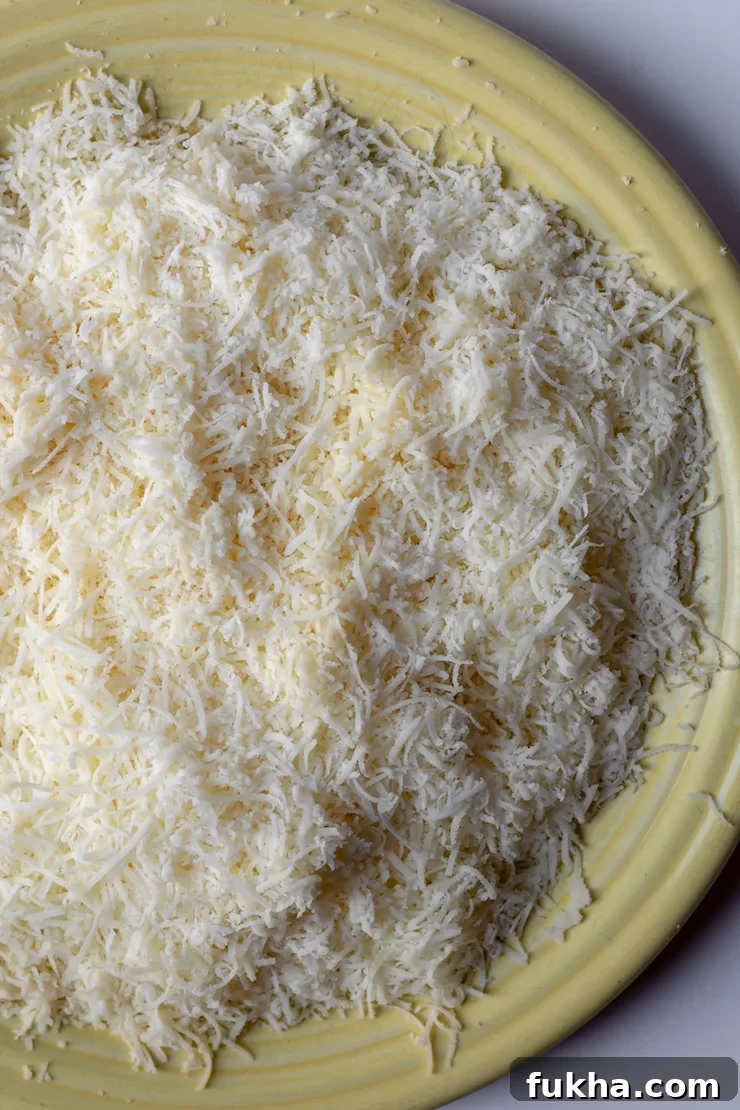
Kasseri is a Greek cheese that melts gracefully, with a slightly sharp, salty flavor. It’s perfect for pastitsio, lending a savory, tangy note as it browns. If you can’t source kasseri, asiago or a shredded Italian blend are good substitutes. Flora recommends plenty of cheese — she’s generous with it — and it’s one of the elements that makes the dish so irresistible.
How to layer pastitsio
The classic assembly goes like this: a bottom layer of tossed noodles, a generous sprinkling of grated cheese, the rich meat ragù, more cheese, then a thick layer of béchamel, extra cheese and a drizzle of melted butter to encourage a golden, flavorful crust. Flora’s béchamel is velvety and not as intimidating as it sounds — it’s simply a butter-and-flour roux slowly combined with milk, finished with eggs for richness.
This dish is best when the meat sauce is made a day ahead and refrigerated — the flavors deepen with time. On the day you bake, assemble the layers, pour over the béchamel, top with extra cheese and melted butter, then bake until bubbling and browned. Let it rest briefly before slicing so it holds together neatly.
If you enjoy Greek flavors and want a comforting, impressive main course, give this pastitsio a try. It’s a great recipe to make for company or to prepare ahead and enjoy all week. Best, Kelly
Ingredients
- 3 pounds ground beef (I used ground sirloin)
- 1 large onion, chopped
- 2 (15-ounce) cans tomato sauce
- 1 tablespoon ground cinnamon
- Coarse kosher salt, to taste
- 1 package pastitsio noodles (or mostaccioli)
- ½ pound (or more) Kasseri cheese, grated — about 4 cups (Asiago or an Italian blend can substitute; Flora often uses up to 1 pound)
- 4 eggs
- 1½ sticks unsalted butter (total)
- 1 cup all-purpose flour
- 5½ cups whole milk
Instructions
- Make the meat sauce a day ahead. Heat a little olive oil in a large pot over medium heat, add the chopped onion with a generous pinch of salt and cook until translucent. Add the ground beef, breaking it up and cooking until no longer pink.
- Stir in the tomato sauce and cinnamon, season with salt, bring to a simmer, then cover slightly askew and let the sauce stew gently for about 3 hours, stirring occasionally. Cool and refrigerate overnight.
- When ready to assemble, bring the sauce to room temperature or warm it gently. Grate the cheese and set aside (aim for at least 4 cups).
- Cook the pasta in well-salted boiling water until just under al dente (a minute or two less than package directions). Drain and, when cool enough to handle, toss the noodles with one beaten egg to help bind the bottom layer.
- Preheat the oven to 350°F (175°C). Lightly oil a large baking pan (a 12 x 18-inch pan works well). Spread the noodles evenly in the bottom, sprinkle with one-third of the grated cheese, then spoon the meat sauce over the noodles and top with another third of the cheese.
- Make the béchamel: in a large heavy pot, melt 1 stick of butter over medium heat. Whisk in the flour and cook, stirring, for 1–2 minutes. Gradually whisk in 5 cups of milk and bring to a gentle boil, stirring constantly until it thickens.
- In a separate bowl, beat 3 eggs with ½ cup milk. Temper this mixture into the hot béchamel by whisking a small amount of béchamel into the eggs, then gradually whisking the egg mixture back into the pot. Return to medium-high heat and cook, whisking, until thick and bubbly. Remove from heat and let rest a few minutes.
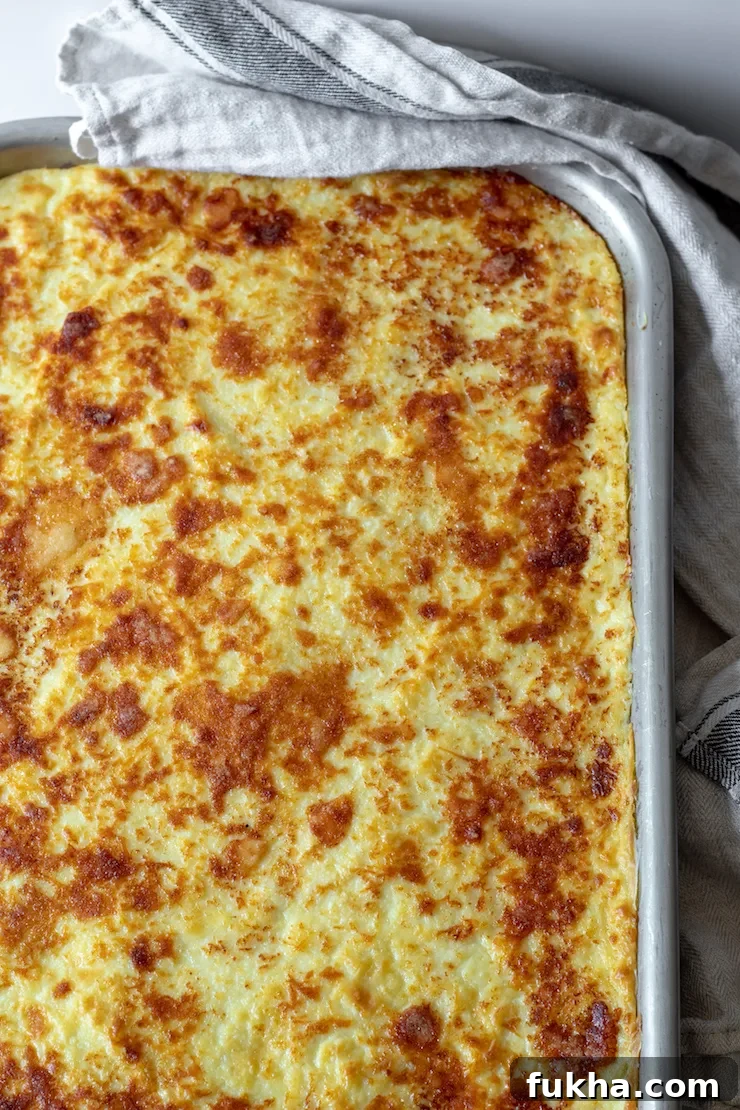
- Pour the béchamel over the meat and cheese layer, spread evenly, sprinkle the remaining cheese on top, and drizzle the melted ½ stick of butter over the cheese to help the top brown.
- Place the pan on a baking sheet and bake for about 1 hour until the top is browned and the center is hot. If needed, broil 3–5 minutes to deepen the color, watching carefully. Let rest 10 minutes before serving.
Recipe Notes
- The meat sauce benefits from a long, slow simmer and is best made the day before.
- Assembling takes roughly 30–45 minutes.
- Baking requires about 1 hour; resting helps the pastitsio slice cleanly.
- Use a very large pan (I used 12 x 18 inches). The recipe can be halved for a smaller pan.
Nutrition (per serving, approximate)
Calories: 690 kcal • Carbohydrates: 43 g • Protein: 40 g • Fat: 39 g • Saturated fat: 20 g • Sodium: 446 mg • Fiber: 2 g
*Adapted from my friend Flora’s grandmother and Flora’s own family tweaks.