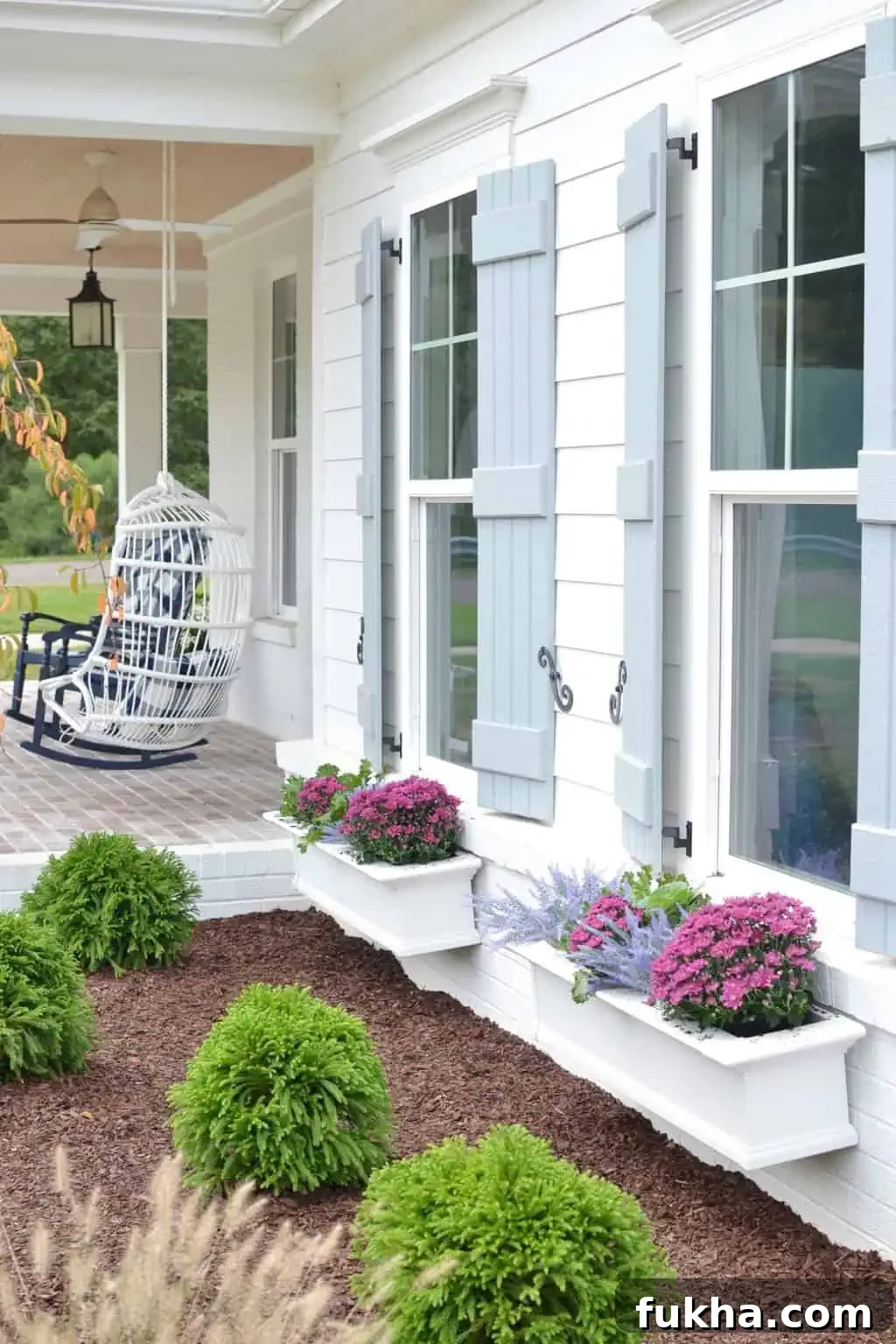
Today I’m talking about artificial window box flowers. If the idea of faux blooms in window boxes sounds tacky to you, read on—I hope to change your mind. I’ll share two simple tips to help you “cheat” your window boxes so they look full, polished, and much easier to maintain through the seasons.
Artificial Window Box Flowers
High-quality faux flowers and greenery have come a long way. Designers and homeowners alike increasingly use them indoors, and many of those same convincing options now work well outdoors when used properly. While some realistic faux stems can be pricey, they can also fool a casual passerby and save time and upkeep without sacrificing curb appeal.
If you’re comfortable with a few artificial sprigs inside your home, consider allowing a few in your exterior window planters too. When used sparingly and thoughtfully, faux accents can support your real plants and keep boxes looking great for longer.
Real and Faux Flowers for Fall Window Boxes
If you’re hunting for fall window box ideas, mixing real and artificial plants is an easy, practical approach. Below I describe how I combine both to create seasonal, low-maintenance displays that still read natural from the street.
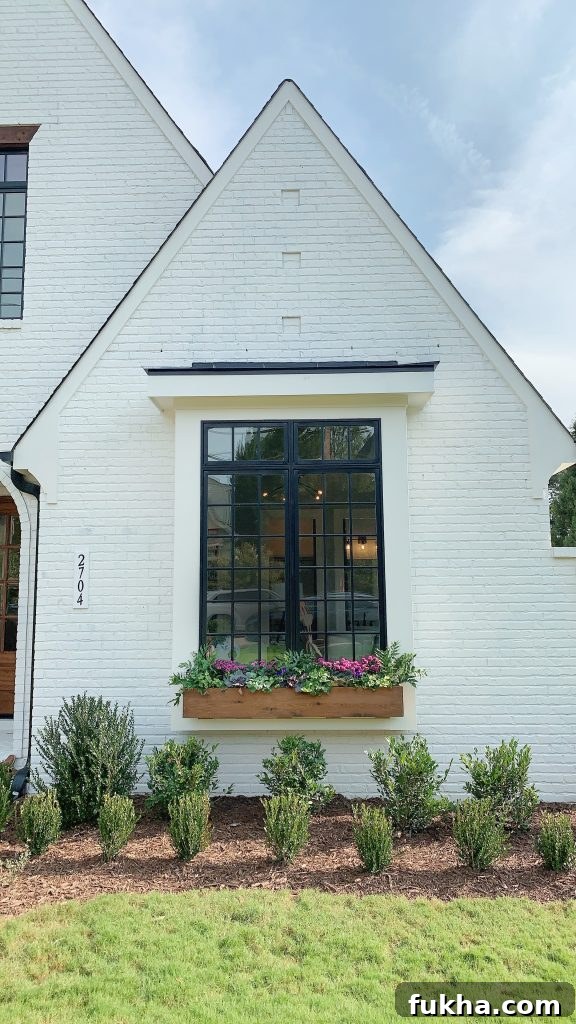
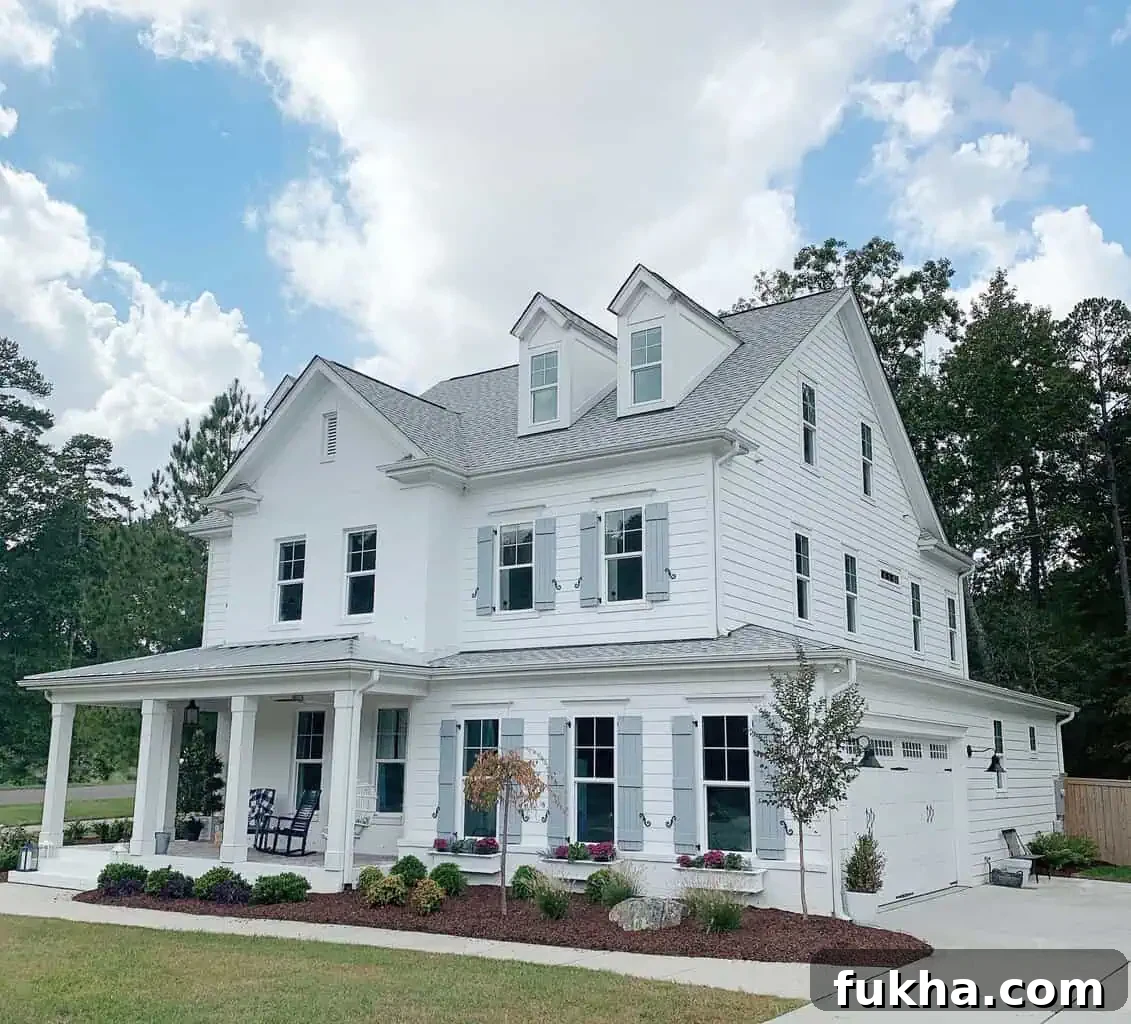
We live on a corner lot and our house sits prominently as you approach the neighborhood. With the backyard mostly settled, I’ve turned attention to the front—despite the daily clutter of bikes and toys on our walk. I still want the house to look welcoming from the street, and window boxes are a big part of that curb appeal.
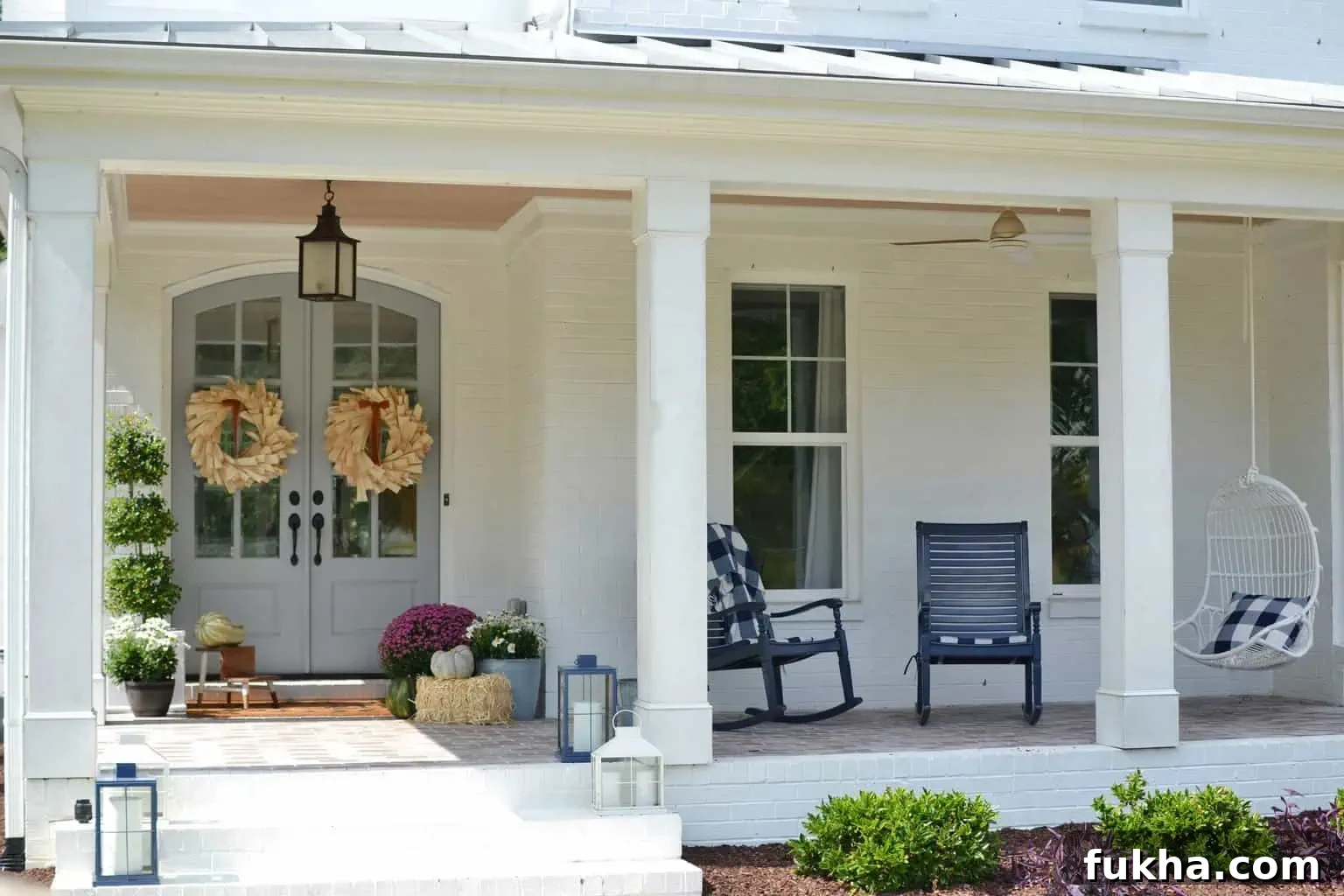
You don’t need to tend window boxes every day to have them look great. With four kids at home, daily maintenance isn’t realistic for me. Instead, I rely on a mix of real plants for seasonal color and a few carefully chosen faux pieces to fill gaps and maintain structure.
Decorating Fall Window Boxes and Adding Faux Flowers
I’m not a botanist, but I do have an eye for color and balance. After several seasons of trial and error, I’ve found a couple of practical hacks that deliver a polished result without constant work.
The most important principle is balance: let the real, most vibrant blooms be the stars and use artificial stems as subtle support. Faux lavender, trailing vines, or structured foliage work well as filler and can bridge the visual gaps when real plants begin to fade.
Passing Off Artificial Flowers in Your Window Boxes as Real
Mixing real and faux plants keeps a natural look and extends the lifespan of your display. For example, use a real focal plant—like mums for fall—and tuck in a few faux sprigs for volume and continuity. Choose UV-resistant outdoor-rated faux pieces if they will be exposed to direct sun.
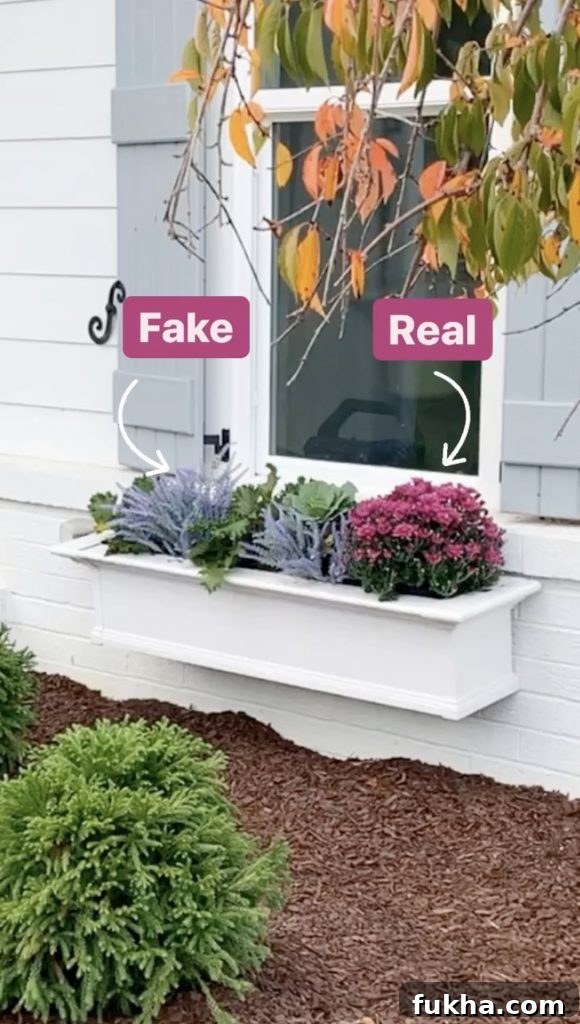
I typically add just one or two faux plants among the real ones so the arrangement reads authentic. Faux elements are perfect when the real plants thin out mid-season or when you need a fuller look without planting more live specimens.
Keep Them in Their Pots
One easy time-saver is to leave seasonal plants in their nursery pots and tuck those pots into the window box. Dig a shallow spot in your box and set the potted plant inside, then press soil around the pot rim to conceal it. This saves time and reduces transplant shock, and it’s quick to swap plants in and out as the season changes.
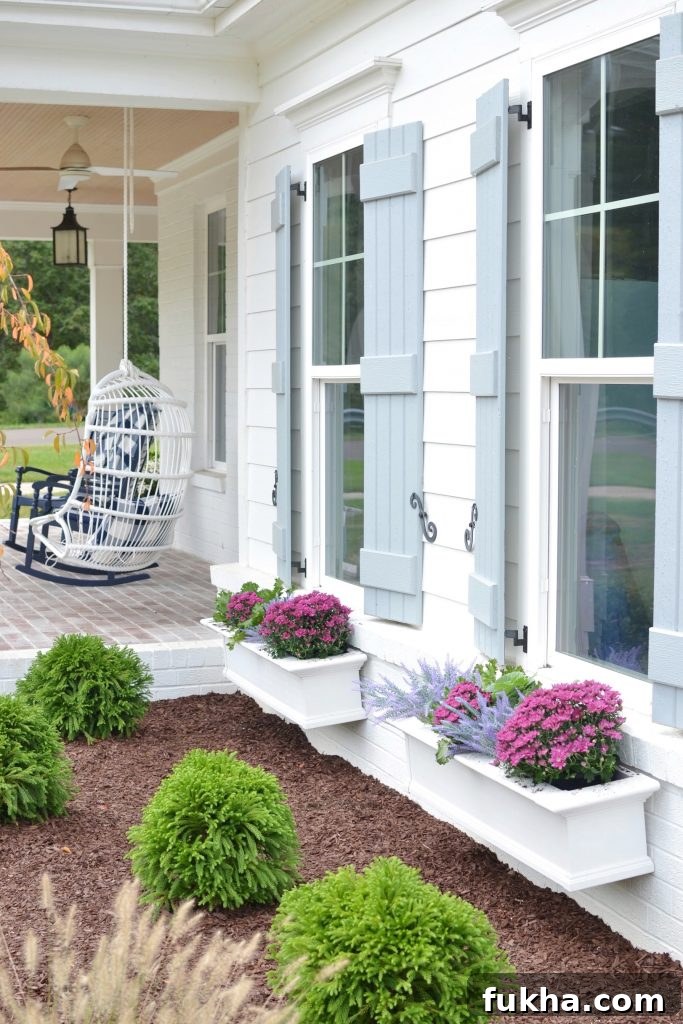
Be mindful that plants left in pots can dry out faster than if planted directly into a self-watering box. If you use potted plants, check moisture regularly and water as needed.
Colors for Fall Window Boxes
The three popular color combinations to consider for autumn are:
- Traditional Autumn – Warm bronzes, deep oranges, and golden yellows using mums, pansies, and ornamental peppers. Add miniature pumpkins or gourds for a seasonal touch.
- Green & White – Focus on texture with ornamental kale, cabbage, and ivy in shades from lime to deep forest green. Accents of white mini pumpkins or pale gourds create a crisp contrast.
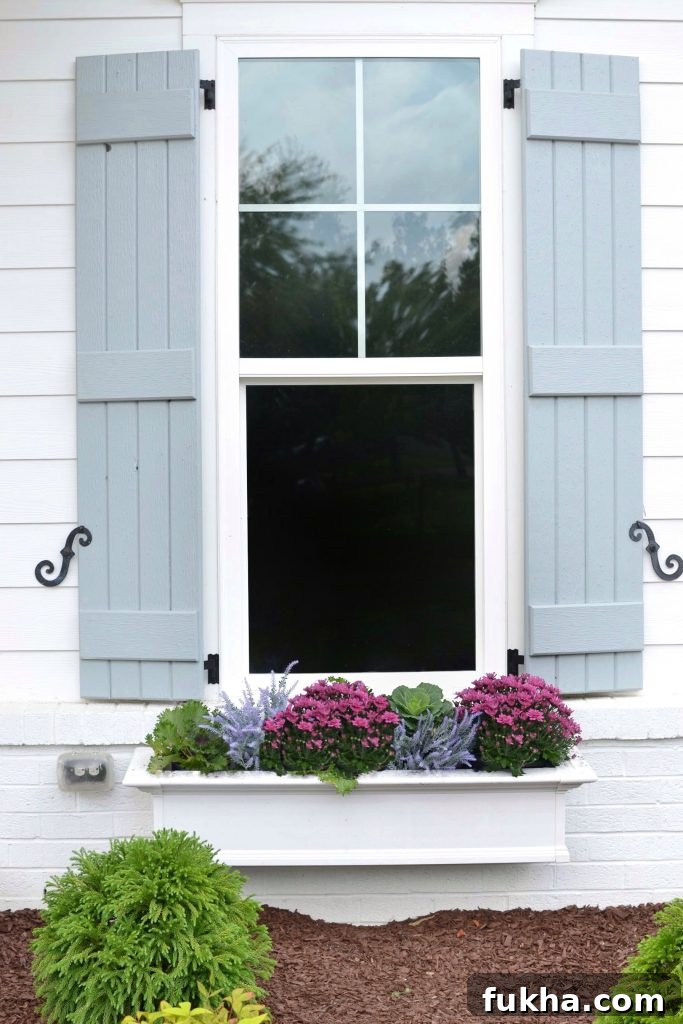
- Wine Tones – A palette of light pinks to deep purples and maroons. Use wine-colored mums, purple kale, and trailing greens to build depth and drama.
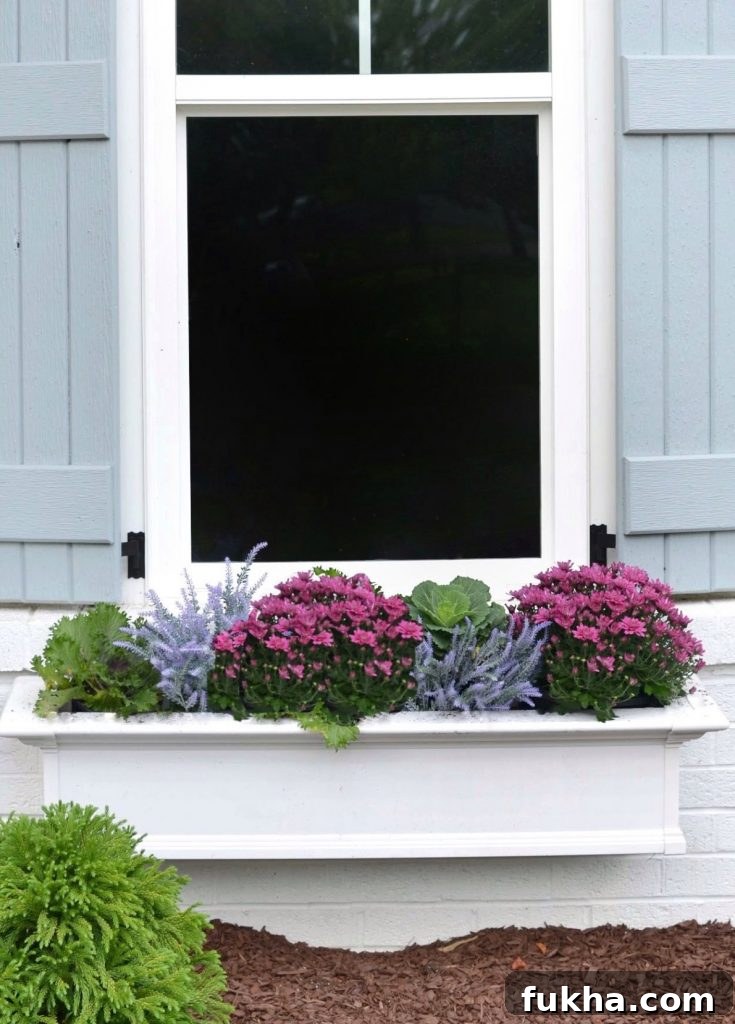
For my boxes I chose wine-colored mums as a bold centerpiece, paired with ruffled ornamental kale and lighter purple lavender sprigs for contrast and long-lasting color. Small white baby pumpkins are an optional accent that fills empty spaces and reinforces the fall theme.
Tip: apply a balanced plant fertilizer every one to two weeks during the active season and water when the soil surface begins to dry. This keeps the live components healthy and vibrant alongside any faux elements.
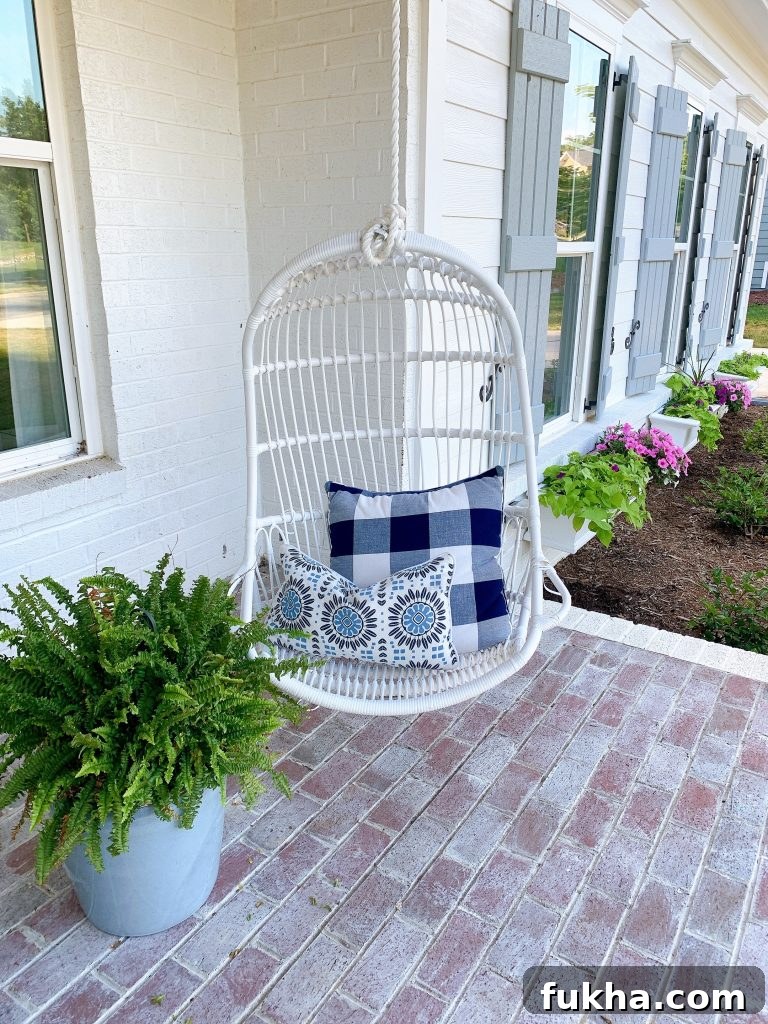
Our summer boxes overflowed with color thanks to regular feeding and watering. For fall, a similar approach—paired with a few well-placed faux pieces—gives the same fullness with less upkeep.
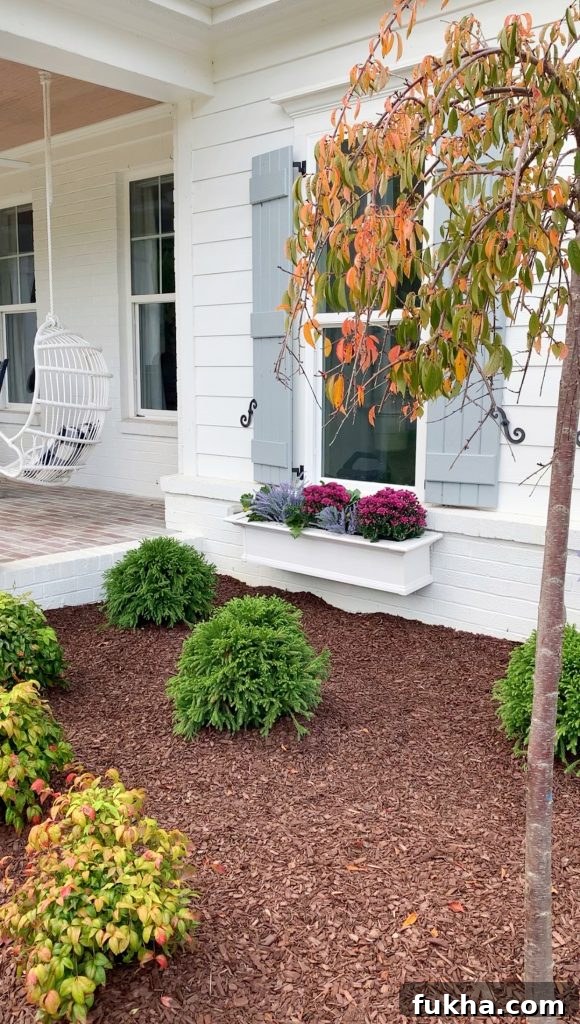
After seeing the finished boxes, most people don’t notice the occasional faux stem. When mixed thoughtfully with live plants, artificial window box flowers become a useful tool for sustained curb appeal rather than an eyesore.
I’m always inspired by other window boxes in my neighborhood—so look around for ideas, choose a color story you love, and don’t be afraid to use a few faux pieces to make the job easier. With a little planning, you can create fall window boxes that look abundant, polished, and effortless.