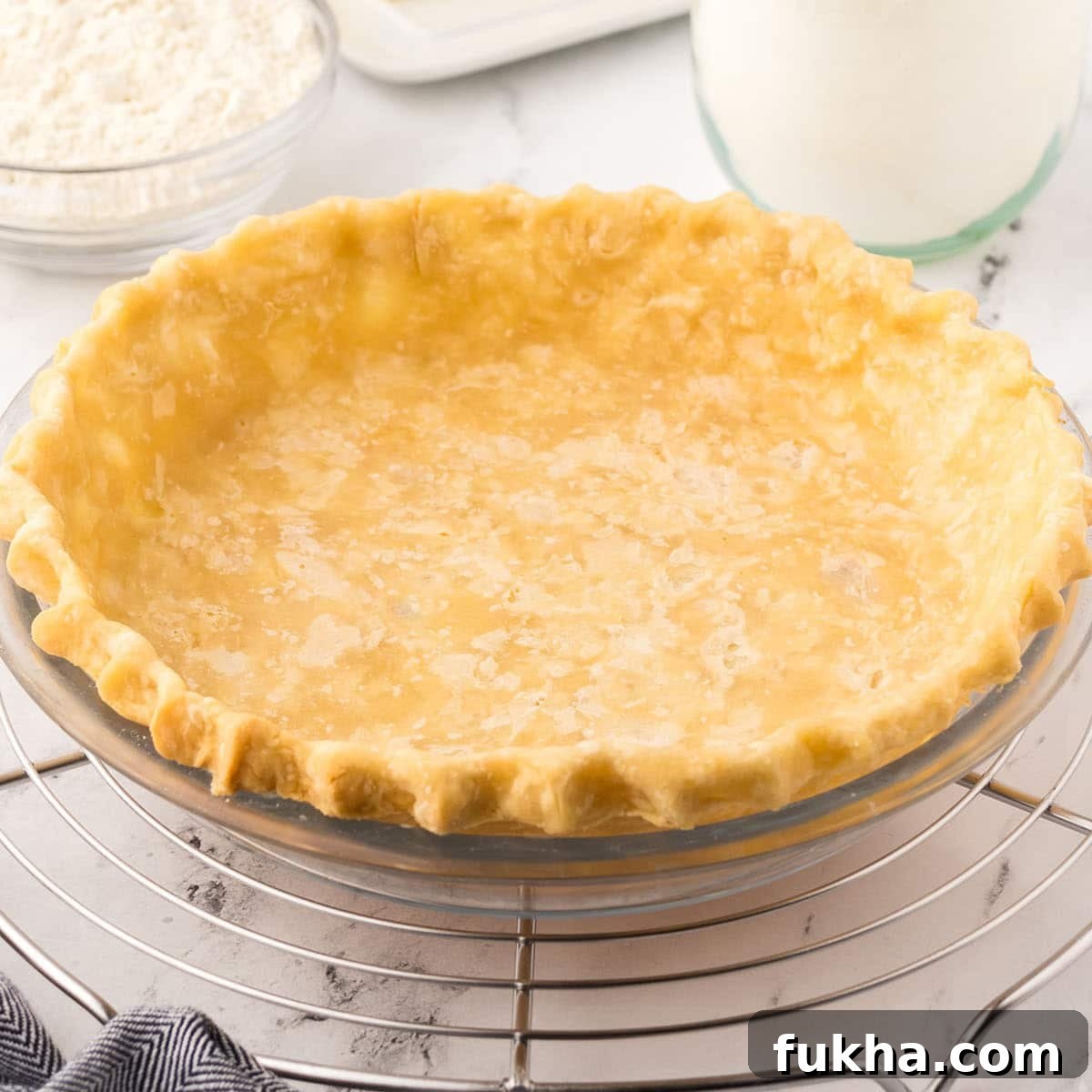
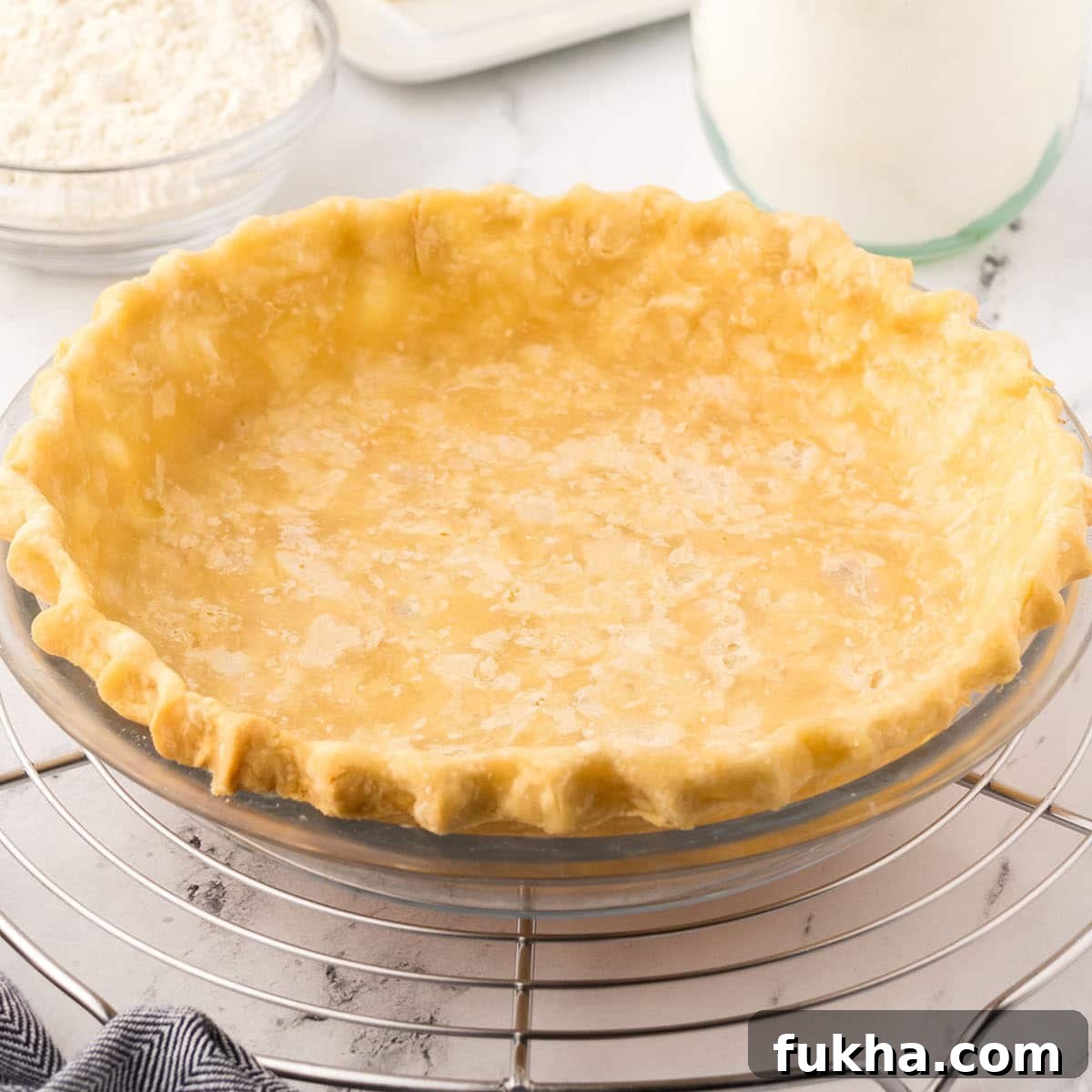
Are you ready to bake your first pie from scratch but your recipe calls for blind baking the crust? Don’t be intimidated. With a few simple steps you can blind-bake a pie crust that stays crisp and won’t turn soggy when you add your filling. This guide explains why blind baking matters and shows an easy method to pre-bake a 9-inch pie shell.
Why you’ll love it
- Blind baking creates a firm, golden bottom crust for custard pies, cream pies, and recipes where the filling isn’t baked long enough to cook the crust fully.
- Pre-baking prevents a soggy bottom so your pie has the texture you expect—crisp edges and a nicely set base.
- The process is straightforward and uses common pantry items like sugar or pie weights to keep the crust flat while baking.
How to Blind-Bake Pie Crust
Blind baking, also called pre-baking or par-baking, means baking the pie shell before adding a filling. The goal is to set the dough so it holds its shape and stays crisp under wet fillings. Use this method for a fully baked shell or stop early for a partially baked crust, depending on your recipe.
Recipe summary
- Prep time: 20 minutes
- Cook time: 30 minutes (plus time with weights)
- Chilling time: 2 hours 30 minutes
- Total time: about 3 hours
- Yield: One 9-inch pie crust
- Author: Amira
Ingredients
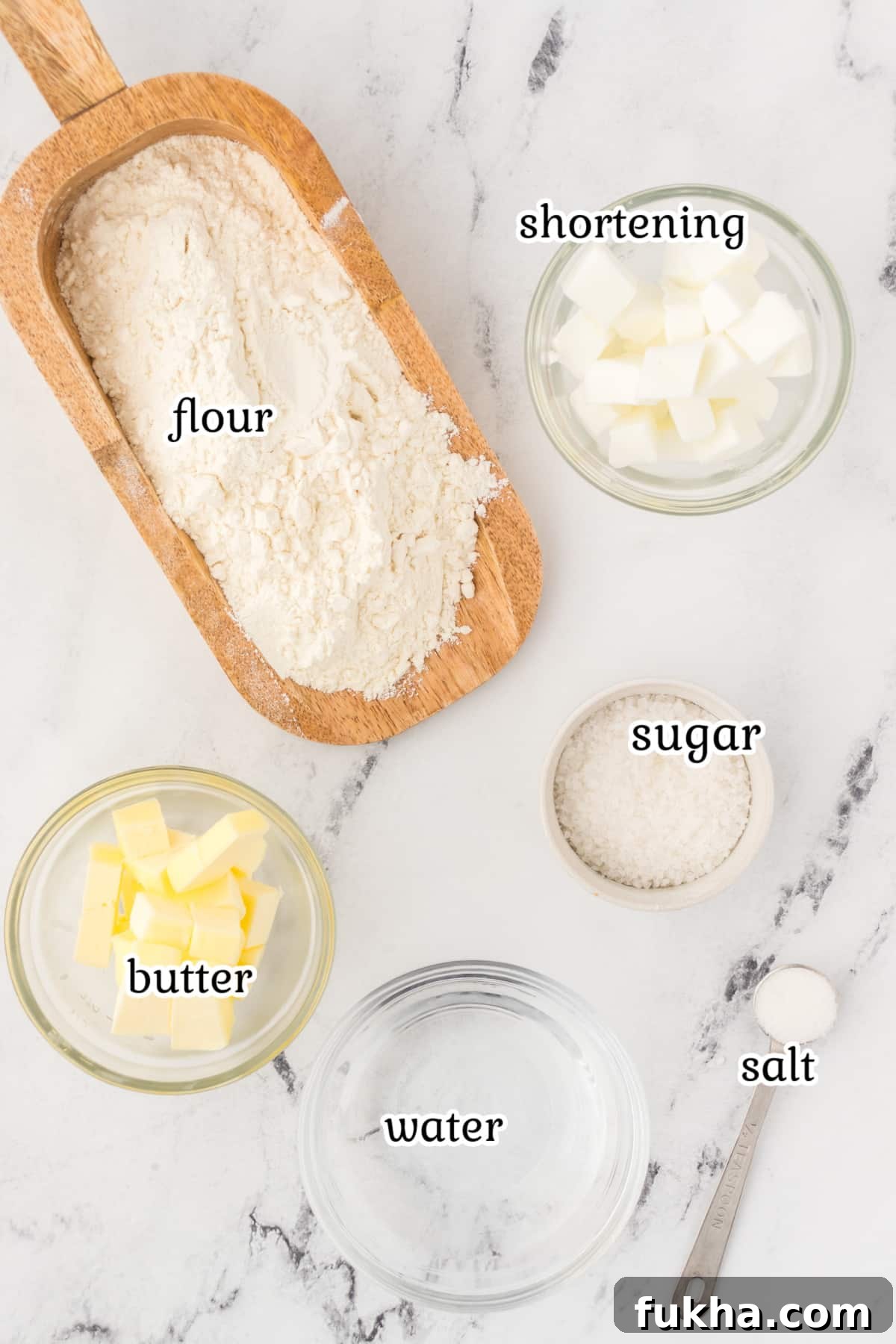
- 1 1/4 cups all-purpose flour
- 1/2 teaspoon granulated sugar
- 1/4 teaspoon salt
- 5 tablespoons cold unsalted butter, cubed
- 3 tablespoons chilled vegetable shortening, cubed
- 4–6 tablespoons iced water
Ingredient notes
- All-purpose flour provides structure for a flaky, tender crust.
- A small amount of granulated sugar improves flavor and helps browning.
- Use unsalted butter for control over salt; the shortening helps tenderize the crust and improves flakiness.
- Iced water keeps the fat cold while bringing the dough together—this prevents a tough crust.
Instructions
Make the dough
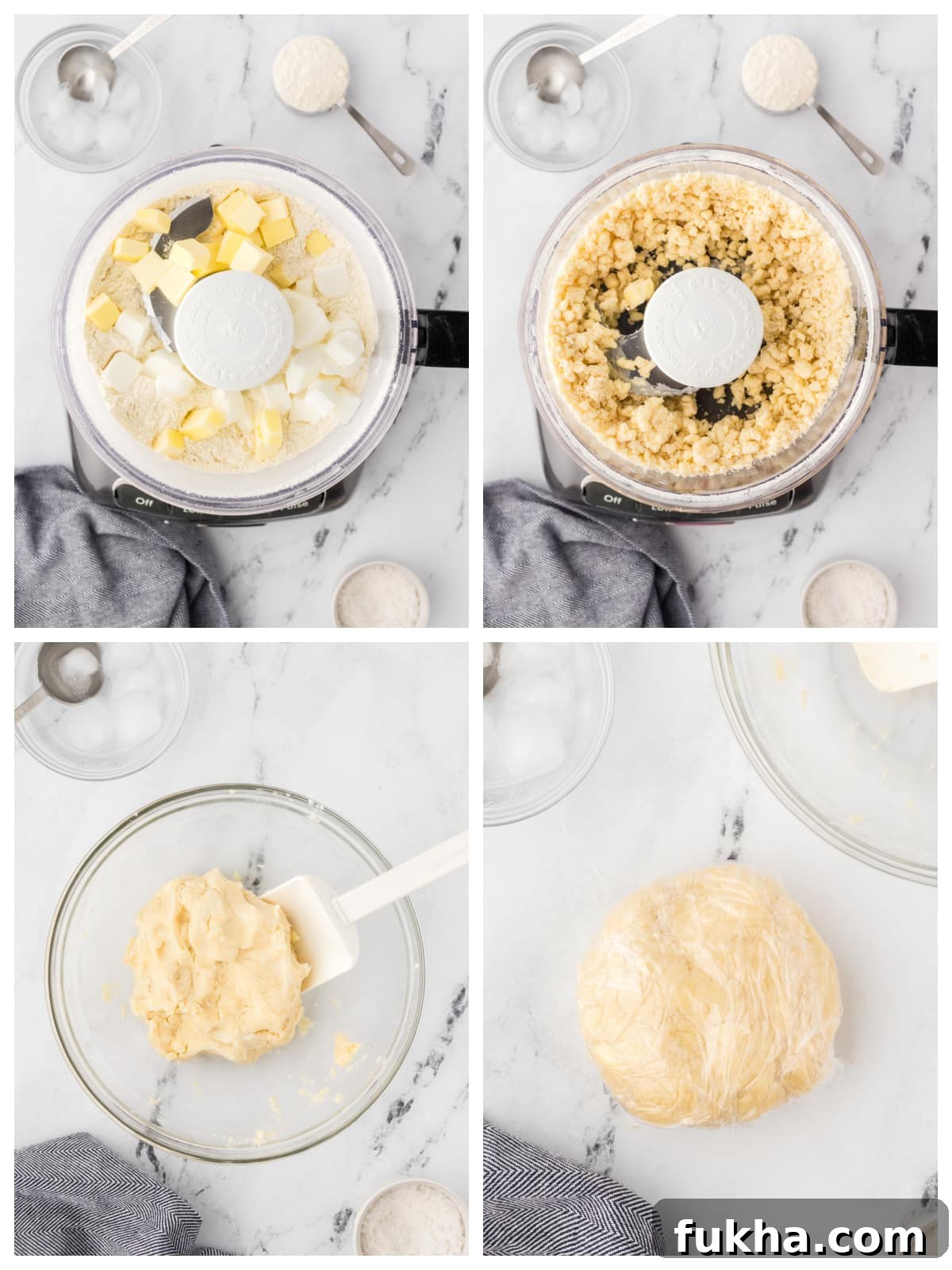
- In a food processor, pulse together the flour, sugar, and salt for a couple of seconds to combine.
- Add the cold butter and shortening cubes and pulse about 6–8 times, until the mixture forms coarse clumps. You should still see small pieces of butter—do not over-process.
- Place iced water in a cup. Transfer the flour mixture to a bowl and add the water, 1 tablespoon at a time, mixing gently with a rubber spatula until the dough just holds together.
- Shape the dough into a 4-inch disk, wrap tightly in plastic wrap, and refrigerate for at least 2 hours or overnight.
Roll and shape
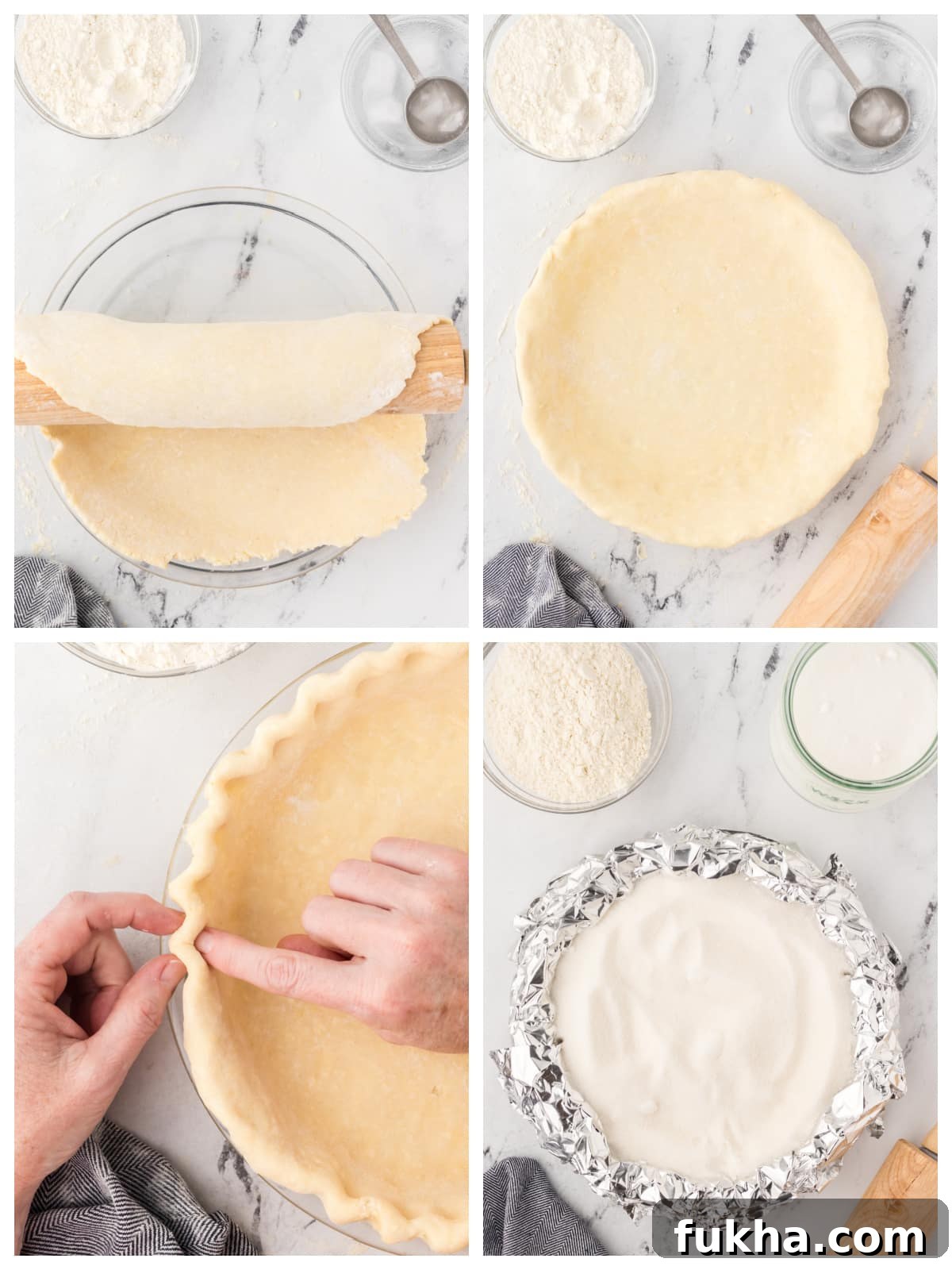
- Lightly flour a clean surface and the rolling pin. Roll the chilled dough from the center outward, turning it a quarter turn every few strokes, until it’s about a 12-inch circle.
- Roll the dough loosely over the rolling pin and unroll into a 9-inch pie pan. Gently ease it into the pan and press to fit, leaving a 1–2 inch overhang.
- Fold the excess under itself to create a thicker rim and crimp the edge into a decorative V-shape with your fingers.
- Freeze the shaped crust for 30 minutes before baking—this helps prevent shrinkage.
Par-bake / pre-bake
- Preheat the oven to 350°F (175°C).
- Line the chilled crust with heavy-duty aluminum foil, pressing it into the base and up the sides to fully support the dough.
- Fill the lined shell with granulated sugar (or pie weights) up to the top edge of the dish; the weight prevents the crust from puffing.
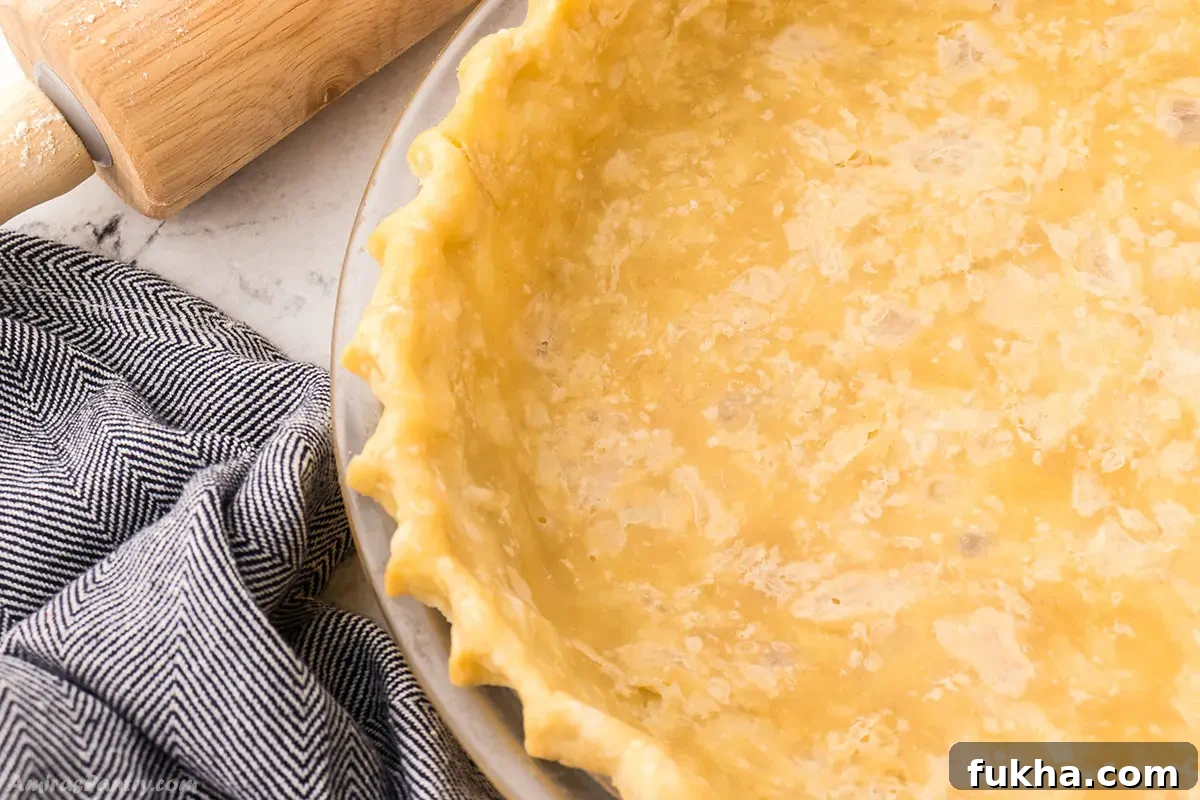
- Bake on the center rack. For a fully prebaked crust, bake about 50 minutes, then carefully lift one edge of the foil and check the rim. Add 5 more minutes if needed until an even golden color appears.
- Remove from the oven, take out the foil and weights, and allow the crust to finish crisping on the bottom while it cools slightly.
Tips
- Cut the butter and shortening into small pieces and keep them very cold—this yields a flakier crust.
- Use the food processor only to combine dry ingredients and cut in the fat; finish adding water by hand to avoid overworking the dough.
- If the dough cracks while rolling, moisten your fingers with iced water and press cracks together, then gently continue rolling.
- Sugar works very well as a weight because its small grains settle evenly, but you can also use commercial pie weights, dried beans, or rice (do not reuse weights in food afterward).
- Do not skip chilling the dough before rolling and before baking—chilling reduces shrinkage and gives a better texture.
Notes
- Add only enough iced water for the dough to hold together—too much water makes a tough crust.
- When using sugar as a weight, there is no need to dock the crust or remove the foil during baking.
- Let a baked shell cool before filling so custards and creams set correctly.
Nutrition (approx.)
Calories, fat, carbohydrates and other values will vary depending on ingredients and portion size. Use these values as a general guide if nutritional tracking is required.
Storage
- Refrigerate prepared dough wrapped tightly in plastic for 2–3 days.
- To freeze, wrap dough in plastic and place in a resealable bag for up to 3 months. Thaw at room temperature for about 30 minutes before rolling.
Serve with
This crust is a versatile base for fruit pies like apple, custard pies, chocolate tarts, and savory quiches.
Variations
- Add a pinch of cinnamon or nutmeg to the dough for warm flavor notes that complement apple or pumpkin fillings.
- For a richer crust, use all butter in place of shortening; for a slightly tender, less crisp result keep some shortening.
FAQs
Yes. If you don’t have commercial pie weights you can use dried beans or rice. Cover the crust with parchment and fill with your chosen weight, pressing it gently to the edges.
Should I poke holes in the crust?
If you use weights, you do not need to dock (poke) the crust. Docking is mainly used when baking unweighted crusts to prevent large air pockets.
What happens if I blind bake without weights?
Without weights the crust will puff up and the bottom may not stay flat, leaving you with an uneven base for your filling.
Related recipe ideas
- No-bake key lime pie—an easy alternative when you don’t want to make a crust from scratch.
- Pumpkin pie using phyllo for a different texture and quicker prep.
- Hula pie—an ice-cream based, no-bake dessert for warm days.
First published Nov 24, 2018. Updated with clarified steps and tips to make blind baking easy and reliable.