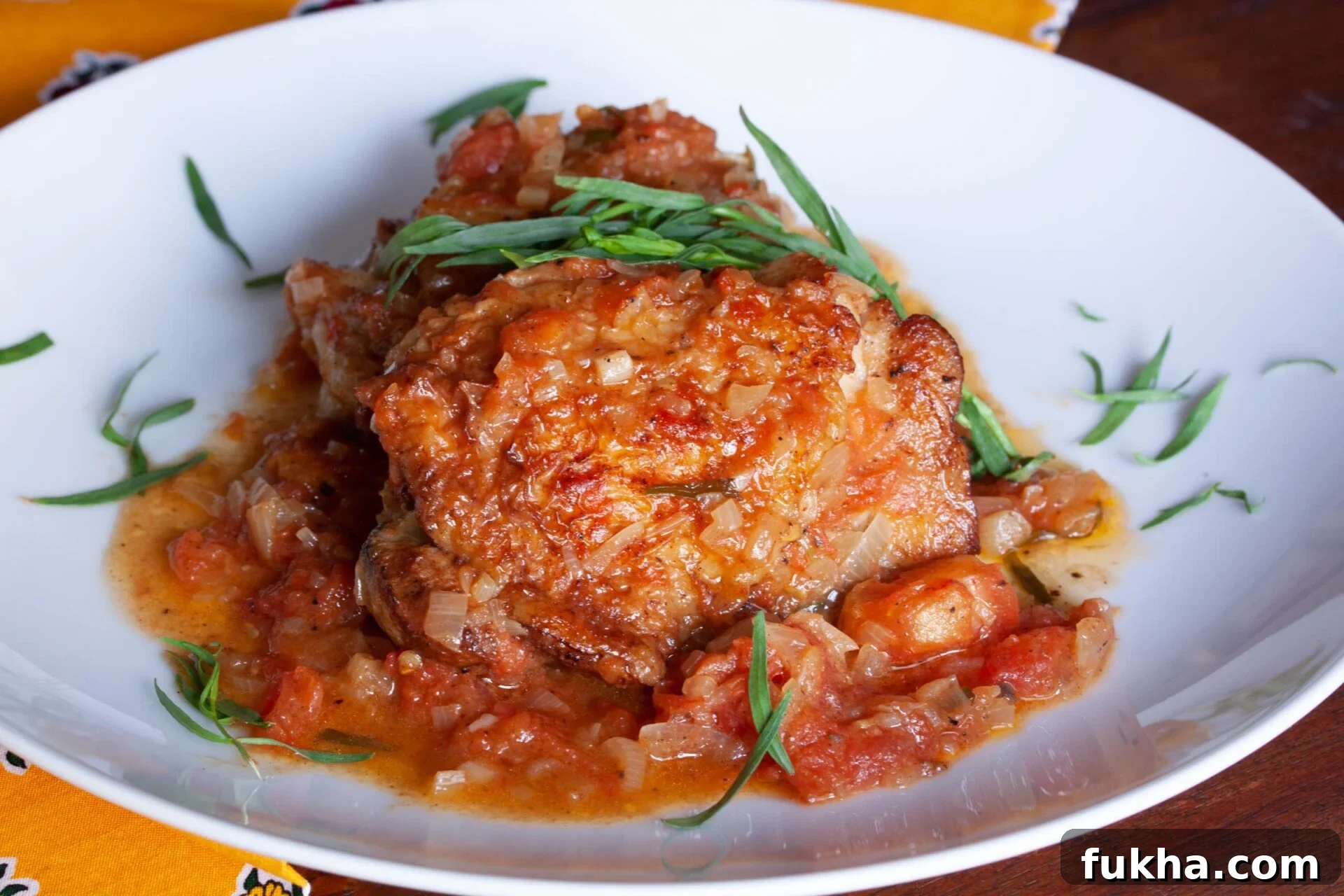
Comfort food returns in full flavor with this classic tarragon chicken recipe.
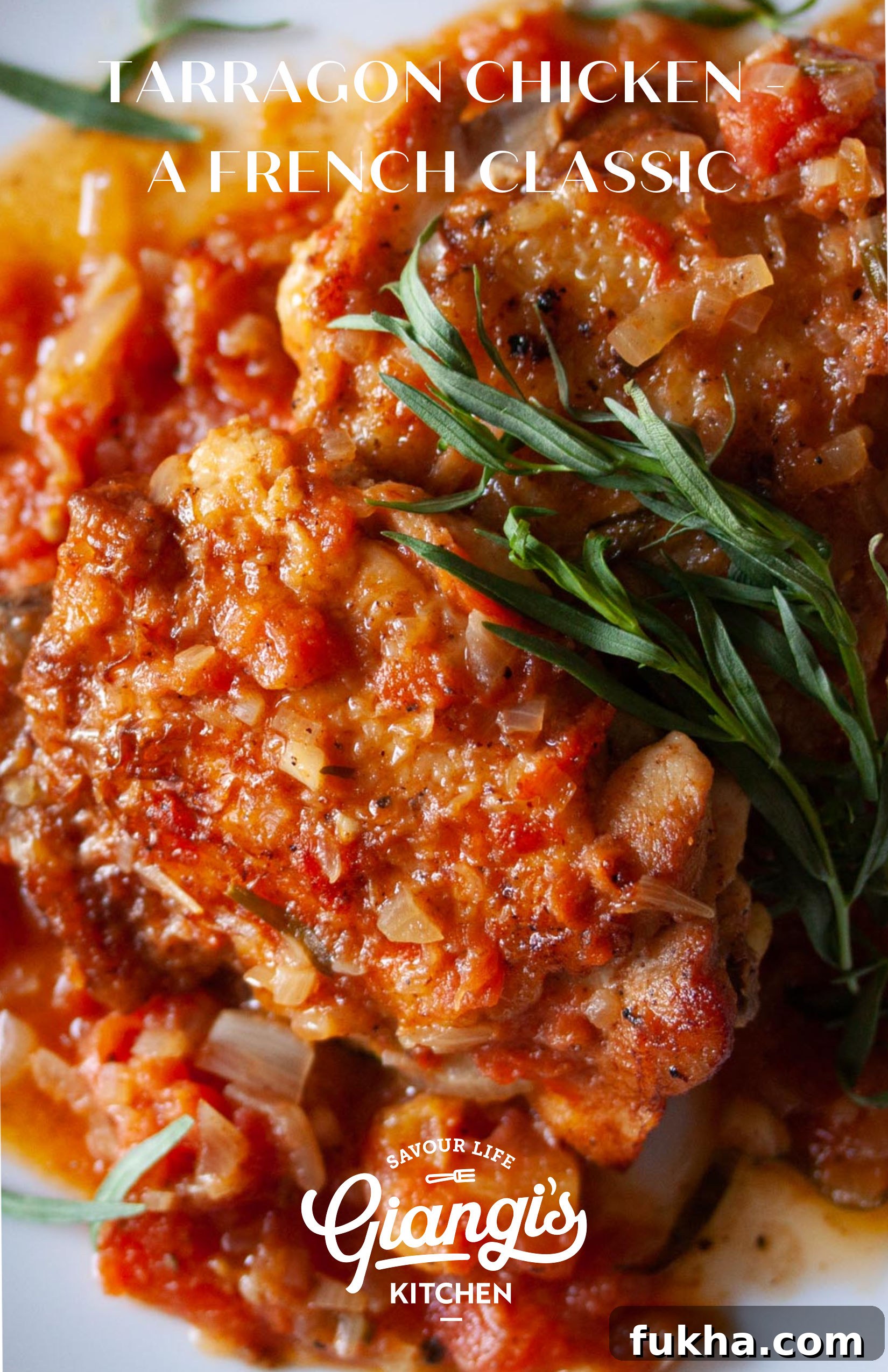
This tarragon chicken is a beloved French staple found in cookbooks, brasseries, bistros, and neighborhood restaurants across France. It combines tender chicken, a bright tomato-and-wine sauce, and the subtle anise-like aroma of fresh tarragon for a dish that feels both elegant and homey.
With just a handful of simple ingredients and straightforward steps, this recipe is quick to assemble and deeply satisfying. It works beautifully for a cozy fall supper, a date-night dinner, or an easy weeknight meal that will have everyone asking for seconds.
In this Article
- What is Tarragon Chicken?
- What is Bistro Style?
- Ingredients Needed
- Equipment Needed
- Cooking Instructions
- Pro Tips
- Using Leftover Tarragon
- Substitutes and Additions
- Storage
- Frequently Asked Questions
- Recipe: Tarragon Chicken
What is Tarragon Chicken?
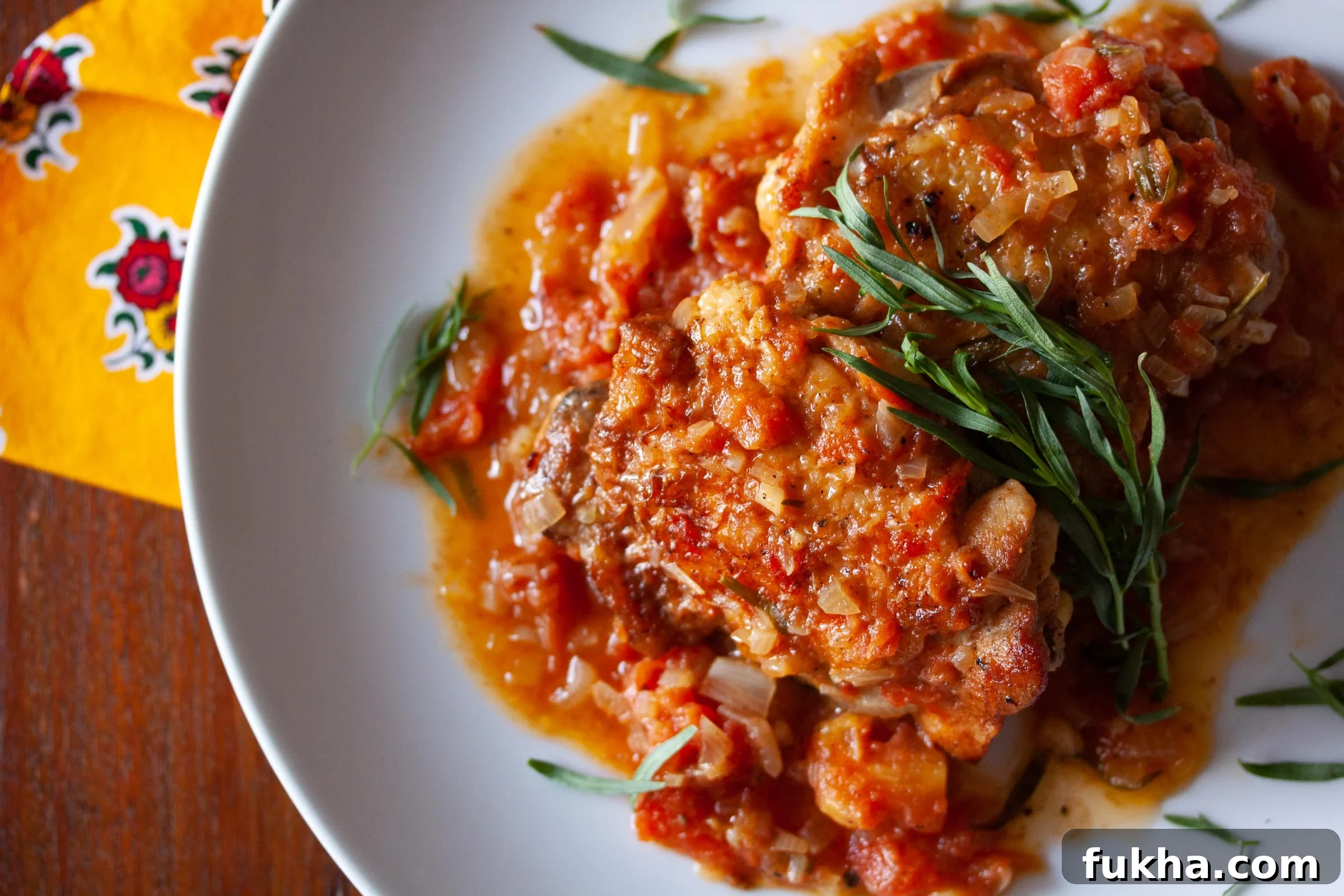
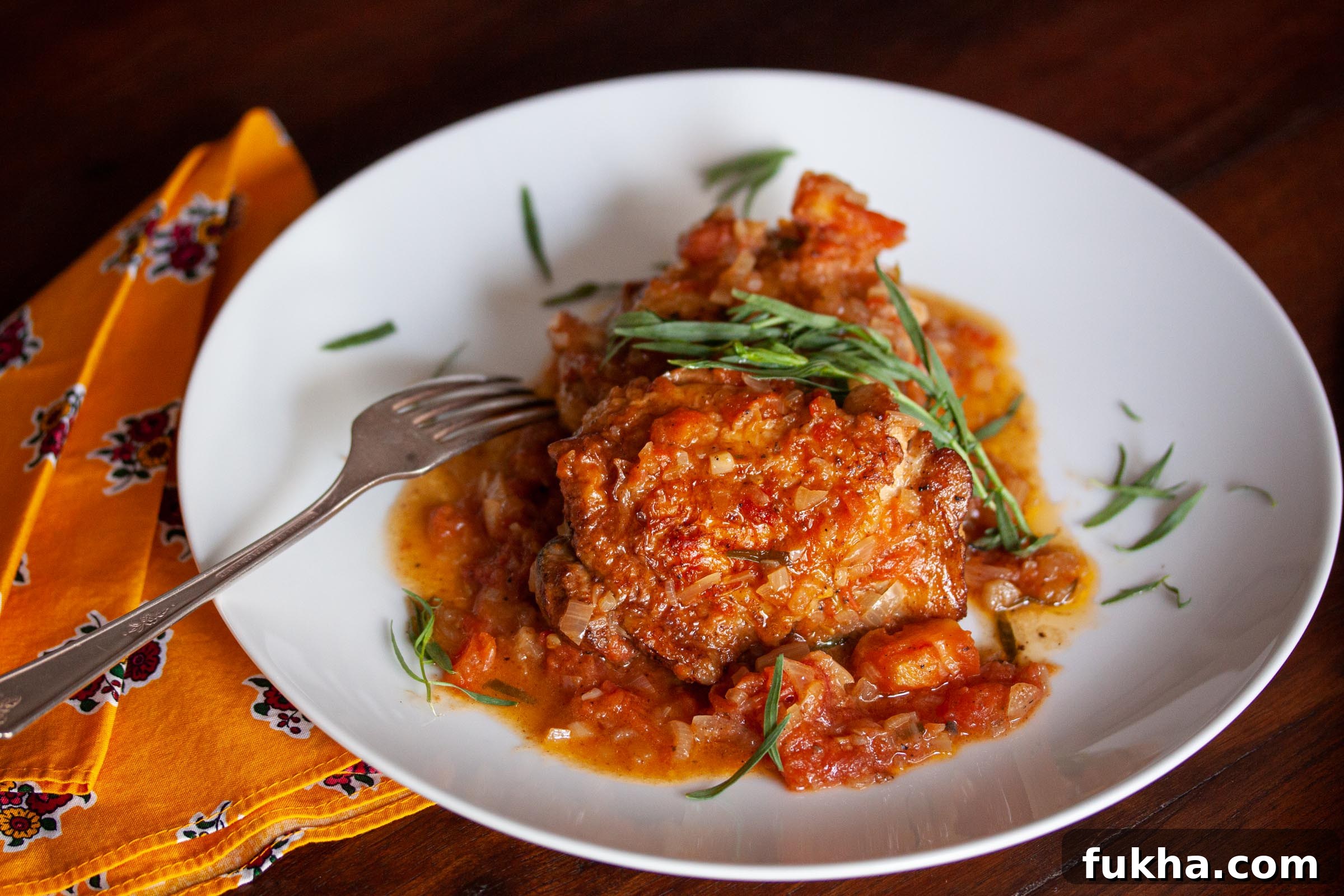
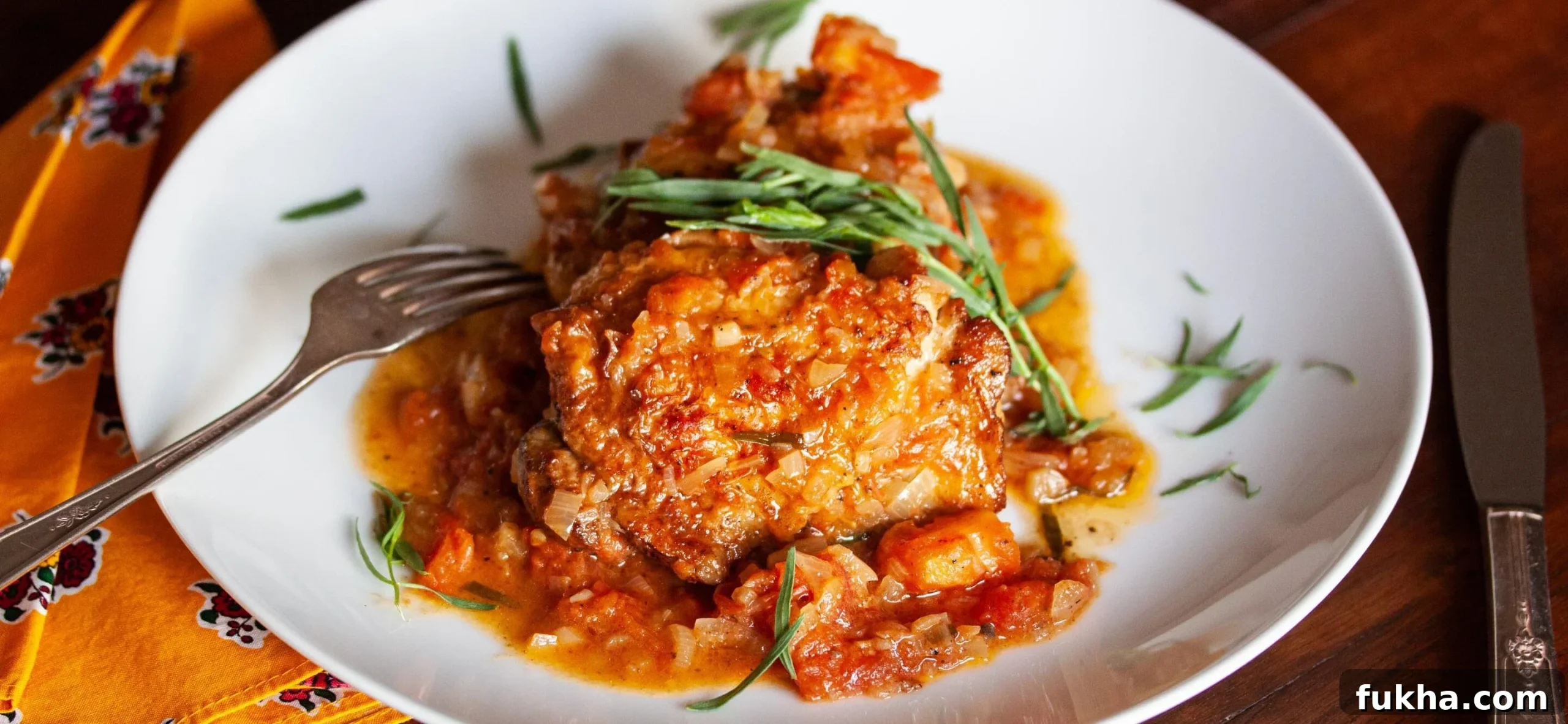
Tarragon chicken features juicy, well-seared chicken paired with a tomato-forward sauce brightened by dry white wine and a splash of tarragon vinegar. Fresh tarragon lends a mild, slightly licorice-like note that complements the acidity and sweetness in the sauce.
Carrots add a natural sweetness that balances the vinegar, and a simple side of sautéed potatoes or a crusty baguette is perfect for soaking up the sauce.
What is Bistro Style?
“Bistro style” implies a straightforward, unfussy approach that emphasizes flavor and speed. This recipe follows that philosophy: minimal fuss, maximum taste. Using chicken thighs keeps the meat moist and flavorful and shortens active cooking time, though chicken breasts can be substituted if preferred.
Ingredients needed to make this recipe
A short, pantry-friendly ingredient list makes this dish accessible. Read the recipe instructions for full details and timing.
- Olive oil – for searing the chicken
- Unsalted butter – for flavor and finish (use unsalted to control sodium)
- Chicken thighs – skin-on, for juiciness and crisp skin
- Salt and pepper – for seasoning
- Dry white wine – adds depth once cooked down
- Shallots – milder than onions and very aromatic
- Carrots – peeled and diced to add sweetness
- Tomatoes – peeled, seeded, and chopped for the sauce
- White wine tarragon vinegar – brings acidity and tarragon character
- Fresh tarragon leaves – for garnish and aromatic lift
Equipment needed
Essential items for this recipe:
- Large deep-sided 12-inch skillet or sauté pan
- Serving platter
- Kitchen tongs
Cooking step-by-step instructions
- Heat 2 tablespoons olive oil and 1 tablespoon butter in a large, deep-sided 12-inch skillet over high heat. Season the chicken thighs well with salt and pepper. When the butter has melted but is not smoking, add the chicken, skin-side down, and cook until the skin turns evenly golden brown. Turn and cook the other side until the chicken is cooked through, about 12 minutes total depending on thickness.
- Manage the heat carefully to avoid scorching the skin. Do not overcrowd the skillet—work in batches if necessary.
- Transfer the cooked chicken to a serving platter and cover loosely with foil to keep warm.
- Pour off excess fat from the skillet. Return the pan to medium-high heat and add 1 tablespoon butter and 1/2 cup dry white wine. Deglaze the skillet, scraping up any browned bits. Add the minced shallots and diced carrot and cook for about 4–5 minutes without allowing them to brown.
- Add the peeled, seeded, and chopped tomatoes and simmer for several minutes until they begin to break down.
- Increase the heat to high and slowly add 1/2 cup white wine tarragon vinegar. Cook 2–3 minutes to meld flavors. Whisk in the remaining 1 tablespoon of butter until the sauce is glossy.
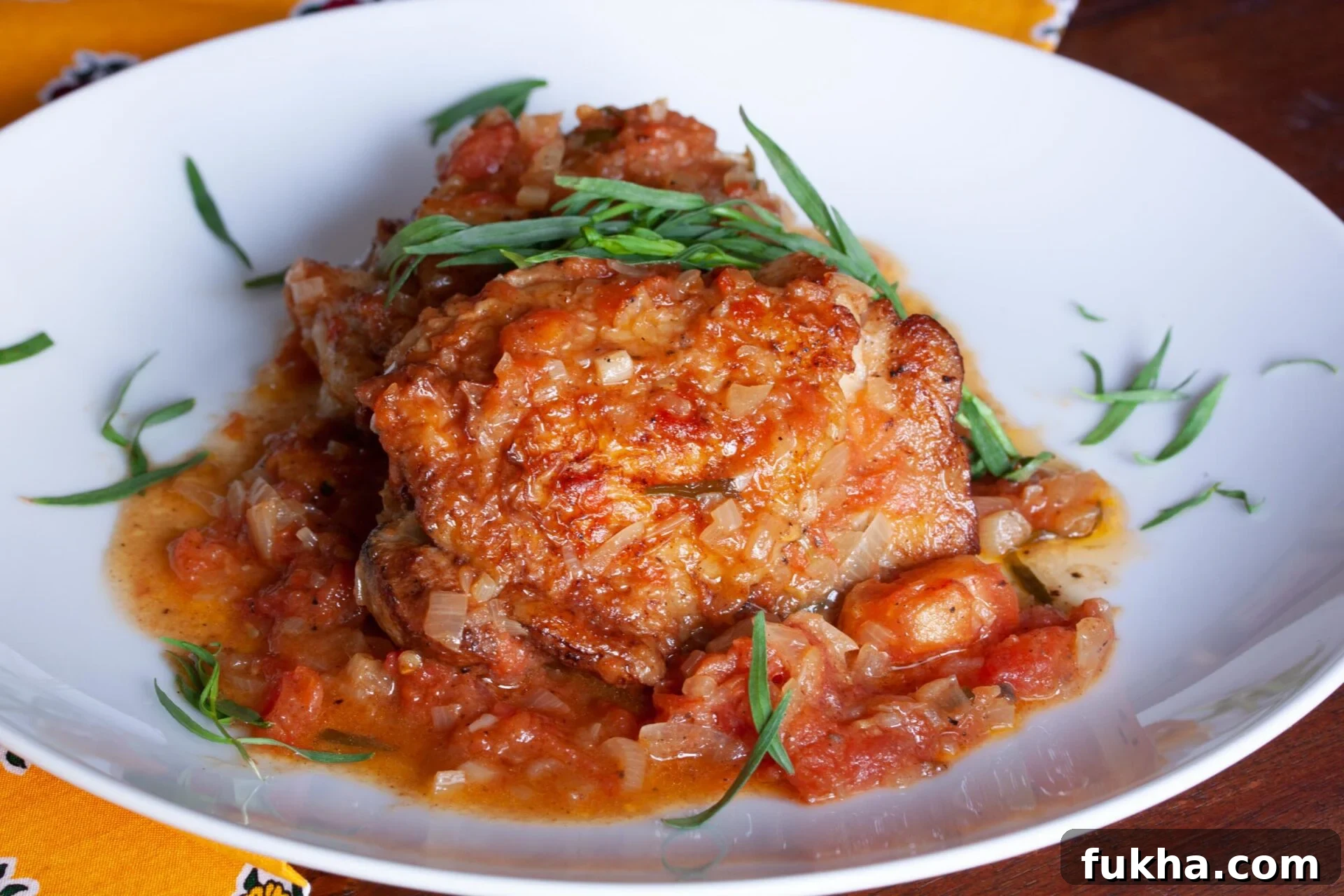
- Return the chicken to the skillet and spoon the sauce over each piece. Cover and simmer over medium heat until the chicken has absorbed some sauce and is heated through. Sprinkle with fresh tarragon, turn to coat, and serve immediately.
Pro Tips
- Boneless, skinless thighs will work—adjust cooking time accordingly.
- Use fresh tarragon whenever possible for the best aromatic flavor.
- Substitute yellow onion for shallots if needed, finely chopped.
- Use a wine you enjoy drinking; it will improve the sauce’s depth of flavor.
What to do with fresh tarragon leftovers
- Mix chopped tarragon with parsley, chervil, and chives to finish a seared steak.
- Stir chopped tarragon into softened unsalted butter and refrigerate for an aromatic compound butter.
Both methods extend the herb’s freshness and flavor beyond the meal.
Substitutes and Additions
- If fresh tarragon is unavailable, use dried tarragon sparingly—about 1 teaspoon dried for each tablespoon fresh.
- Replace butter with olive oil or a plant-based butter for a dairy-free option.
- For a richer sauce, stir in a splash of heavy cream or crème fraîche before serving.
- Sautéed mushrooms make a delicious addition—add them when you cook the shallots.
- If you like heat, add a pinch of crushed red pepper flakes with the shallots.
- Serve over rice, quinoa, or pasta to make the meal more substantial.
Storage
Store leftovers promptly in an airtight container in the refrigerator for up to three days.
For longer storage, cool and portion the chicken into freezer-safe containers and freeze for up to two months. Thaw overnight in the refrigerator and reheat gently on the stovetop until piping hot.
To preserve freshness when meal-prepping, omit the final tablespoon of butter and the fresh tarragon until just before serving.
Frequently Asked Questions
Can the chicken be marinated with tarragon beforehand?
Yes. Marinating chicken with chopped tarragon, a splash of olive oil, and a little salt for at least an hour in the refrigerator will deepen the herb flavor.
Can this be made without alcohol?
Yes. Substitute non-alcoholic white wine or low-sodium chicken broth to maintain moisture and base flavor in the sauce.
Can I adapt this for a slow cooker or Instant Pot?
Yes. For a slow cooker, brown the chicken first and reduce added liquid slightly. In an Instant Pot, brown on Sauté, then pressure cook on high for about 8 minutes, followed by a quick release.
How do I know when the chicken is done?
The internal temperature should reach 165°F (75°C). Juices should run clear and the center should have no pink.
More delicious recipes to try
Try other French-inspired dishes and simple salads to complement this meal.
Recipe: Tarragon Chicken
Tarragon Chicken
Prep Time: 5 minutes | Cook Time: 30 minutes | Total Time: 35 minutes | Serves: 4
Ingredients
- 2 tablespoons olive oil
- 3 tablespoons unsalted butter
- 8 chicken thighs, skin on, rinsed and patted dry
- Salt and pepper, to taste
- ½ cup dry white wine
- 4 shallots, minced
- 1 carrot, peeled and diced small
- 2 tomatoes, peeled, cored, seeded and chopped
- ½ cup white wine tarragon vinegar
- 1 handful fresh tarragon leaves
Instructions
- In a large deep-sided 12-inch skillet, heat the oil with 1 tablespoon of butter over high heat. Season the chicken with salt and pepper. When the butter has melted but is not smoking, add the chicken and cook on both sides until the skin is evenly golden and the chicken is cooked through, about 12 minutes.
- Adjust heat as needed to avoid burning the skin and do not overcrowd the pan.
- Transfer the chicken to a serving platter and cover loosely with foil to keep warm.
- Pour off excess fat. Return the skillet to medium-high and add 1 tablespoon butter and the wine. Deglaze the pan, scraping up browned bits. Add shallots and carrots and cook about 4–5 minutes without browning.
- Add tomatoes and cook several minutes until they begin to break down.
- Raise heat and slowly add the tarragon vinegar. Cook 2–3 minutes, whisk in the remaining 1 tablespoon butter, then return the chicken to the skillet, coating it with sauce.
- Cover and simmer over medium heat until the chicken absorbs some sauce. Sprinkle with tarragon, turn to coat, and serve immediately.
Nutrition (per serving)
Calories: 675 kcal | Carbohydrates: 5 g | Protein: 38 g | Fat: 53 g | Saturated Fat: 17 g | Sodium: 191 mg
Nutritional information is an estimate.
Did you make this?
Leave a comment and share a photo to let others know how it turned out.
Originally published on 10/2/2019